




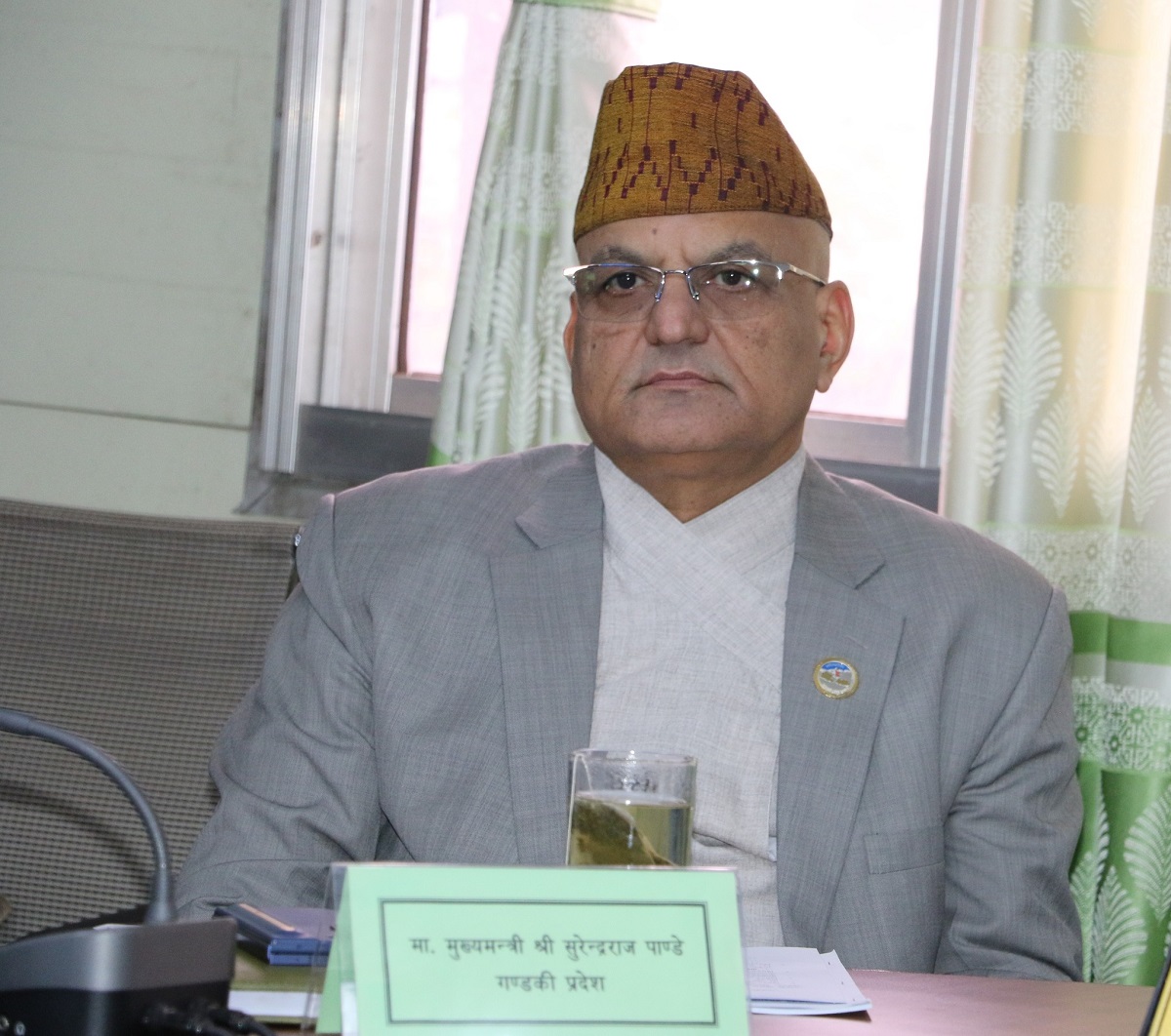
POKHARA: The Gandaki Provincial Government’s initiative to review its administrative structure to reduce administrative and financial burdens has stirred significant debate among government employees and political circles.
Based on the report prepared by the committee led by former secretary Sharad Chandra Paudel, Chief Minister Surendra Raj Pandey is preparing to cut at least 200 staff positions and abolish dozens of provincial- and district-level offices, triggering widespread concern.
According to the Paudel Committee’s findings, the restructuring could save the province approximately Rs 3–4 billion annually.
However, the plan has sparked anxiety among employees over job security and the loss of institutional power. If implemented, the current staff quota of 2,679 will be reduced, and managing the more than 3,200 existing employees will become a major challenge.
Many directorates under the ministries have been singled out for closure due to overlapping functions. Recommendations include scrapping key directorates in agricultural development, livestock and fisheries, forestry, physical infrastructure, education, and health, as well as the tourism, industry, commerce, and consumer protection directorates.
At the district level, the restructuring would significantly impact offices such as agricultural knowledge centers, veterinary hospitals and livestock service centers, drinking water and sanitation divisions, and water resources and irrigation divisions, which would either be closed or merged into nearby hubs centered around Tanahun, Kaski, and Baglung. The proposal also includes replacing district infrastructure offices with new physical construction and maintenance offices, altering the work approach at the district level.
The biggest concern centers on the management of staff from abolished offices. The government has promised to redeploy permanent employees to a “pool” under the Office of the Chief Minister and Council of Ministers for reassignment, but has recommended terminating office assistants and not retaining contract staff. This has caused particular worry among lower-level employees, leading groups of them to meet with the Chief Minister to plead their case.
As the plan moves toward implementation, internal discontent is surfacing. Sources say some ministers are lobbying to preserve structures under their ministries, particularly health and agriculture directorates, which also receive federal funding. Pressure against abolishing these has reportedly come from the secretary level.
The committee, now chaired by Chief Secretary Khagendra Prasad Subedi, is finalizing the report for implementation. Once approved, the proposal will be submitted to the Council of Ministers, which will make the final decision on the administrative future of Gandaki Province.
Civil service unions have strongly objected to the restructuring report, accusing the government of moving to implement it in secrecy without consulting stakeholders. They have submitted a letter of concern to the Chief Minister, warning of joint protests if their demands are ignored.
The unions claim the report will render a large number of employees—from the 11th grade to the lowest levels—redundant, narrow opportunities for career development, disrupt the chain of command, weaken service delivery, and potentially force employees to resign. They argue that instead of downsizing, the province should focus on building a productive economy in line with its limited internal resources.
They have demanded the immediate public release of the report, broad consultations before implementation, no reduction in approved staff quotas, no obstacles to career development, and guarantees that services directly affecting citizens will not be disrupted. The letter states that if these demands are not met, the unions will launch joint protest programs and hold the provincial government fully responsible for the consequences.
The memorandum is signed by leaders of various civil service organizations in Gandaki and Kaski, including Dolraj Parajuli (Nepal Civil Service Organization, Gandaki), Bed Prakash Dhakal (Nepal Civil Service Union, Gandaki – acting chair), Ramesh Basnet (Nepal National Civil Service Organization, Gandaki – treasurer), Somlal Tiwari (Integrated Government Employees Organization, Nepal – Gandaki chair), Bharat Prasad Bhusal (Official Trade Union of Civil Servants, Kaski chair), Ramchandra Pahari (Nepal Civil Service Organization, Kaski chair), among others.




Comment