




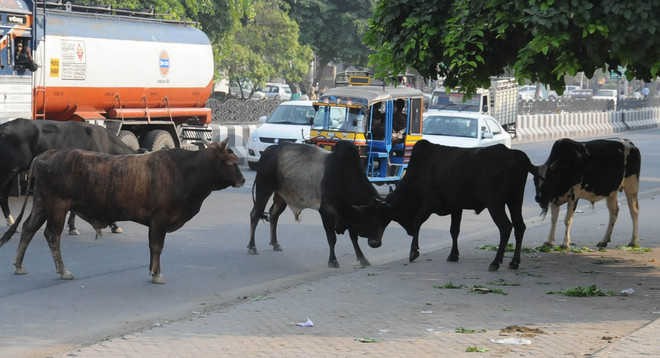
KATHMANDU: Lumbini Province has recorded around 12,732 stray cattle, according to a new survey report released by the Ministry of Agriculture, Land Management and Cooperatives. The report stresses the need for stronger legal arrangements and effective coordination, noting that nearly 4,000 animals remain unmanaged despite ongoing efforts.
According to the study, 39 cattle shelters (gaushalas) currently operating across the province have a combined capacity of 11,677 cattle. However, only 8,995 animals are currently accommodated. While the shelters could take in an additional 2,682 cattle, around 1,000 cattle would still remain outside the system.
The report was prepared by a committee led by Agriculture Minister Dinesh Panthi after field inspections, data collection, stakeholder interactions, and consultations. The ministry formally submitted the report to Chief Minister Chet Narayan Acharya.
Receiving the report, Chief Minister Acharya directed authorities to table a new bill on stray-animal management in the upcoming winter session. He emphasized that gaushalas must be strengthened in cooperation with local communities, with a long-term goal of using the shelters for breed improvement and organic fertilizer production.
“In the future, these gaushalas can be used for livestock breed enhancement,” Chief Minister Acharya said. “They can supply the province’s cattle needs and become centers for organic fertilizer production, so we must move ahead with a long-term plan.”
The report shows that the stray cattle problem is most severe in the Tarai districts. Many shelters lack adequate fodder, water, manpower, and veterinary services. Managing injured, sick, or severely weak cattle remains a major challenge, Minister Panthi noted.
As per ministry data, managing cattle in shelters costs around Rs 100 per animal per day. Each caretaker is responsible for the daily care, fodder, and feeding of around 50 cattle, the ministry’s acting secretary Anil Marasini said.
The report highlights unresolved questions about which level of government—federal, provincial, or local—holds the primary responsibility for stray-animal management. It also points out the lack of a clear legal basis for government investment in privately or religiously run gaushalas.
Weak utilization of cow dung and urine, limited testing and marketing of organic fertilizer, and low public awareness have contributed to a growing tendency to abandon cattle overnight, the report states. It also notes that Nepal’s cultural and religious respect for cows could support better management efforts.
Some shelters have already moved toward self-reliance through milk production, organic manure, biogas, and herbal products.
The committee has recommended that the province support gaushala infrastructure through conditional grants, while local governments should take the lead in managing land and fodder. It also suggests making livestock tagging mandatory and requiring a Rs 5,000 contribution from individuals who wish to place cattle in shelters.
The report further proposes support for organic fertilizer processing and marketing, and the preparation of model laws to guide local governments.
Once the bill is passed, the report concludes, stray-animal management will improve through clearer division of roles between provincial and local governments, reducing road accidents and crop damage, strengthening veterinary services, and gradually making cattle shelters more self-sustaining.






Comment