




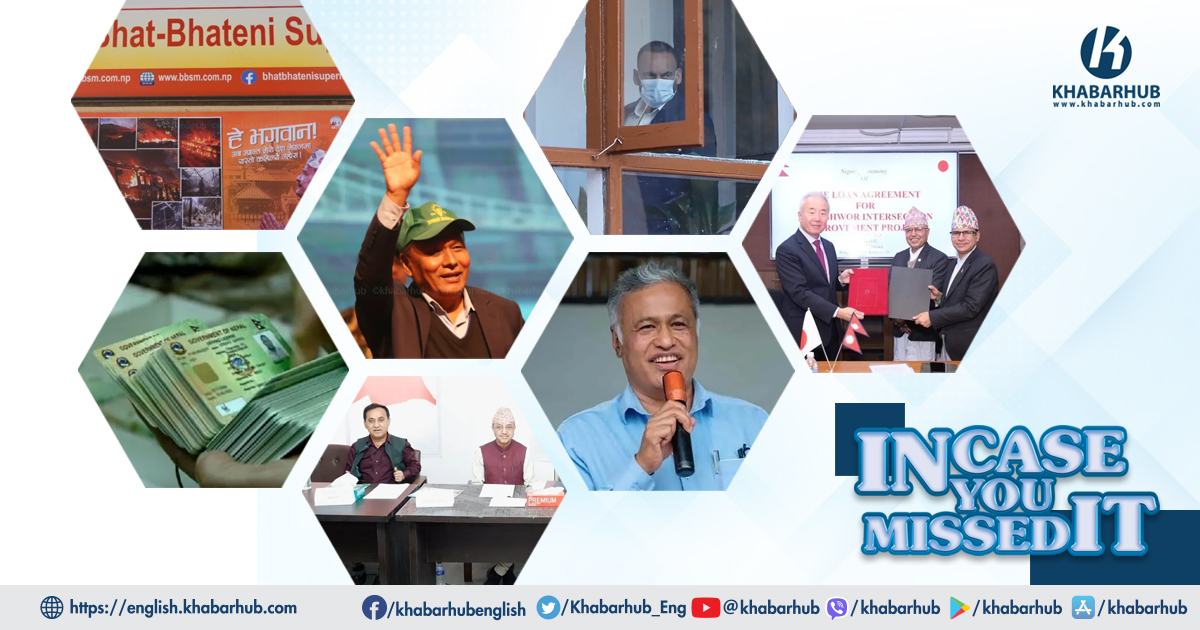
KATHMANDU: Last week marked one of the most consequential periods in Nepal’s evolving political trajectory as the nation moves toward the House of Representatives election scheduled for March 5, 2026. A series of political, administrative, and institutional developments—ranging from renewed electoral commitments and inter-party negotiations to corruption investigations and shifting political ambitions—collectively signaled that Nepal has entered a critical phase of political recalibration.
At the center of these developments stood Prime Minister Sushila Karki, whose reaffirmation that the 2026 election would not be postponed helped stabilize an environment plagued by speculation, political anxiety, and unrest following the seismic Gen-Z movement that reshaped the national political order.
By publicly insisting that “the election will proceed on the scheduled date” and emphasizing a peaceful, fear-free democratic environment, Karki exercised both symbolic and strategic leadership. Her remarks at the all-party meeting underscored a broader message: the interim government intends to maintain continuity and legitimacy despite ongoing factional vacuums and fragmented public trust.
Karki’s emphasis on the preparedness of the Election Commission, security agencies, and political parties served as an important assurance at a time when questions lingered over Nepal’s administrative capacity and political cohesion. Her statement that the people themselves—empowered by the spirit of the Gen-Z movement—form the “first line of security” reflects a significant departure from traditional state-centered narratives.
This rhetorical choice suggests a deliberate strategy to leverage the moral force of the youth-led uprising as a foundation for democratic participation, rather than allowing it to remain a disruptive symbol of institutional breakdown.
Election Commission’s Directives: A Push for Structural Reform
Complementing the Prime Minister’s resolve, the Election Commission (EC) introduced a landmark 20-point directive aimed at improving electoral conduct, enhancing inclusivity, and safeguarding democratic norms. The requirement for political parties to ensure at least one-third women candidates, to uphold proportional inclusion, and to adopt gender- and disability-friendly practices signals that Nepal’s electoral institutions are attempting to align national politics with global democratic standards such as the Sustainable Development Goals (SDGs).
Furthermore, the EC’s push for internal party codes of conduct, strict prohibition of discriminatory campaigns, and social media monitoring highlights a growing recognition of electoral vulnerabilities in the digital era. The strengthened focus on non-discrimination—protecting women, children, minorities, and marginalized groups—represents a more assertive stance against hate speech and cyber manipulation, problems that have increasingly shaped Nepal’s political culture.
At the same time, the directive can be read as a subtle but necessary pressure on political parties, many of which have historically paid lip service to inclusion while resisting structural change. Whether these parties will fully comply remains to be tested, but the EC’s move is itself an indicator of an institutional push toward modernization and credibility as Nepal approaches the 2026 polls.
Oli–Deuba meeting: A symbolic eeset in elite politics
One of the most striking political developments of the week was the meeting between CPN-UML Chair KP Sharma Oli and Nepali Congress President Sher Bahadur Deuba—their first encounter since the Gen-Z protest. That this meeting occurred at Deuba’s temporary residence, amid an ongoing court case on the dissolution of Parliament, demonstrates the shifting political landscape and the urgency among traditional power centers to re-evaluate their roles.
While the public narrative framed the meeting as a health inquiry, political circles widely interpreted it as the beginning of cautious recalibration. Both leaders, representing the country’s largest traditional parties, face the challenge of maintaining relevance as newer political forces—energized by the Gen-Z movement and fluid public sentiment—gain visibility.
Their meeting could potentially signal the opening of strategic communications ahead of the 2026 elections, as well as an attempt to reconstitute elite networks that were partially disrupted by last year’s civil unrest.
Nepali Congress resets itself
In another significant step, the Nepali Congress (NC) set the dates for its 15th General Convention for January 10–12, 2026. This decision, reached after over a month of internal deadlock, underscores the party’s deep internal divisions between the establishment and special convention factions. The agreement indicates a temporary closure of internal disputes, allowing Nepal’s oldest democratic party to stabilize its organizational base in preparation for national elections.
Yet the return of membership issues to the scrutiny committee and the extended deadline for processing applications highlight ongoing friction within the party. The insistence on ensuring inclusivity in membership distribution reveals an internal recognition that NC must adapt better to changing voter demographics—especially the youth—if it hopes to retain influence in the emerging political climate.
Governance and administrative developments
Beyond political maneuvering, the week featured important administrative updates. The Security Printing Center handed over a new batch of driver’s licenses to the Department of Transport Management, marking progress in reducing a long-standing backlog. Although technical errors persist, the phased delivery represents institutional adaptation following disruptions caused by the Gen-Z uprising.
Similarly, the government’s decision to commemorate September 8 as Gen-Z Martyrs’ Day is of deep symbolic value. It indicates formal recognition of the sacrifices made during the movement and implicitly acknowledges the failures of political leadership at the time. The decision to issue ID cards to families of the deceased formalizes state responsibility, though critics may view it as an attempt to pacify the movement’s lingering influence rather than address structural grievances.
The loan agreement between Nepal and Japan for the Koteshwor Junction Improvement Project—one of Kathmandu’s most critical congestion points—marks a significant infrastructure commitment. With an underpass and flyover planned, the project promises long-term urban mobility improvements. The concessional loan’s favorable terms reflect Japan’s continued support for Nepal’s infrastructure modernization and bilateral cooperation.
Corruption and oversight pressures
Corruption remained a dominant theme as the CIB expanded its banking fraud investigation, arresting Guna Airlines operator Rajendra Shakya. The implicating of Prabhu Bank officials underscores deep-rooted governance weaknesses and long-standing issues in Nepal’s banking system, particularly irregular lending practices and supervisory lapses.
Simultaneously, the corruption case involving the Nalinchowk Heliport project revealed procedural violations within the Civil Aviation Authority. The bypassing of feasibility studies, collusion in awarding consultancy contracts, and budget approvals without proper evaluation indicate systemic flaws in public project management. These revelations reinforce public skepticism regarding infrastructure governance and highlight the need for stronger accountability mechanisms.
Rise of new political actors and potential realignments
Perhaps the most transformative political development came from Energy Minister Kulman Ghising, whose increasingly open political positioning generated intense public discussion. His active promotion of the Ujyalo Nepal Party, coupled with explicit declarations of national leadership ambitions, blurs the boundaries between governance and partisan politics. Critics argue that Ghising is exploiting his ministerial role for political gain, while supporters view him as a much-needed alternative leader capable of introducing technocratic governance.
Sudan Gurung’s claim of a political understanding between Ghising and Kathmandu Mayor Balen Shah adds further intrigue. If true, their alignment could signal the emergence of a formidable “alternative political bloc,” especially attractive to young voters disillusioned with traditional parties. Gurung’s outreach to jailed RSP chief Rabi Lamichhane suggests a broader attempt to consolidate power among anti-establishment forces—potentially reshaping electoral dynamics in 2026.
Economic and social dimensions
The reopening of the Bhatbhateni warehouse, three months after the arson linked to the Gen-Z movement, reflects ongoing attempts to restore economic normalcy. The heavy losses incurred by the retail chain underscore the broader economic consequences of last year’s unrest. The reopening symbolizes resilience but also highlights the depth of socioeconomic tensions that fueled the movement.
Conclusion: A Nation repositioning itself for a pivotal election
Taken together, the week’s developments reveal a nation at a pivotal crossroads. Prime Minister Karki’s insistence on maintaining the election schedule seeks to anchor stability. Institutional reforms by the EC aim to modernize Nepal’s electoral system. Traditional parties are reorganizing internally, while alternative leaders are mobilizing new platforms and alliances. Corruption cases highlight institutional vulnerabilities, even as major infrastructure commitments signal long-term development aspirations.
The political order emerging from the Gen-Z movement remains fluid. The coming months will determine whether Nepal moves toward deeper democratic consolidation or enters another cycle of uncertainty. What is clear is that the 2026 elections have already become the defining reference point for political action, institutional reform, and public discourse across the country.



Comment