




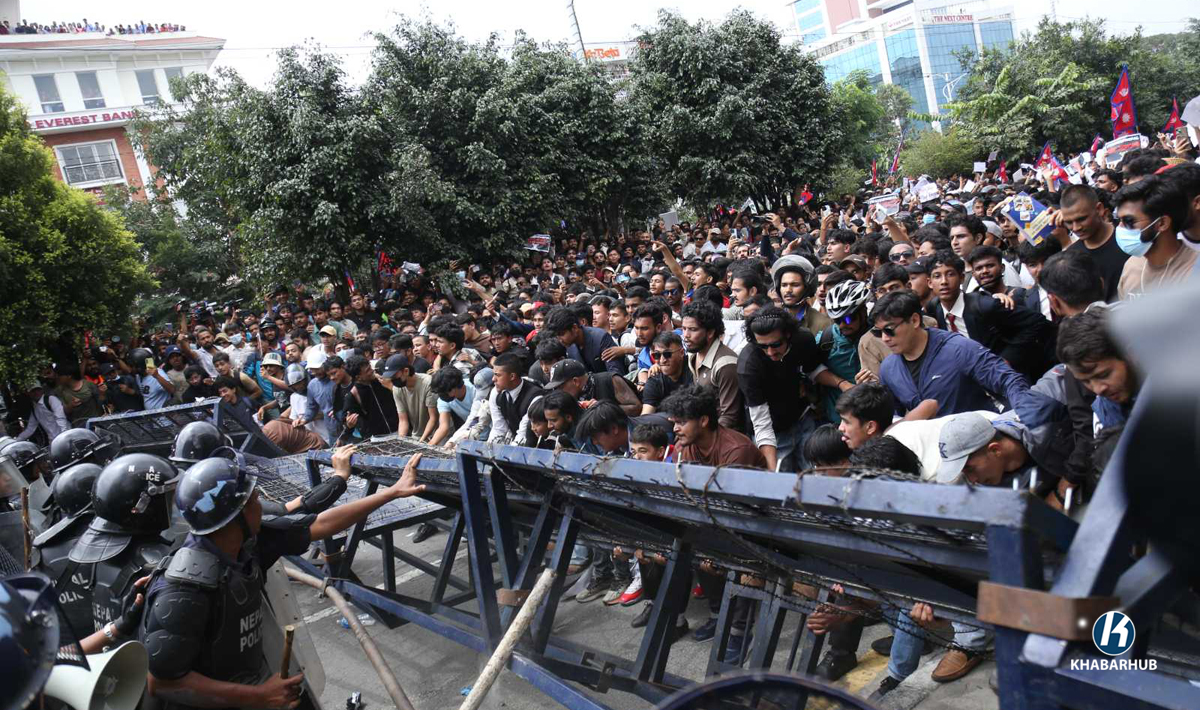
KATHMANDU: The streets of Kathmandu on Monday (September 8) remained alive with protest. A new generation — young, angry, and incredibly online — made its voice heard in a way the country hasn’t seen in years.
What started as a protest against a social media ban has grown into something much bigger. Thousands of young Nepalis, most of them from Generation Z, flooded into the capital, Kathmandu, to call out government censorship, corruption, and a political class they say no longer represents them.
The movement didn’t begin in a party office or through traditional activism. It started on TikTok, Instagram, and X (formerly Twitter), where users rallied around hashtags and videos calling for action. When the government announced plans to ban TikTok — citing concerns over “social harmony” and “national security” — it was seen by many as the final straw.
For a lot of these young protesters, the TikTok ban wasn’t just about one app — it was about something much deeper. They argue that this isn’t just about TikTok anymore, but about everything such as corruption, unemployment, and nepotism — tired of being ignored.
Now known online as #GenZAndolan, the movement took root in the streets. Demonstrators surrounded the Parliament Building in New Baneswor, Kathmandu from all directions, holding signs, chanting slogans, and using their phones not just to record — but to organize in real time.
As the protests gained momentum, so did the tension. Clashes broke out between protesters and police, with officers deploying tear gas in an attempt to control the crowds.
Nepal’s Gen Z came of age in the digital world, where social media is more than just a platform — it’s where they gather, speak out, and mobilize. They’ve grown increasingly frustrated with a political system led by older generations and riddled with corruption.
In response, the District Administration Office imposed a curfew in the Baneshwor area from 12:30 PM to 10 PM (Monday). Authorities said the move was necessary to “maintain peace and order,” but critics argue it only fuels more anger — and highlights how out of touch officials are with the country’s youth.
What sets this movement apart from past demonstrations in Nepal is its spontaneity — and its digital roots. Unlike previous protests, which were often tied to political parties or civil society groups, this one is leaderless, decentralized, and powered by smartphones.
Observers noted that this generation is different since they are digitally literate, politically conscious, and deeply frustrated with how things are run. And they’re not waiting for permission to speak out.
The Gen Z movement has also sparked conversations in households, classrooms, and social circles across the country — a sign that something bigger may be happening beneath the surface.
Despite the government’s tough stance, the protesters aren’t backing down. Hashtags like #BanCorruptionNotTikTok, #NepalNeedsChange, and #GenZAndolan continue to trend, even as talk of a full TikTok ban looms.
What happens next remains to be seen. Will the government choose dialogue over suppression? Will this movement bring about real change — or be silenced like so many before it?
For now, one thing is clear: Nepal’s Gen Z has found its voice. And it’s not going quiet anytime soon.
Nepal’s Gen Z came of age in the digital world, where social media is more than just a platform — it’s where they gather, speak out, and mobilize. They’ve grown increasingly frustrated with a political system led by older generations and riddled with corruption.





Comment