




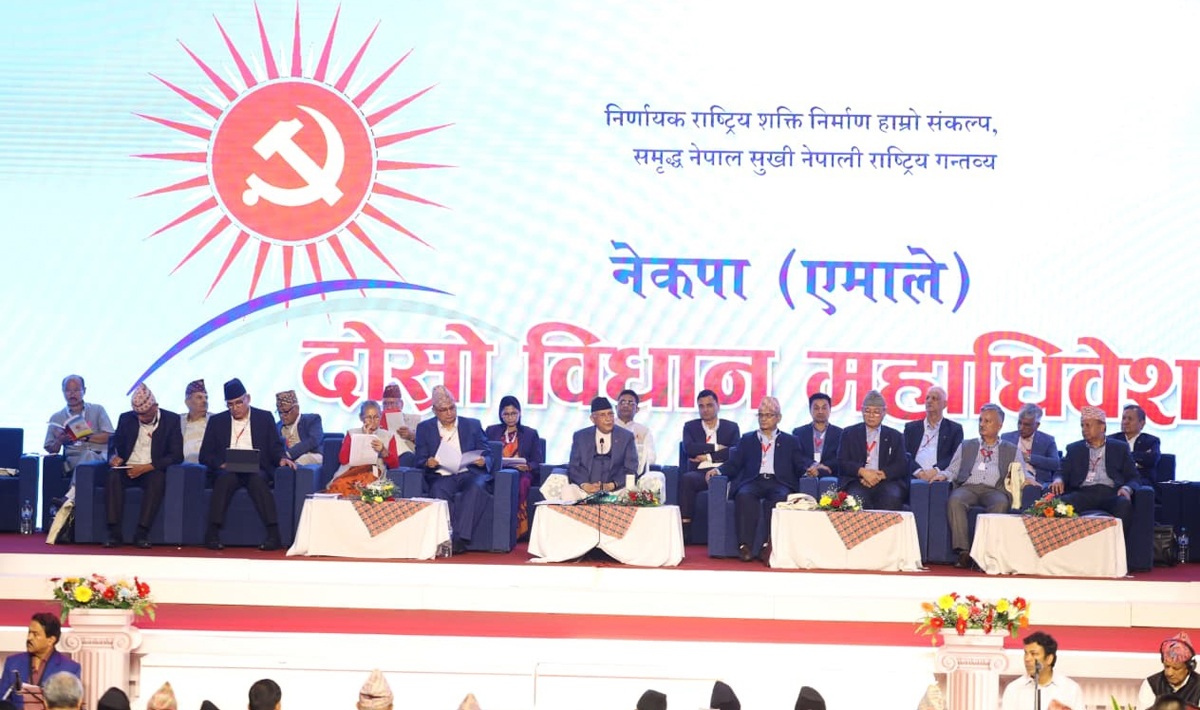
KATHMANDU: The second national statute convention of CPN-UML, held from September 5–7 at Sunrise Hall, Godavari, Lalitpur, passed a comprehensive 28-point contemporary proposal on Sunday.
The proposal highlighted Prime Minister and UML Chair KP Sharma Oli’s disagreement with the China-India trade agreement on Lipulekh during his visit to China noting that his stance elevated Nepal’s international standing. The document also cited bilateral and multilateral meetings held during the trip that further enhanced Nepal’s global visibility.
The convention acknowledged that, based on a seven-point agreement with Nepali Congress, the Oli-led government has laid the foundation for political stability in the country. It credited government initiatives for reviving the economy, accelerating major infrastructure projects such as roads, irrigation, and tunnels, and addressing issues faced by landless, squatters, and displaced populations.
The proposal stressed curbing regressive and anti-constitutional activities while strengthening democratic governance. It also expressed serious concern over growing internal migration from hills to plains, rural to urban areas, and abroad, urging immediate action by all three levels of government.
Additional points included addressing negative consequences of population growth and gender imbalance, ensuring timely enactment of federal laws (Education Act, Civil Service Act, Police Acts), and full commitment to press and expression freedom. The convention also called for legal frameworks regarding social media, cyber security, AI, e-commerce, and drone operations.
The convention condemned all forms of terrorism, citing the Israel-Palestine conflict, and demanded the safe release of abducted Nepali youth Vipin Joshi. Tributes were paid to deceased party leaders, including former Vice Chair Subash Chandra Nembang, and a seven-member committee led by Secretary Yogesh Bhattarai was formed to oversee follow-up actions.





Comment