




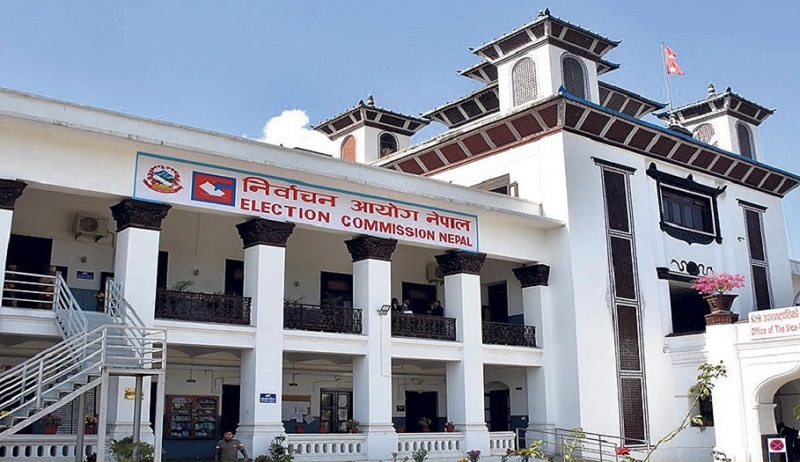
KATHMANDU: The ruling CPN-UML has expressed strong disagreement with the Election Commission’s newly introduced Political Party Self-Assessment Procedure 2025, claiming that it interferes with the internal affairs of political parties.
The UML has argued that self-assessment is an internal matter of political parties and that the Election Commission should not intervene in such processes. The Commission had invited political parties and stakeholders to provide feedback on the procedure by Thursday.
“Self-assessment falls under the internal domain of political parties. Articles 269 to 272 of Part 29 of the Constitution outline the legal provisions regarding political parties,” said UML’s Chief of Central Election Department, Neeraj Acharya. “Matters such as party formation, registration, and operation must respect party autonomy and align with the aspirations of the people.”
Acharya emphasized that political parties should operate through self-regulation and that their performance should be evaluated by the people through democratic mandates. As such, he maintained that the self-assessment guideline is a matter solely for the parties themselves, and the UML does not support the Commission’s initiative in principle.
This follows a similar objection raised a day earlier by an opposition alliance. On Wednesday, leaders from various parties, meeting at the call of Maoist Centre Chair Pushpa Kamal Dahal ‘Prachanda’ at Singha Durbar, concluded that the Election Commission’s self-assessment guideline contradicts the spirit of the Constitution and prevailing laws.
Leaders further warned that the Commission’s recent moves appear to be aimed at overstepping its constitutional boundaries, interfering in party autonomy, and weakening smaller and alternative political forces.
Speaking to the media after the meeting, Maoist Vice Chair Barshaman Pun stated, “We concluded that the Election Commission’s guideline lies outside the scope of the Constitution and existing laws. It appears to be a strategy to undermine parties other than Congress and UML.”





Comment