




KATHMANDU: Although Nepal has the capacity to welcome over 2 million tourists annually, the country has consistently fallen short of this target, drawing just over 1.2 million foreign visitors in 2024.
In 2020, Nepal launched the “Visit Nepal 2020” campaign, aiming to attract 2 million international tourists. However, the COVID-19 pandemic severely disrupted this initiative, bringing global travel to a halt. Six years later, even as global tourism has rebounded strongly, Nepal’s international tourist arrivals remain stagnant at around 1.2 million.
Over recent years, investments have been made to strengthen tourism infrastructure—ranging from roads and airports to telecommunications, accommodation facilities, and human resource development.
Nepal also continues to brand itself as a destination of “Lifetime Experiences.” Yet, the tourism sector has not gained the expected momentum. This raises a fundamental question: Why is Nepal, despite its vast natural beauty, cultural richness, and growing infrastructure, still lagging behind in attracting tourists?
Is it because we continue to rely on outdated tourism models from decades ago? Or has the government failed to treat tourism as a serious economic priority?
Political instability and frequent strikes further tarnish the country’s image, with negative media coverage spreading rapidly across international platforms. Unfortunately, Nepal has been unable to effectively respond or counteract this damage through coordinated public relations efforts.
The National Hotel and Restaurant Survey Report 2023/24, published by the National Statistics Office, reveals that Nepal now has 142,233 tourism-related establishments, including hotels, lodges, guest houses, resorts, homestays, hostels, restaurants, and catering venues.
However, despite this accommodation capacity, the overall occupancy rate last year was only around 40%.
According to Shraddha Shrestha, Senior Manager at the Nepal Tourism Board (NTB), the problem is not limited to hotel capacity. She notes that while there is sufficient infrastructure to accommodate more than 2 million tourists annually, broader issues—particularly air connectivity and airline capacity—remain major obstacles.
Although Nepal has recently built two additional international airports, they are yet to be fully operational. As a result, international air traffic remains heavily reliant on Tribhuvan International Airport (TIA), which suffers from congestion and has been marred by recurring controversies.
Furthermore, the condition of surface transport—especially roads connecting Kathmandu to Butwal and Pokhara—remains poor, creating further hurdles for tourists seeking to travel within the country.
Nepal’s safety record in domestic aviation has also harmed its global image, with frequent crashes making international headlines.
Shrestha adds that the 1.2 million figure only includes air arrivals, excluding Indian tourists who travel overland. If all types of arrivals were considered, the total tourist numbers could already exceed 2 million.
Yubika Bhandari, General Secretary of the Nepal Association of Tour and Travel Agents (NATTA), echoes similar concerns. She highlights poor international air connectivity as the most pressing challenge facing Nepal’s tourism sector.
With limited operations by Nepali airlines on international routes, tourists are largely dependent on foreign carriers. This creates a supply-demand mismatch, pushing up travel costs.
As a result, Nepal often loses out to competing destinations like Vietnam or Sri Lanka, which offer more affordable and accessible air travel options.
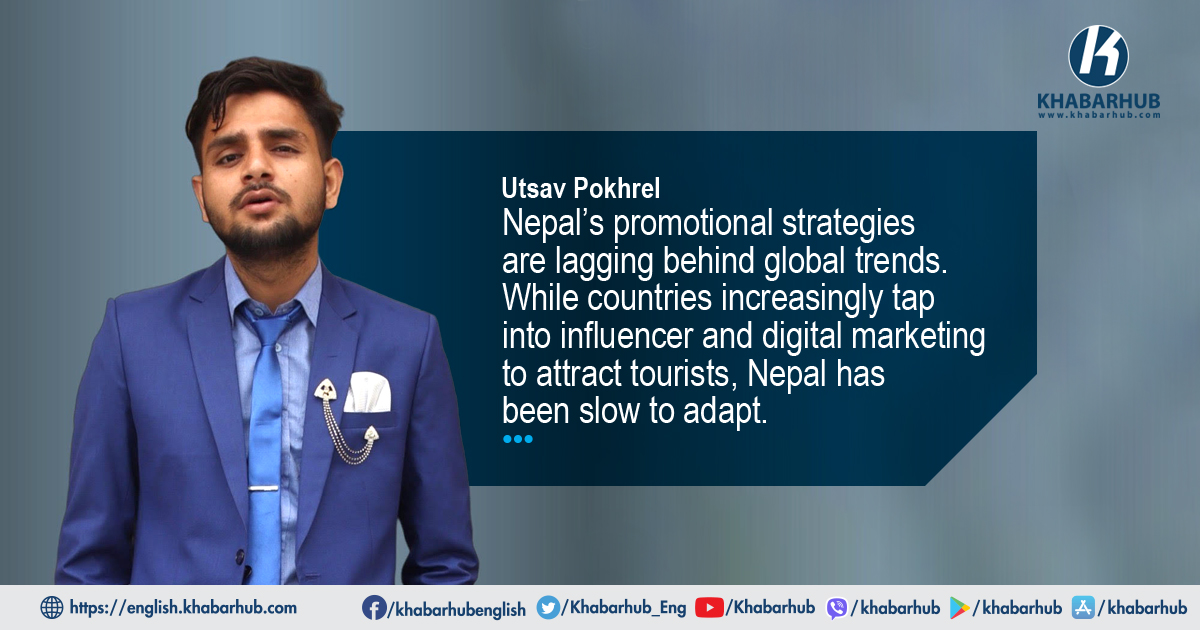
Bhandari also points out that Nepal’s promotional strategies are lagging behind global trends. While countries increasingly tap into influencer and digital marketing to attract tourists, Nepal has been slow to adapt.
Political instability and frequent strikes further tarnish the country’s image, with negative media coverage spreading rapidly across international platforms. Unfortunately, Nepal has been unable to effectively respond or counteract this damage through coordinated public relations efforts.
Despite these multiple concerns, both Shrestha and Bhandari agree on one central issue: inadequate air connectivity remains the single largest barrier preventing Nepal from realizing its tourism potential.




Comment