




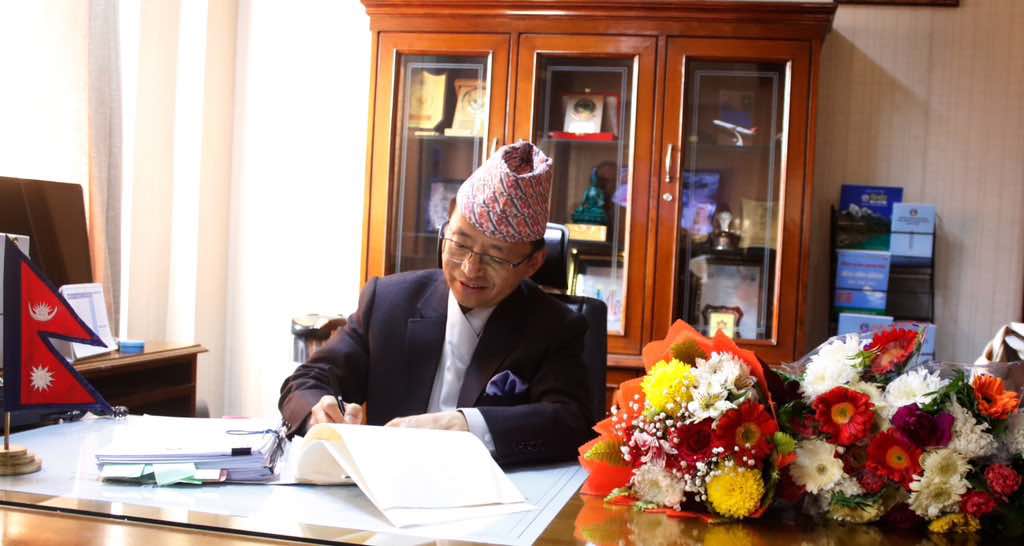
KATHMANDU: Secretary of the Ministry of Foreign Affairs, Amrit Bahadur Rai, has emphasized that the upcoming Sagarmatha Sambaad will be instrumental in drawing international attention to the climate challenges faced by mountain communities.
The multi-stakeholder dialogue, scheduled from May 16 to 18 in Kathmandu, aims to bring mountain issues to the forefront of global climate discourse.
Speaking at a pre-event organized by the People’s Forum in Lalitpur, Secretary Rai said that the intensifying climate crisis poses a grave threat to human life in mountain regions. He stressed that the concerns of mountain communities have long been sidelined in international negotiations, including the Paris Agreement, and that Sagarmatha Sambaad seeks to bridge this gap.
“We will use the Sagarmatha Sambaad to elevate the voices of mountain people, which have often gone unheard in global climate platforms,” Rai said.
Thakur Bhandari, Chairperson of the Federation of Community Forestry Users Nepal (FECOFUN), called for 80 percent of the Climate Resilience Fund to be allocated to local governments.
He urged the state to highlight the contributions of community forestry to conservation and to bring the lived experiences of forest users affected by climate change into the dialogue.
Arjun Bhattarai, President of the NGO Federation Nepal, underscored the importance of ensuring inclusive participation in the Sambaad, advocating for the meaningful involvement of all relevant stakeholders.
The event, organized by the People’s Forum—which includes representatives from grassroots campaigns, civil society, human rights organizations, children, persons with disabilities, marginalized and indigenous communities, mountain dwellers, and residents of lowland areas—called for climate justice through equitable distribution and protection of shared natural resources.
Participants also demanded fair access to land, forests, and water, and emphasized empowering local communities to manage these resources sustainably. The gathering highlighted the urgent need to build community resilience to climate impacts at the local level.




Comment