




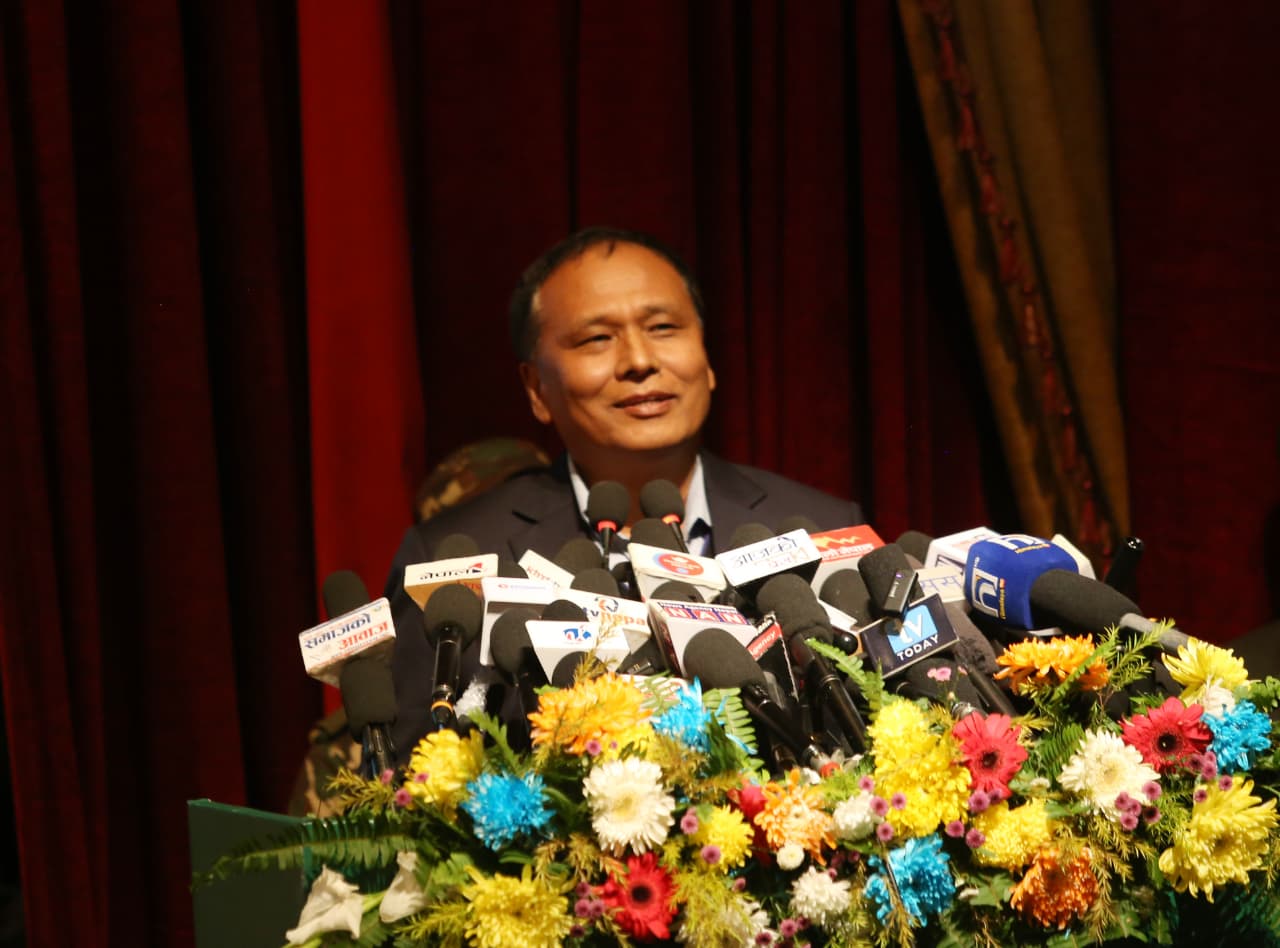
KATHMANDU: Energy, Physical Infrastructure, and Urban Development Minister Kulman Ghising has stated that the leadership of change must now come from new and alternative individuals, institutions, and political parties.
Speaking at the formal launch of the Ujyalo Nepal Party in Kathmandu on Wednesday, Ghising said the forces regarded as alternatives should unite to lead change in line with the aspirations and wishes of the people.
Highlighting the need to make current reforms results-oriented, he stressed that a new government and youthful leadership are essential. Ghising noted that the Gen-Z movement has placed anti-corruption at the forefront of its agenda, asserting that a corruption-free nation would pave the way for prosperity.
“Had the right individuals been entrusted with responsibilities from the prime minister down to local levels, the Gen-Z movement would not have reached its current state. Change can occur quickly if the right people are in the right positions,” Ghising said.
He added that individuals capable of delivering big speeches may still fail to ensure national progress, stressing the importance of tangible results over rhetoric. Accepting the challenges following the Gen-Z movement, Ghising said he is fully committed to fulfilling his responsibilities as part of the government.
Ghising also highlighted that the current government remains focused on institutionalizing the post-Gen-Z movement reforms to take the country forward.
Meanwhile, former minister Sumana Shrestha called for unification among the so-called alternative forces, warning that internal disputes could allow established parties to dominate through elections. She urged the Ujyalo Nepal Party to seriously address the public’s current needs and agenda.
At the event, party leader Reema Bishwakarma unveiled the party’s manifesto. The Ujyalo Nepal Party’s agenda includes amending certain provisions of the current constitution for a brighter future, ensuring proportional and inclusive representation through electoral reforms, and establishing directly elected provincial chief ministers with five-member cabinets.



Comment