




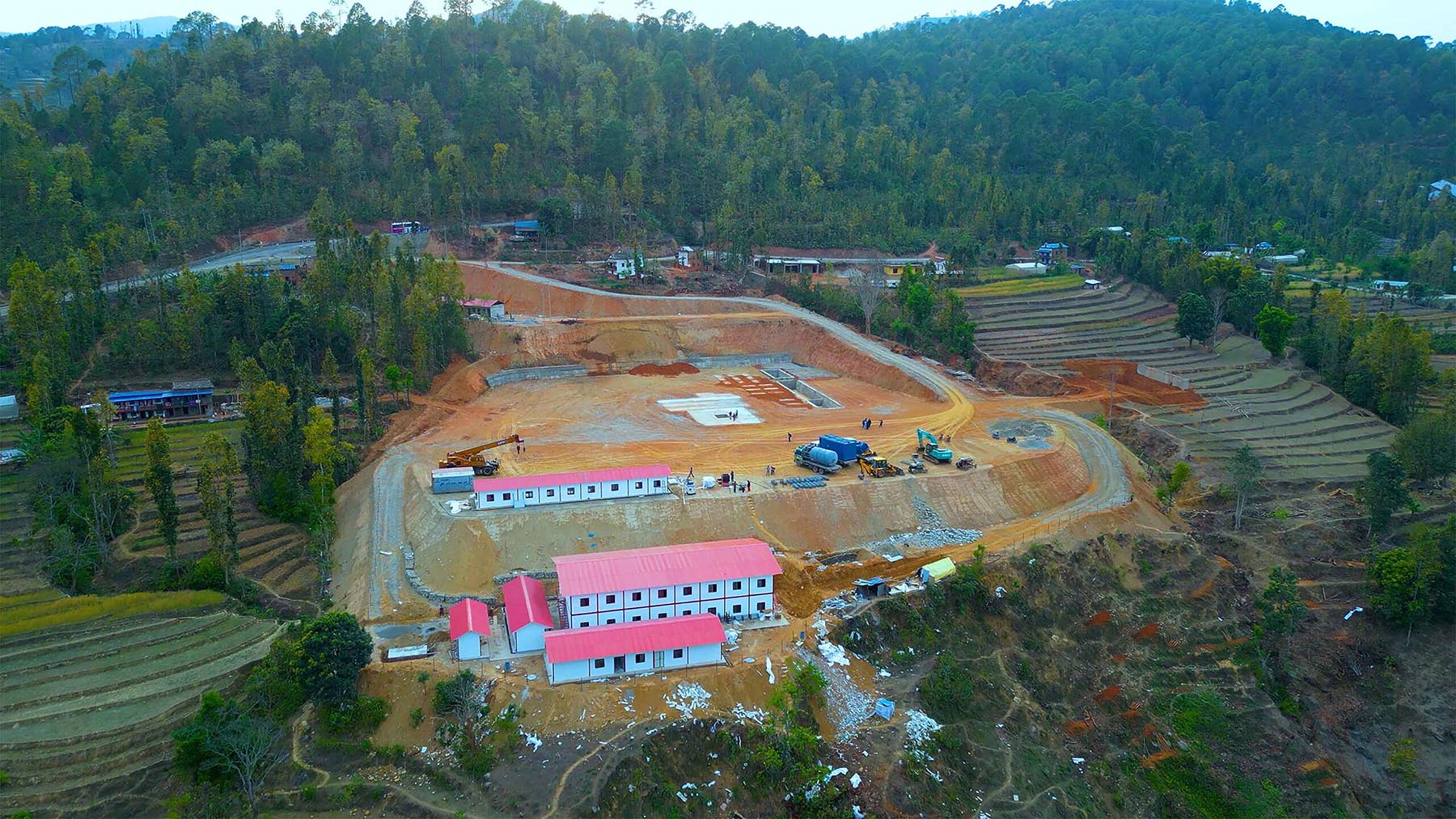
DAILEKH: The once-bustling petroleum exploration site in Jaljale, Bhairavi Rural Municipality–1 of Dailekh, has now fallen quiet.
Where Chinese and Nepali technicians once worked round the clock, only the presence of Armed Police Force guards signals the significance of the area. Excitement remains high nationwide after preliminary findings confirmed a massive reserve of natural gas in the region.
Led by Nepal’s Department of Mines and Geology in partnership with China’s Geological Survey, the exploration began in April 2021. The first drilling reached a depth of 4,013 meters, from which samples confirmed reserves of 1.12 billion cubic meters of methane gas. This is just the initial result from one of four prospective wells. Early estimates suggest the Jaljale area could hold a total of 430 billion cubic meters of gas, enough to meet Nepal’s demand for around 50 years.
“We are awaiting the final detailed report of the collected samples, which the Chinese team is currently analyzing,” said project spokesperson and geologist Prakash Luitel. According to him, the final exploration report is expected by December 2025, and it will include comprehensive geological and geophysical data essential for future steps.
The government has already expressed determination to fast-track the project. Prime Minister KP Sharma Oli has directed officials to move toward commercial production. A four-member study committee, led by Nepal Oil Corporation director Binitmani Upadhyaya, has been formed to assess feasibility and preparatory work for potential extraction. The committee has conducted a field visit to Dailekh and is also examining the possibility of setting up a chemical fertilizer plant in neighboring Surkhet.
Nepal Oil Corporation’s executive director Chandika Prasad Bhatta said the study will focus on how to utilize the natural gas for maximum national benefit. “The committee is assessing potential uses, required infrastructure, and cost factors. The report will guide the government’s next steps,” he noted.
Petroleum exploration in Dailekh traces back to 1979, with locals long aware of naturally seeping gas and oil-like substances in the area. Efforts intensified after the 2015 Indian blockade, which exposed Nepal’s vulnerability to external energy supplies. In 2019, Nepal and China signed a government-to-government agreement, leading to the current exploration project funded entirely by China as a pilot initiative. The initial estimated cost was Rs 2.5 billion, though delays caused by the COVID-19 pandemic and logistical challenges have raised expenses.
For locals, the discovery represents more than just energy independence. The project has generated jobs and raised hopes of industrial growth in the region. “If commercial production succeeds, it could transform Dailekh’s economy and reduce Nepal’s reliance on imported fuel,” said a local leader.




Comment