




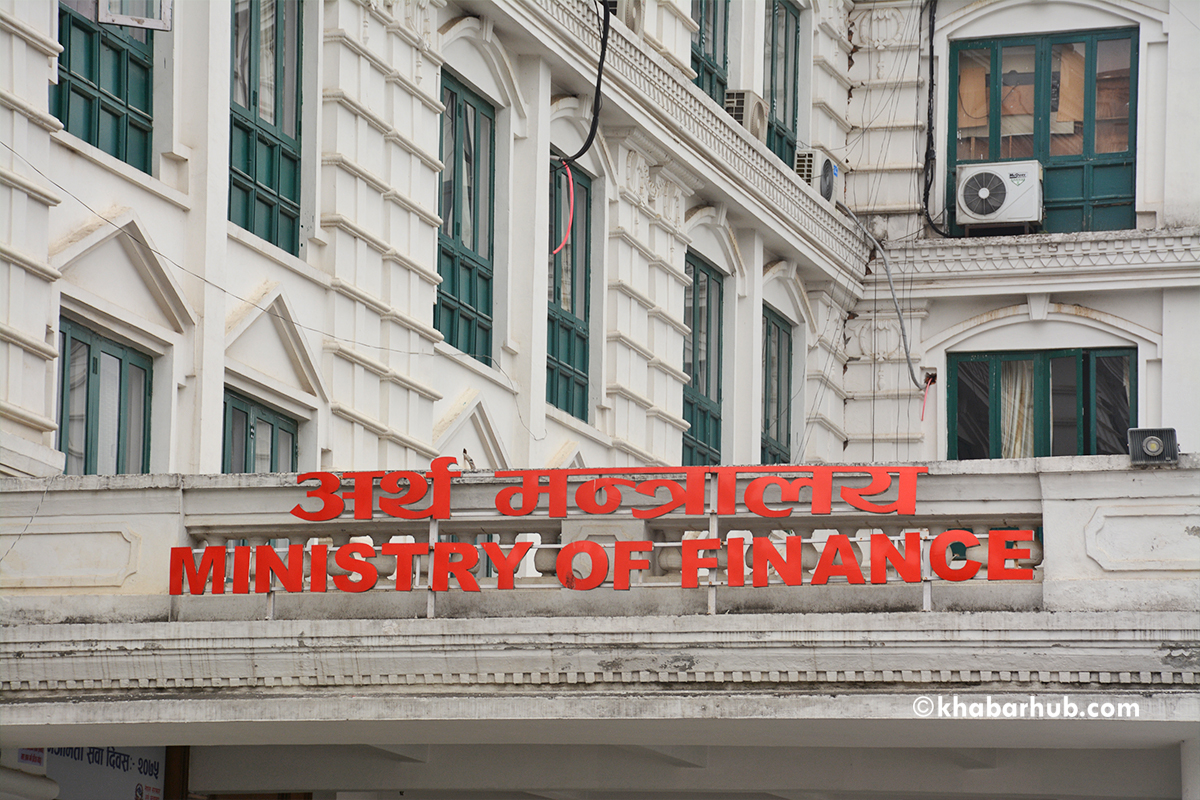
KATHMANDU: Nepal’s improving economic indicators, particularly the rise in per capita income, have led to an increase in the interest rates on foreign loans obtained from bilateral and multilateral development partners.
The change will naturally raise the cost of foreign-funded projects, government officials confirmed.
According to the Ministry of Finance, agencies such as the World Bank, Asian Development Bank (ADB), International Monetary Fund (IMF), and bilateral lenders including China, Japan, and India adjust interest rates based on a country’s income level and debt repayment capacity.
In the case of the World Bank, loans are provided through the International Bank for Reconstruction and Development (IBRD) for lower-middle-income countries and the International Development Association (IDA) for the poorest nations.
The interest rate for Nepal’s concessional loans, which stood at 0.75 percent, has now doubled to 1.5 percent effective July, after Nepal’s per capita national income crossed USD 1,135 over the past three years.
Officials said Nepal opted for a fixed interest rate instead of a variable one to minimize risk. Interest rates for loans from the ADB and Japan International Cooperation Agency (JICA) are also set to increase as they follow similar criteria based on per capita income and GDP growth.
Data from the Public Debt Management Office show that over the past 10 years since the promulgation of the constitution, Nepal borrowed Rs 1.08 trillion in foreign loans. Of this, Rs 280.09 billion, over a quarter, was used solely for debt repayment, while Rs 807 billion was mobilized for development projects and programs.
In the fiscal year 2024/25, the government signed foreign loan agreements worth Rs 215.54 billion, mainly with multilateral agencies. Major sectors included transport infrastructure, disaster management, agriculture, irrigation, water supply, energy, and climate adaptation. The largest commitments came from the ADB and the World Bank, along with contributions from IFAD and the Strategic Climate Fund.
Despite growing commitments, the utilization of foreign loans has declined in recent years. In FY 2023/ 24 80/81, the government managed to use only Rs 111.23 billion of foreign assistance, a sharp drop from Rs 209.43 billion in FY 2020/21. Last year, Nepal mobilized Rs 125.39 billion in loans, far short of the Rs 217 billion target.
The government has set an ambitious target to mobilize Rs 233.66 billion in foreign loans in the current fiscal year, but falling absorption rates and rising interest costs could complicate debt sustainability.






Comment