




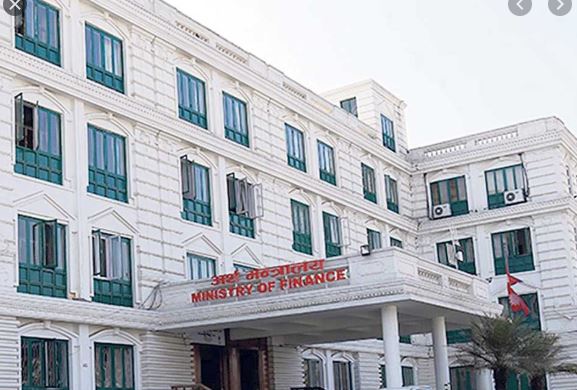
KATHMANDU: The Finance Ministry officials briefed Finance Minister Bishnu Prasad Poudel on Tuesday about Nepal’s economic challenges and the necessary measures to address them.
According to a press note issued by the Ministry, there are 46 identified challenges in the country’s economy, requiring action in 29 sectors to overcome these issues.
The ministry’s secretaries and joint secretaries outlined the country’s economic status and proposed solutions to Minister Poudel, who then directed them to prioritize these challenges for resolution.
Key challenges highlighted include the slow growth rate in the economic sector despite resource availability, limited growth in savings, consumption, and investment, poor investment in the productive sector, and a significant imbalance in the import-export ratio.
Other concerns include unstable and slow economic growth, a substantial financing gap, limited gross domestic savings, and significant internal migration leading to population declines in mountainous, hilly, and rural areas.
Additional challenges include the limited contribution of the productive sector to economic growth, declining industrial sector productivity, an import-based revenue system, poor export status, a massive trade deficit, marginal growth in revenue collection and expenditure, ineffectiveness in capital expenditure, rising debts, and a significant financial burden for loan repayment.
To address these issues, the Ministry has proposed reforms in 29 sectors.
These include ensuring effective public expenditure prioritization, improving capital expenditure capacity, emphasizing fiscal strengthening, prioritizing production-based revenue, promoting effective debt utilization, reducing financing risks, fostering economic growth by creating an investment-friendly environment, and increasing investment in the productive sector.
The Ministry also suggested measures to accelerate the current economic slowdown, such as removing internal obstacles to attract foreign direct investment (FDI), focusing on hydropower projects and transmission lines, developing quality road networks, aligning rural roads with agricultural production and marketing, promoting the effectiveness of capital expenditure, and applying austerity measures in administrative costs.
Furthermore, the Ministry recommended centering government investment on economic infrastructure development, mobilizing foreign grants and concessional loans for national priority projects, and utilizing climate change-related funds.
Other proposed solutions include maintaining the government’s reserve fund, discouraging non-budgetary demands, ensuring loan disbursement in the productive sector, and controlling bad debts.
Officials also advocated for relaxed monetary policies to reduce fiscal tool costs while maintaining stability, providing project-based loans for SMEs, ensuring effective fiscal sector regulation, and developing a secondary regulatory mechanism for the cooperative sector.
Additionally, they suggested encouraging the use of remittance in the productive sector, making migration work more effective, and implementing policy and legal reforms to increase foreign investment inflows.






Comment