




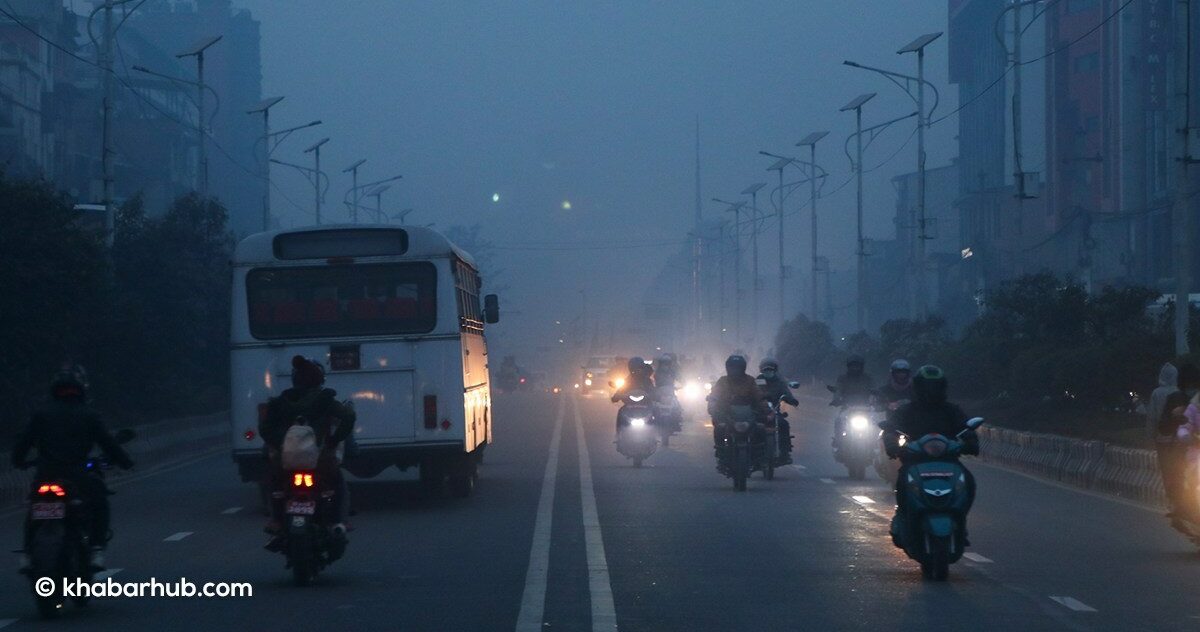
As winter tightens its grip on the picturesque Himalayan nation, Kathmandu finds itself in a hazardous dance with air pollution, ranking alongside metropolises like Delhi and Beijing as one of the world’s most polluted capitals.
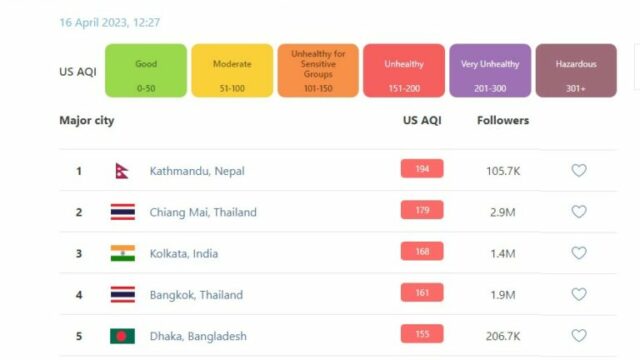
In April of this year, the Himalayan capital grabbed headlines as the world’s most polluted city, recording alarming PM2.5 levels reaching 194 micrograms per cubic meter (μg/m3).
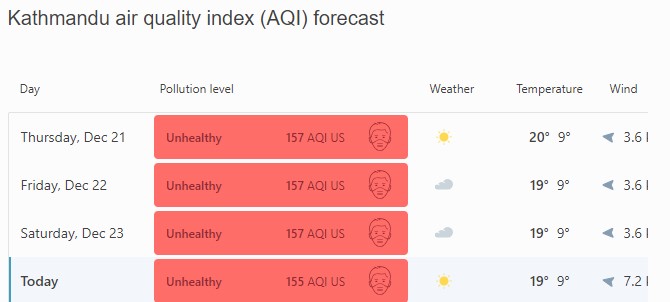
On a grim Saturday, Kathmanduites inhaled the world’s 13th most polluted air, with PM2.5 levels hitting a staggering 158 micrograms per cubic meter (μg/m3), far surpassing the WHO’s annual air quality guidelines. Living under a haze of smog has become the norm, fueled by vehicular emissions, burning of organic matter, plastics, construction dust, and the ominous presence of small industries.
According to IQ AirVisual, a Swiss authority on global air quality, PM2.5 in Kathmandu is currently 12.7 times the WHO guideline value, painting a bleak picture for residents who are unwittingly embracing a life under the shadow of severe pollution.
As the UN Environment Program highlights, air pollution is a global health crisis, responsible for an alarming 7 million premature deaths each year. In 2019, a staggering 99% of the world population lived in areas where the WHO’s air quality guidelines were not met. The consequences were dire, with four million deaths attributed to fine particulate outdoor air pollution, hitting East Asia and Central Europe the hardest.
The deadly repercussions of PM2.5 contamination range from strokes, heart diseases, and lung diseases to lower respiratory illnesses and cancer. Beyond these, air pollution contributes to diabetes, impedes cognitive development in children, and takes a toll on mental health.
Adding to the vulnerability, studies indicate a link between air pollution and threats posed by tuberculosis and COVID-19. Infants, in particular, bear the brunt, with WHO data revealing that the combined effects of ambient and household air pollution result in 6.7 million premature deaths annually, with 89% occurring in low- and middle-income countries.
The World Bank underlines the staggering cost of health damages related to air pollution, estimating a global toll of $8.1 trillion, equivalent to 6.1% of the world’s GDP.
In the heart of this atmospheric crisis, Kathmandu is witnessing a perilous decline in air quality that jeopardizes public health. While precise data on the extent of the damage may be elusive, the visible consequences are merely the tip of a looming iceberg.





Comment