




Doctors have noted a recent rise in patients with blood-related issues.
Similar to other ailments, the incidence of blood-related diseases has also seen an increase.
Anemia, a condition not always apparent to everyone, is one such ailment linked to blood disorders.
It is a genetically inherited disease affecting red blood cells, leading to a reduction in their numbers within the body.
Hematologist Dr. Niraj Kumar Singh sheds light on the topic of anemia and its treatment in the following edited excerpt from a conversation with Khabarhub.Top of Form
What is anemia, and how do we understand it?
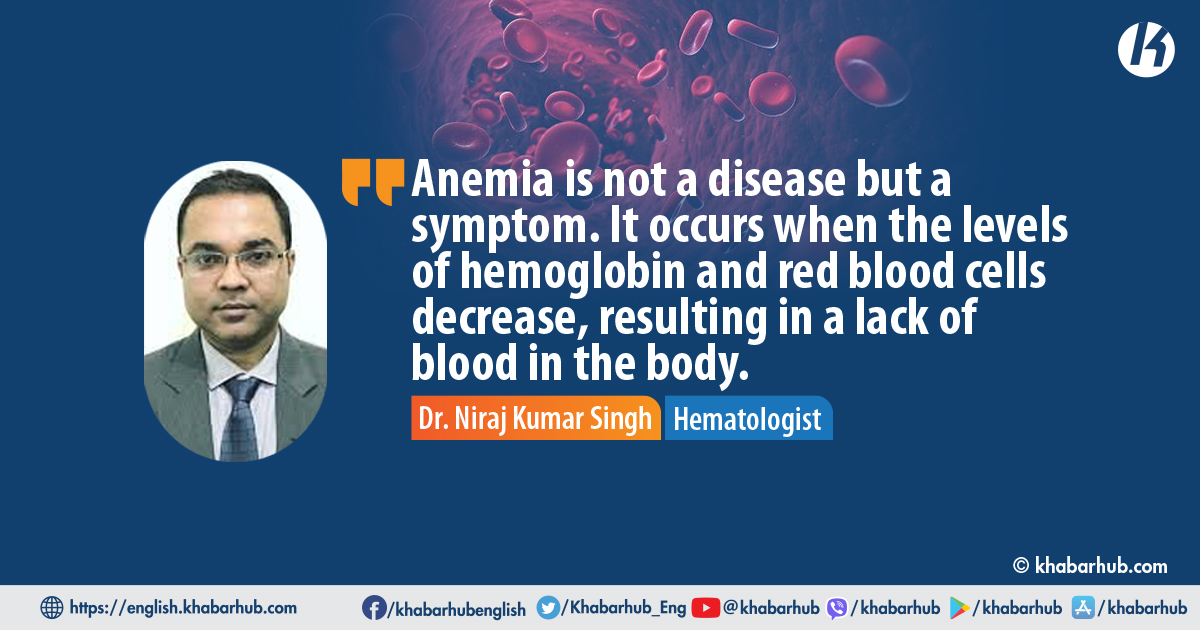
Anemia is not a disease but a symptom. It occurs when the levels of hemoglobin and red blood cells decrease, resulting in a lack of blood in the body.
In simpler terms, anemia is the deficiency of blood and is often caused by factors such as iron and vitamin B12 deficiency.
What are the causes of anemia?
Ringworm is a major cause of anemia, and preventing lice entry by consuming green vegetables is recommended.
Additionally, anemia can result from various factors such as a lack of iron, vitamin B12, micronutrients, blood formation problems, and wastage in the body.
Who is more prone to anemia, men or women?
Anemia is more prevalent in women, especially those with bleeding issues. Heavy menstrual bleeding can contribute to anemia.
In which age group is anemia commonly observed?
Anemia can occur in any age group. It may manifest in childhood if inherited, become more pronounced in the first 3 to 6 months of a newborn, and cause issues for adolescent girls during their first period.
Pregnant women are also at risk due to iron deficiency.
What are the risks if anemia is not treated in time?
Lack of red blood cells can lead to problems such as early fatigue, reduced energy, and even heart failure.
The body may not receive sufficient oxygen, causing multiple health issues.
How is anemia treated in the hospital?
Treatment involves identifying the cause, which may include addressing underlying issues like blood cancer or providing iron pills for iron deficiency.
Investigating the root cause is crucial before initiating treatment.
How can one prevent anemia or address it early on?
Prevention involves maintaining a healthy lifestyle and diet. Women, especially those with excessive menstrual bleeding, should be aware of the risk and consume iron-rich foods like green leafy vegetables, legumes, fish, meat, liver, and lungs.
Regular testing for vitamin B12 deficiency is recommended for both vegetarians and non-vegetarians, with anemia checks every 6 months.






Comment