




KATHMANDU: Uterine rupture is also understood as a blowout of the uterus. Many women may have problems with such rupture due to the lack of care after childbirth.
Particularly in women who give many births, have shorter birth periods, lack nutritious food after delivery, suffer lack of rest, overwork, and home delivery without the care of a trained nurse, women are more likely to have this uterine rupture.
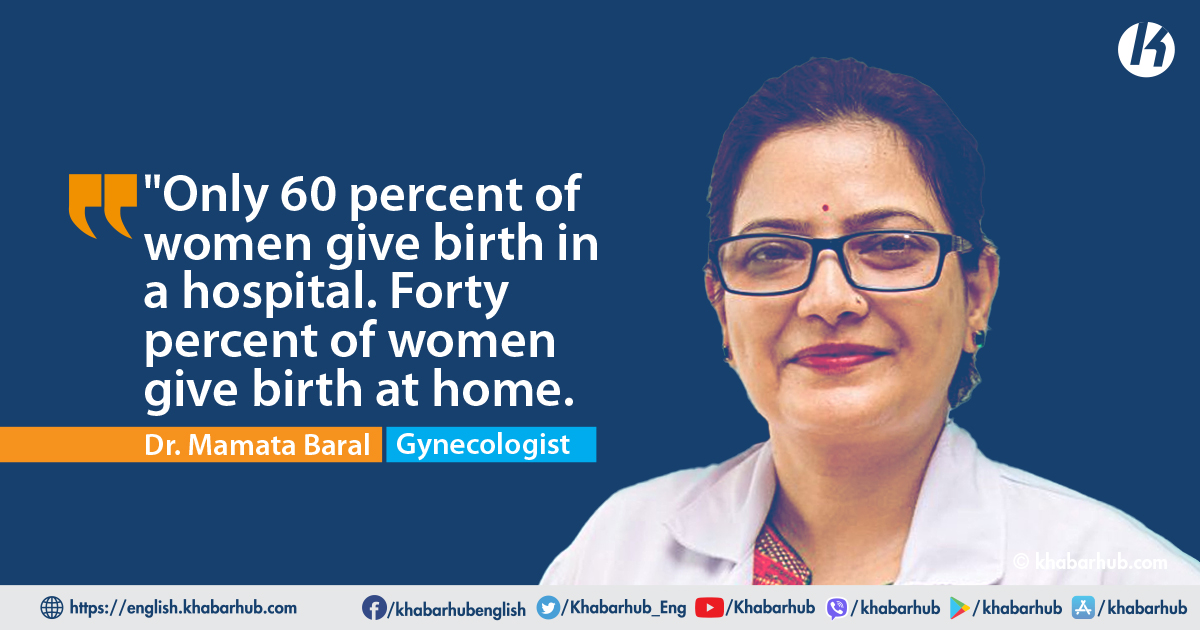
In Nepal, only 60 percent of women give birth in a hospital. Forty percent of women give birth at home. Since there is no trained nurse to deliver at home, forcing a delivering mother to push a child to the abdomen with the help of a neighbor can have a serious effect on the small abdomen; this might affect the uterus.
The problem of uterine prolapse also increases when a child is born again in 6 months after giving birth a child. When a woman reaches the age of 50, she lacks the estrogen hormone which keeps her fertility healthy; as a result, the uterus becomes insecure.
A recent medical study in Nepal has shown that 6 percent of women have uterine prolapse. Uterine rupture is a common problem among women in Nepal’s hilly and mountainous regions.
How to understand the problem of uterine prolapse?
The problem of uterine prolapse is a common condition in our country. The uterus is between the bladder in the front and the rectum in the back. If this organ falls from its place for any reason, it is called uterine rupture.
Our body has a different mechanism to support it. If this mechanism is disturbed, the uterus collapses. The uterus is divided into first, second, and third degrees. It does not fall completely at the beginning.
At first, it falls slightly from its place. At that time the patient is not uncomfortable. Clinically, we do not see this. In the second degree, the lower part of the uterus can be seen even when looking at the clinic as if something is sitting in the mouth of the uterus.
Without using any tools, we can see the uterus come out. Normally it should not be seen. In the third degree, the uterus hangs out. It also pulls down the urinary bladder and the rectum. The patient says it is dripping from her vagina. If the uterus has collapsed, back pain occurs. Something seems to be hanging in the vagina and makes you feel pain.
Causes of uterine prolapse
If a woman is deficient in nutrients during childbirth, has poor hygiene, and does not have the support of relaxation muscles, she is likely to suffer uterine prolapse.
If the baby is not born safely or in a hospital, the uterus collapses due to stress on the fascia and ligaments that support the uterus. Usually when you have a baby, if you put a lot of force on the cervix without opening it, it will have an adverse effect.
Sometimes, if the baby does not come out even when the mouth of the uterus is opened, the uterus collapses, affecting the muscles and ligaments. The uterus collapses if too much force is applied to remove the placenta during childbirth.
This problem is seen in women who smoke, cough and are malnourished. Coughing puts a lot of force inside the stomach. Hormonal deficiency occurs in dry menstrual women and affects the muscles. This problem can be seen even after the menstrual period stops.
Symptoms of uterus rupture
Not all women with back pain have a rupture. If the back does not hurt during sleep except at other times, the uterus has collapsed. It is more common in women who give birth quickly, do not eat nutritious food and do not maintain hygiene.
When the uterus collapses, the urinary bladder and the stool sac are pulled down at the same time, this results in urination-related troubles like frequent urination.
When this happens, they see the problem of urinating tract infections (UTI). As the stool bag is also pulled down, a lot of force has to be applied while excretion. If the uterus is completely protruding for a long time, there will be a complete wound. It causes water to flow mixed with blood.
When problems such as difficulty in walking, wounds, and bleeding occur it becomes very difficult for a woman.
The problem of uterine prolapse is hereditary
The problem of uterine prolapse is divided into two parts: congenital and acquired. This problem is common in women who have a quick baby and have many children. But, even if the uterus of an unmarried person falls, it becomes congenital.
The muscles that support it are born with uterine prolapse. In unmarried woman, the whole uterus does not fall off. However, the lower part of the uterus protrudes.
Vulnerable group
It can be seen in women of all age groups. This problem has been occurring even after menstruation has stopped with a pregnant woman. During pregnancy, you should eat nutritious food and exercise. Don’t lift too heavy. This problem can also be seen when doing a lot of work during pregnancy.
This problem is less common in urban women as they do not carry heavy loads. This problem is more prevalent among rural women as they carry heavy loads and do housework soon after delivery.
How is the treatment done?
Surgery is the treatment for uterine prolapse. During the operation, along with the uterus, urinary bladder and defecation sac also need surgery.
We put them in the vagina like a thief and stick the uterus in them. This is not a permanent cure. The permanent cure for uterine prolapse is operation.
Risk of not treating on time
If not treated in time, the wound will heal. Many women endure long periods without treatment. Later, they begin to bleed, and then they come for treatment. The first and second stages of uterine rupture are not so difficult.
But, after getting out, it becomes difficult. If not treated in time and lack of hygiene, the risk of cervical cancer is high.
What can be done to prevent problems?
We need to eat nutritious food to avoid uterine prolapse. One should avoid giving birth too fast, one should not give birth to too many children. The baby should be delivered safely or at a health facility.
Adolescents should be fed nutritious food, women should be married only after reaching the age of at least 20, and children should be born only after the age of 20.
One should get a regular health check-up during pregnancy and rest for up to 6 weeks after delivery. One should avoid carrying heavy loads after child birth, and during pregnancy and other vulnerable periods.






Comment