




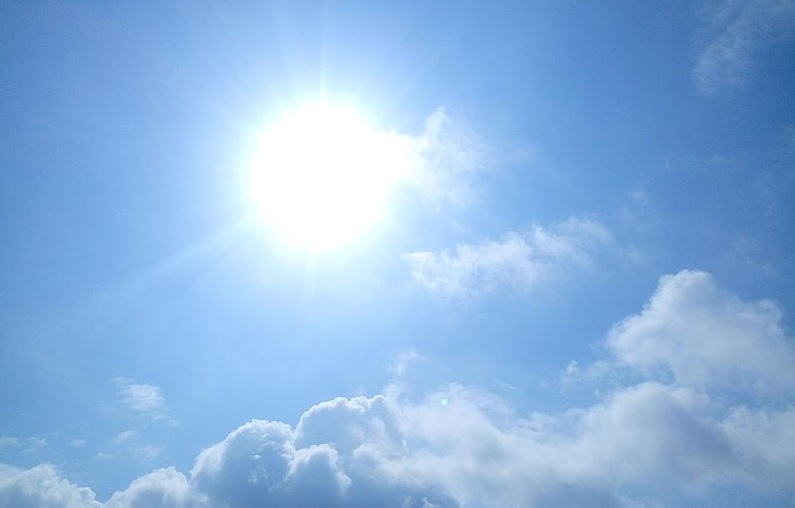
KATHMANDU: The Meteorological Forecasting Division (MFD) formally announced that monsoon has ended in Nepal from Friday.
Monsoon has withdrawn from all parts of the country from Friday, according to meteorologists at MFD under the Department of Hydrology and Meteorology (DHM) on Saturday.
Monsoon usually begins from June 10 and lasts till September 23. It remains effective for around 105 days in Nepal. This year monsoon had begun from June 12.
The MFD had, however, already announced on Octover 1 that monsoon had started receding from Karnali, Sudurpaschim, and State-5 in western Nepal.
“This year, monsoon stayed for a total of 127 days in which it remained active just for just about 100 days,” senior meteorologist Min Kumar Aryal said.
According to him, monsoon withdrawal date is being pushed back for the past few years in Nepal than its normal cessation period (September 23), he said.
“This is all because our weather system is dependent on the monsoon trough that develops in the Bay of Bengal, in India,” he said. So, monsoon cannot withdraw from Nepal unless it formally withdraws in India,” he said.
When asked about some details about monsoon and overall rainfall measured across the country, the MFD requires a few more days to collect detail report of the monsoon of this season, he said.
Aryal, however, said this year too, the whole country received average rainfall although the report of the losses of human lives and property damage were huge.
This happened mainly due to sporadic but heavy rains in some specific places like Sindhupalchowk in the east, and Baglung, Gulmi and Kalikot in the west.
He also said this time before the onset of the monsoon, some regions of Nepal had already been saturated during the time of pre-monsoon, and that had resulted in heavy landslides in many places of the country where the topography is weak, he said.
Another meteorologist Shanti Kandel said Nepal receives an average of 80 per cent annual rainfall during the monsoon, which originates in the Bay of Bengal and moves along the southern flanks of the Himalayas, bringing rains to Nepal.
The average annual rainfall in Nepal is 1,600 mm, but it varies from place to place depending on the climatic conditions, she said.
The South Asian Climate Outlook Forum had also issued its seasonal outlook, predicting normal rainfall over large tracts of South Asia, including Nepal.
This time the country had experienced most probably the longest monsoon after 2013, lasting 127 days from the date of its start on June 12.
In 2013, monsoon also lasted for 127 days beginning on June 14.




Comment