




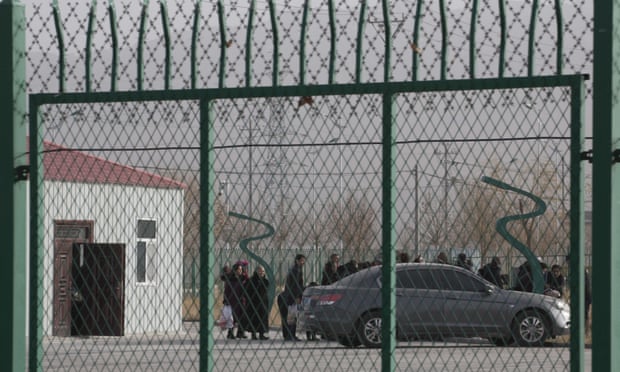
BEIJING: A leak of a list of prisoners from a Chinese internment camp has shown how a government data program has been targeting Muslim minorities for detention over transgressions that include simply being young, or speaking to a sibling living abroad, according to The Guardian.
A database obtained by Human Rights Watch has shed a new light on how authorities in China’s Xinjiang use a “predictive policing” network to track individuals’ personal networks, it said.
According to the report, the list has details of over 2,000 Uighur detainees held in Aksu prefecture between the years 2016 and 2018 — apparently imprisoned after they were flagged by the Integrated Joint Operations Platform (IJOP), which is a database that combining personal data scooped from automated online monitoring and information entered into a bespoke app by authorities, the report added.
It also includes information ranging from physical characteristics of people to the color of their vehicle or their personal preference of using the front or back door to enter their house besides the software they use online and their regular contacts, according to The Guardian report.
The report has quoted Maya Wang, senior China researcher at HRW saying that the Aksu List provides insights into how China’s brutal repression of Xinjiang’s Turkic Muslims is being turbocharged by technology.
According to The Guardian report, most of those on the list were held for lawful and non-violent behavior, but some are simply noted as “flagged by IJOP”, without further information about how authorities reached a decision with such painful implications.
Chinese authorities initially denied the existence of the camps, the report said adding, “But more recently has claimed they are a vital part of the fight against extremism and terrorism.”
The details on the list also show a broad detention dragnet.
According to Wang, this contradicts the Chinese authorities’ claims that their ‘sophisticated’, ‘predictive’ technologies, like the IJOP, are keeping Xinjiang safe by ‘targeting’ criminals ‘with precision’, The Guardian said.
(With inputs from The Guardian)






Comment