




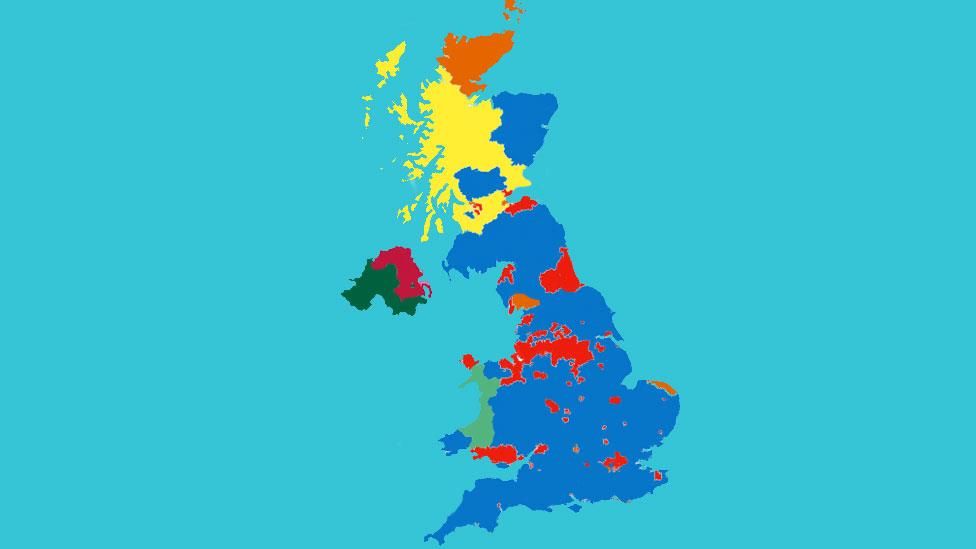
LONDON: A new study from consumer magazine Which? has claimed that people living in 36% of UK constituency areas (236 of the 650 total) do not have access to “decent 4G [mobile] or broadband” services. The study was based on old data from Ofcom and found that areas in rural Scotland and Wales bore the brunt of the problem.
At the time of writing Which? has only published a vague news article and we couldn’t find any table to depict their actual data for 4G mobile and broadband (we hope they’ll publish that later this morning). The news article also fails to clarify precisely what data from Ofcom they’ve used to reach their conclusions and how it was weighted.
In terms of defining what “decent” broadband constitutes, Which? used the government’s new Universal Service Obligation (USO) as a guide (i.e. 10Mbps download and 1Mbps upload), although it’s unclear where they set the coverage bar for this.
As for mobile, the group defined constituencies lacking “comprehensive” 4G coverage as those where more than 1% of outdoor premises did not have a signal from all four mobile network operators (based on very old data from September 2018). Many areas would easily fall into that category as mobile coverage is notoriously variable and expecting near-perfect coverage is perhaps unrealistic.
Aside from rural areas across Scotland and Wales, the study noted that many constituencies, “made up of mostly urban areas” including parts of Canterbury, Macclesfield, Maidstone, Norfolk, Southampton, Surrey, and York, were also affected. A fair few seaside towns were also said to be “plagued by both substandard 4G and poor broadband“, including Dover, Cleethorpes, Great Yarmouth, Scarborough and Whitby, and Totnes.
Sadly no actual data for any of the aforementioned areas was included in their news report, which makes it exceedingly difficult to fact check their conclusions. We can, however, pick out a few examples to examine the broadband side of things.
For example, York is almost entirely covered by “superfast broadband” (24Mbps+) capable networks (same for Dover, etc.), while Virgin Media and TalkTalk’s FibreNation platform have ensured that more than half of its premises can access a gigabit-capable or “full fiber” (FTTP) network. Openreach also has a growing chunk of FTTP and G.fast in the area. Suffice to say that some of Which?’s picks for bad constituencies have us puzzled.
At present fixed “superfast broadband” (24Mbps+) coverage sits at an estimated 96% of UK premises today (up from 83% in 2015) and this is predicted to reach 97-98% by the end of 2020. Similarly geographic outdoor coverage of 4G based mobile services from all four mobile operators has risen to 66% of the UK (up from 64% last year), although EE alone are able to reach 91%, mobile is certainly still a problem area.
(Agencies)
(






Comment