




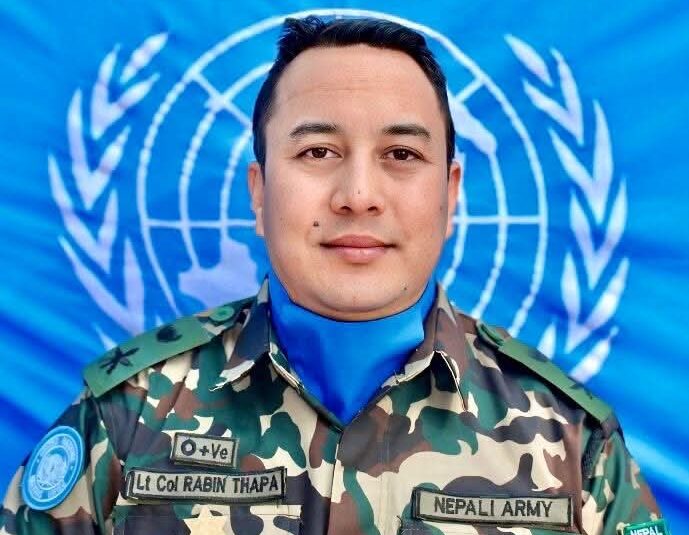
KATHMANDU: Lieutenant Colonel Rabin Thapa of the Nepali Army promoted the active participation of women peacekeepers in patrols, armed escorts and civilian protection missions while serving as a contingent commander with the United Nations Organization Stabilization Mission in the Democratic Republic of the Congo (MONUSCO).
Thapa emphasized the need to expand women peacekeepers’ involvement in operational assignments and strengthen engagement with local communities, particularly women and girls affected by conflict.
Under his leadership, women peacekeepers participated in community outreach, emergency response and other security operations. Their involvement helped the battalion gain a better understanding of local security challenges and the protection needs of vulnerable communities.
During periods of heightened insecurity, thousands of civilians sought refuge near United Nations bases following outbreaks of violence. In response, the battalion intensified patrols and strengthened civilian protection measures amid the deteriorating security situation.
The operations underscored the importance of preparedness, coordination and inclusive approaches in safeguarding civilians, particularly women and children, who are often exposed to heightened risks during armed conflict.
In a separate operation, peacekeepers escorted students, including nine girls, through a security-sensitive area to ensure they could safely reach their examination venue. The mission helped the students continue their education despite the prevailing security threats.
Thapa’s approach aligns with the United Nations’ Women, Peace and Security agenda, which advocates meaningful participation by women in peace and security processes and the integration of gender perspectives into conflict prevention, response and peacebuilding.
Nepal remains a major contributor to United Nations peacekeeping operations, deploying military personnel to conflict-affected regions across the world.
Thapa’s experience in the Democratic Republic of the Congo highlights the importance of inclusive leadership in peacekeeping, demonstrating how greater participation by women can strengthen community engagement, improve understanding of local protection needs and support efforts to safeguard civilians in conflict zones.



Comment