




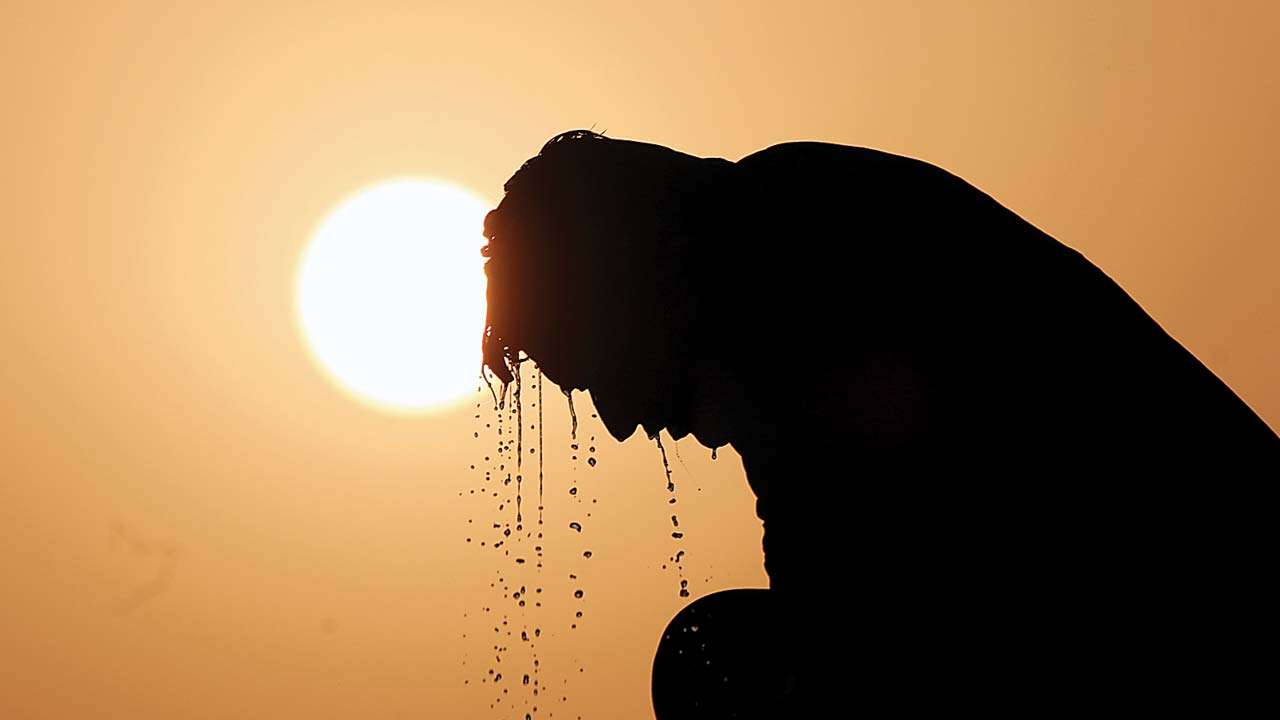
KATHMANDU: The head of climate prediction at the United Nations’ weather and climate agency has said that every El Niño event is unique and can produce different impacts across the world, regardless of its intensity.
Wilfran Moufouma Okia, who leads climate prediction at the World Meteorological Organization (WMO), said that warming El Niño conditions are expected to develop before the end of August.
The natural climate phenomenon is likely to trigger more extreme weather and rainfall patterns, although its strength remains difficult to predict at this stage, according to the UN agency.
Different impacts across regions
Moufouma Okia said El Niño has a temporary warming effect on global weather systems and, although it originates in the tropical Pacific, it influences weather patterns across large parts of the planet.
“When El Niño occurs, droughts are expected in West Africa, the Sahel, South Africa, Australia, and Southeast Asia,” he said.
“Conversely, other regions experience abundant rainfall, such as the southeastern United States and especially the equatorial Pacific region. Therefore, different regions will react differently to the phenomenon.”
He added that El Niño does not act in isolation but interacts with other climate systems, which can either strengthen or weaken its impact.
According to WMO projections, a moderate to strong El Niño event is likely. However, he cautioned that even weaker events can still cause serious impacts depending on local conditions.
“Each El Niño event is unique. One might think that a weak El Niño will have no consequences — but that is wrong. Depending on the country and the context, the consequences can be just as damaging as strong events,” he said.
Preparedness and global cooperation
Moufouma Okia said the WMO shares its forecasts with national meteorological services, while countries are responsible for translating them into local-level preparedness measures.
He said WMO models can provide forecasts up to six months in advance, giving governments time to prepare.
However, he noted that some events can overwhelm national capacities, as seen during the 2023–2024 El Niño period, when reduced rainfall in Panama affected the Panama Canal and had global economic implications.
He also highlighted improved international cooperation in recent years, saying countries are now better at sharing weather data, including during conflicts.
“There were fewer casualties in 2023–2024 than in 1997, so we can assume countries are better prepared or have learned from previous events,” he said.
“To predict a phenomenon on the other side of the world, you need data from the other side.”





Comment