




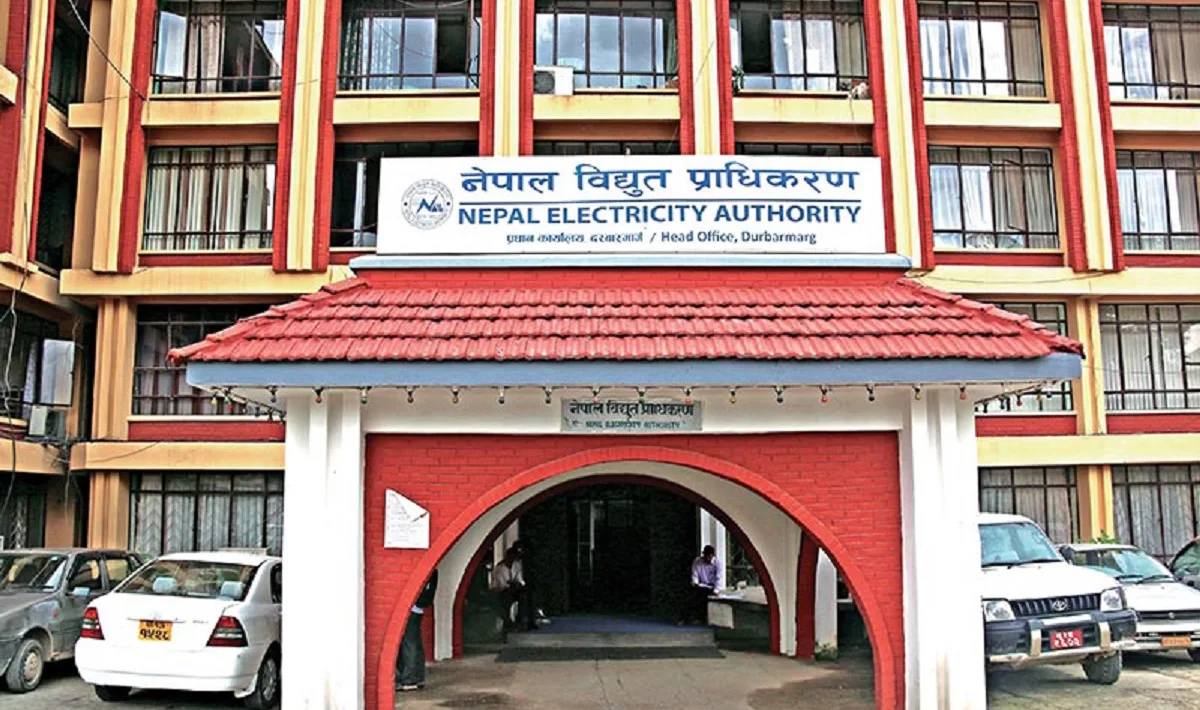
KATHMANDU: The Office of the Auditor General has raised questions over the appointment of employees of the Nepal Electricity Authority, including its managing director, as directors in multiple subsidiary and associated companies.
According to the Auditor General’s 63rd annual report, the Nepal Electricity Authority (NEA) has established and operated several companies in which the managing director serves as chairperson while senior employees hold positions as directors.
The report noted that such appointments require prior approval from the Nepal government, but appointments were made without following the legal provision.
Under the Nepal Electricity Authority Act, 1984, government approval is mandatory before making share investments. However, the NEA invested Rs 56.08 billion in shares across 35 entities without obtaining government approval, the report states.
The Auditor General also questioned the NEA for receiving Rs 381.3 million from two ministries of Gandaki Province without approval from the federal government.
Losses due to lower-than-planned electricity production
The report further stated that the NEA had signed power purchase agreements with 253 independent power producers for electricity generation totaling 16,027 megawatts.
However, comparisons between planned and actual electricity production showed lower generation than expected in most months, resulting in a shortfall of 268.8 million kilowatt-hours of electricity.
Due to the production deficit, Nepal had to import additional electricity from neighboring countries, creating an estimated financial burden of Rs 1.2279 billion, according to the report.
The Auditor General also pointed out Nepal’s continued dependence on imported electricity during dry seasons, while electricity generated by run-of-river hydropower projects often goes to waste during the monsoon season.
The report recommended that the NEA adopt more commercially viable electricity planning and sign power purchase agreements based on realistic production projections.
Delay in pole relocation increased road project costs
The Auditor General’s report also stated that delays by the NEA in relocating electricity poles increased the cost of road construction projects.
An agreement signed between the Department of Roads and the NEA on Baisakh 16, 2079 stated that the NEA would bear the cost of relocating old poles and constructing new power lines during highway expansion projects.
However, during the removal of old structures along the 110-kilometer Kakarbhitta-Laukahi road section, costs totaling Rs 886.2 million were estimated.
The report noted that while the project was initially expected to bear only Rs 119.8 million for installing new poles and removing old structures, later agreements required the road project to cover Rs 769 million — around 86.78 percent of the total cost.
The Auditor General questioned why project costs had increased and why agreements with the NEA were not implemented properly.
A similar issue was reported in the relocation of electricity lines along the Mainapokhar-Gulariya section of the Hulaki Highway in Bardiya.
The report stated that Rs 9.211 million was spent on purchasing new poles, relocating old structures, cables, transformers, labor and transportation costs.
A total of 264 poles were relocated and 195 new poles were purchased.
The Auditor General concluded that it was inappropriate for road projects to bear expenses that should have been covered by the NEA under existing agreements for strengthening electricity infrastructure.





Comment