




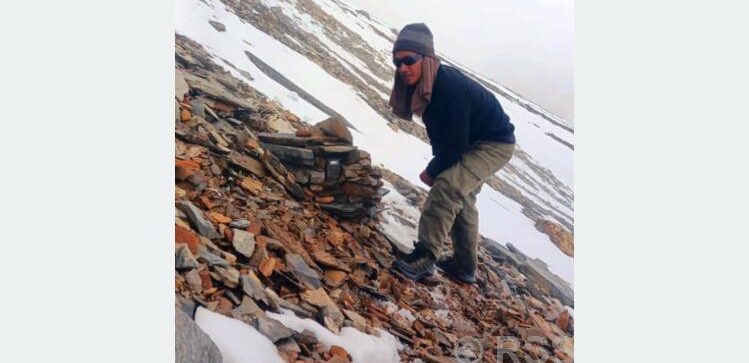
BAGLUNG: Cameras have been installed for the first time in Nepal’s only hunting reserve, Dhorpatan Hunting Reserve, to conduct a snow leopard census.
Three teams reached elevations ranging from 3,200 to 5,500 meters and installed 56 sensor cameras over a period of 15 days.
Although snow leopards are known to inhabit the high-altitude areas of the reserve — where blue sheep (naur) and Himalayan tahr (jharal) are legally hunted — no formal census had previously been carried out. Technicians, reserve staff, and enumerators have now completed the installation process to determine the exact population of snow leopards in the area.
According to reserve ranger Sagar Subedi, the three teams installed 56 cameras across six hunting blocks before returning. The cameras will automatically capture photographs for 45 days. Technical teams will revisit the sites every 15 days to replace batteries and memory cards.
Subedi said the teams had to stay in temporary shelters and clear snow while installing the cameras in remote high-altitude areas.
“Cameras have been installed at 56 locations for the snow leopard census. The number of snow leopards will be determined based on images captured over 45 days,” Subedi said. “The cameras were placed after assessing potential habitats, dens, forests, and other high-mountain areas where snow leopards are likely to move.”
A total of 15 employees and technicians were deployed for the census. Snow leopard habitats in Dhorpatan Hunting Reserve are found between elevations of 3,000 and 5,500 meters above sea level. The reserve, which covers 1,325 square kilometers, has its headquarters in Baglung district and extends into Myagdi and Rukum districts.
The cameras, installed beginning April 11, will be collected after 45 days and brought to the reserve office for analysis. The census is being conducted in the Seng, Sundaha, Dogadi, Ghustung, Barse, and Falgune blocks of the reserve.
According to Subedi, the cameras have been placed along trails, rocky areas, gorges, and mountain passes frequently used by snow leopards. Individual animals will be identified by matching the unique spot patterns on their bodies from the captured images.
In addition, fecal samples found in forest areas will be collected for laboratory testing, while footprints and other field signs will also be used to estimate the snow leopard population.






Comment