




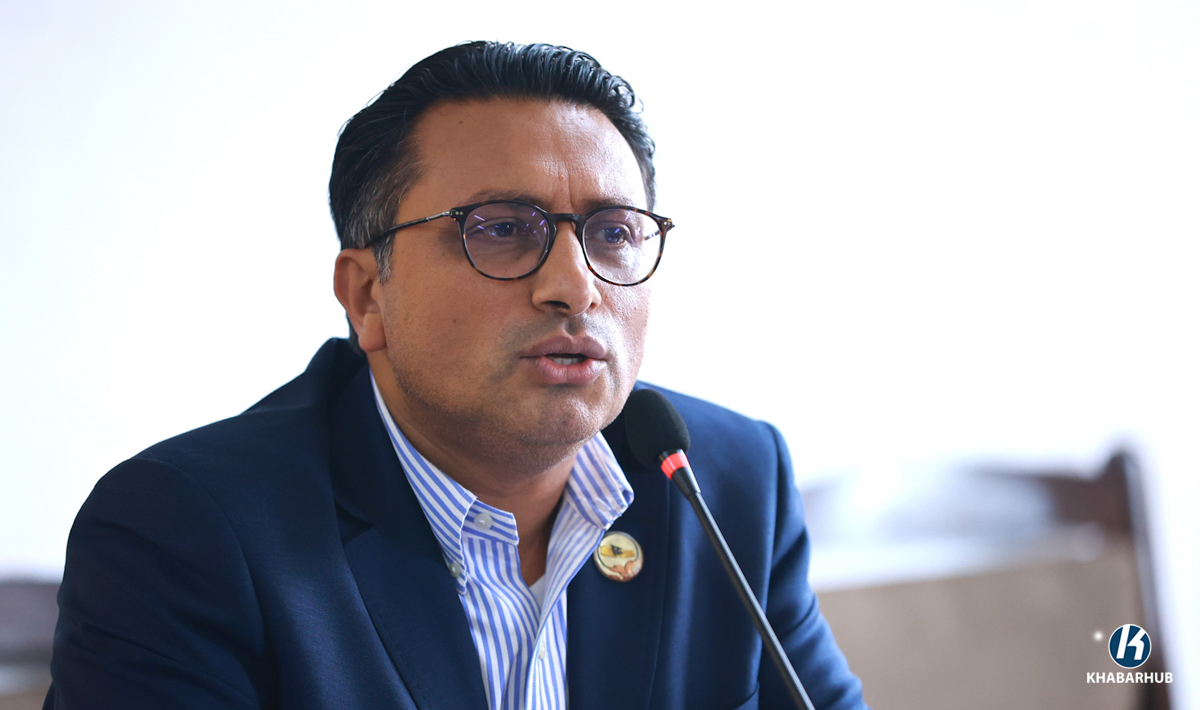
KATHMANDU: The government has released the “Current Economic White Paper,” highlighting weaker-than-expected economic performance and rising structural challenges.
Finance Minister Swarnim Wagle unveiled the report on Monday, stating that Nepal’s economy remains fragile amid global and domestic pressures, including geopolitical tensions in West Asia and internal socio-political movements.
According to the report, Nepal’s average economic growth over the past decade has remained around 4.2 percent, but is projected to slow further to 3.5 percent in the current fiscal year.
The paper notes that compared to neighbouring countries, Nepal’s growth rate remains significantly lower, creating challenges for job creation and income expansion.
Structural shift in economy
The report shows a continued shift toward a service-driven economy. Agriculture’s contribution has declined to 25.2 percent, while the service sector has expanded to 62 percent. Industry remains limited at 12.8 percent, raising concerns over long-term productive capacity.
Rising foreign employment dependence
Domestic job opportunities remain limited, leading to increased reliance on foreign employment. Over 800,000 Nepalis obtained labour permits in the last year alone, a trend experts describe as a sign of human capital depletion.
Investment and savings gap widens
The report highlights a wide gap between savings and investment. While gross domestic savings stand at 8.5 percent, investment has reached 33.9 percent, indicating heavy reliance on external financing and weak private sector confidence.
Fiscal pressure and rising debt
Weak revenue performance and high recurrent expenditure have widened the fiscal deficit. Public debt has now reached 43.8 percent of GDP, raising concerns over long-term debt sustainability.
Revenue collection has also underperformed, averaging only 87.6 percent of targets in recent years, with an import-dependent tax structure making revenues vulnerable to external shocks.
Inflation stable but external risks remain
Inflation currently stands at 2.13 percent, remaining relatively low. However, the report warns of potential upward pressure due to global oil price volatility and supply chain disruptions.
Declining foreign aid, rising debt reliance
The share of loans in foreign assistance has increased to 81 percent as grants decline, further adding to long-term repayment obligations.
Weak capital expenditure slows development
Capital expenditure remains low, averaging 19 percent of total spending over the past decade, hampering infrastructure development and economic transformation.
Tourism potential constrained
Although tourism is recovering, with over 1.1 million arrivals in 2025, inadequate air and road infrastructure continues to limit the sector’s full potential.
The Finance Minister said the findings highlight the need for structural reforms, improved investment climate, and stronger fiscal discipline to ensure sustainable growth.





Comment