




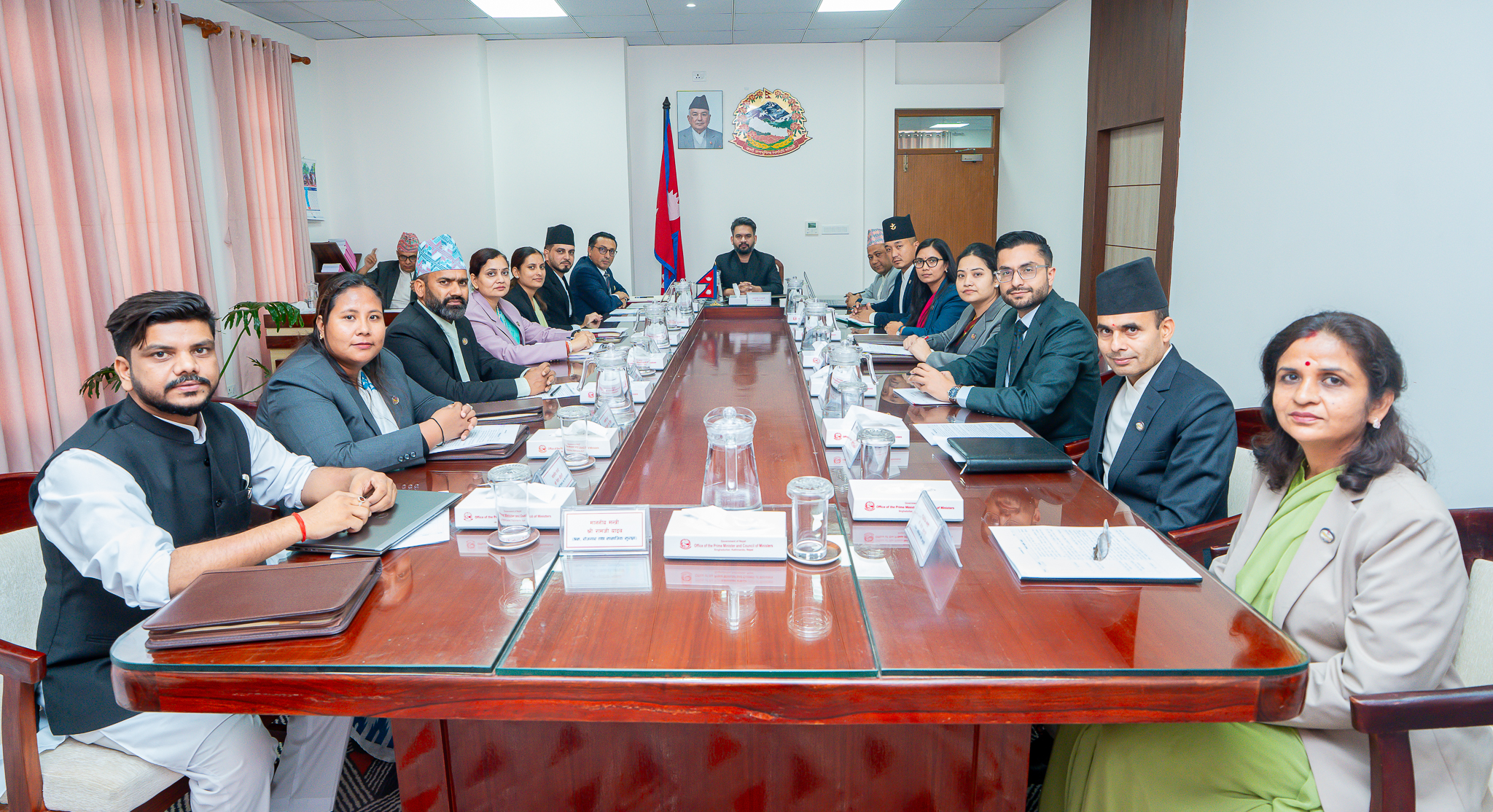
KATHMANDU: The Nepal Development Watch (NEDEW) has welcomed the government’s decision to form a high-level commission to investigate the assets of high-ranking public officials.
In a statement issued on the occasion of New Year 2083 BS, the organization described the move to investigate the assets of individuals who have held senior positions since 2006 as an important step toward strengthening transparency and accountability.
NEDEW also congratulated the government for moving forward with the implementation of its 100-point program announced after the formation of the new government led by Prime Minister Balen Shah on March 27, 2026.
The organization said the program outlines a clear roadmap for reforms in areas such as administrative efficiency, public service delivery, digital governance, anti-corruption measures, investment promotion, energy, tax reforms and human development.
While welcoming the decision to probe assets of senior officials, NEDEW stressed the importance of ensuring a lawful, transparent and impartial process, stating that it would send a strong message in the fight against corruption.
The organization also termed the government’s acknowledgement of historical discrimination against Dalit and other marginalised communities as a positive step. It said an official apology from the Prime Minister would send an even stronger message.
It further suggested a review of Nepal’s reservations under the International Convention on the Elimination of All Forms of Racial Discrimination (ICERD).
Welcoming the government’s commitment to formulate a second national anti-corruption action plan, NEDEW urged the establishment of clear and measurable targets to improve Nepal’s performance in corruption perception and human development indices.
It also described the decision to allocate 10 percent of hospital beds for economically disadvantaged groups as a positive initiative.
However, NEDEW expressed concern over the proposed restriction on student organizations, warning that it could affect freedom of expression and the right to association. It urged the government to adopt a balanced approach that ensures both violence control and democratic participation.
Welcoming the government’s commitment to addressing the problems of landless farmers, the organization said land distribution alone would not be sufficient. It recommended long-term programs focused on housing support, skill development and income generation.
On the proposal to operate women-only public transport services for safety, NEDEW termed it a short-term solution and stressed the need for long-term reforms in public transport management, security systems and behavioural change.
The organization also welcomed the inclusion of commitments made by various political parties into the government’s action plan, while urging implementation through time-bound and practical strategies.
NEDEW said it will continue to monitor Nepal’s development progress based on the new government’s baseline indicators and publish evidence-based analyses in the future.




Comment