





KATHMANDU: Economic Digest offers a concise yet comprehensive overview of significant business happenings in Nepal, presented in easily digestible summaries.
The overall picture reflects a cautiously improving but structurally fragile economy, where positive signals in financial markets are offset by deep-rooted vulnerabilities in production, governance, and external dependence. The stock market’s continued rise suggests growing investor confidence, yet declining turnover indicates limited participation and underlying uncertainty.
External shocks, particularly tensions in West Asia, are clearly influencing domestic behavior, from rising demand for electric alternatives to supply constraints in industries, highlighting Nepal’s exposure to global disruptions. Persistent issues such as delayed payments to farmers, weak provincial revenue collection, slow budget execution, and stalled infrastructure projects point to systemic inefficiencies and governance bottlenecks.
At the same time, rising health risks, disaster losses, and logistical challenges in remote regions underscore gaps in resilience and service delivery. While policy efforts, such as budget preparations, anti-money laundering measures, and export promotion, signal intent to reform, their effectiveness will depend on timely execution and institutional coordination.
NEPSE extends gains with 23.83-point rise
The Nepal Stock Exchange (NEPSE) continued its upward trend on Tuesday, climbing 23.83 points (0.81%) to close at 2,960.40. The Sensitive Index rose by 1.97 points to 507.00, while the Float and Sensitive Float indices edged up by 0.45% and 0.47%, respectively. A total of 35.82 million shares of 341 companies were traded, generating a turnover of Rs 14.84 billion.
Of the traded firms, 136 advanced, 117 declined, and 11 remained unchanged. Gains were led by banking, finance, hydropower, and mutual funds, while hotels and tourism, life insurance, microfinance, and non-life insurance declined. The trading sector recorded the highest surge, rising by 9.12%.
Gold prices fall while silver gains
Gold prices declined by Rs 1,600 per tola on Tuesday to Rs 273,900, while silver prices increased by Rs 80 to Rs 4,505. Market analysts attribute the fluctuation to global trends and shifting demand in international markets.
West Asia tensions boost demand for electric stoves
Rising geopolitical tensions in West Asia have led to increased demand for electric stoves in Nepal, driven by fears of LPG shortages. Concerns over disruptions at the Strait of Hormuz have pushed consumers toward induction and infrared cooktops. Imports reached 147,864 units worth Rs 304.1 million in the first eight months of the fiscal year. Retailers report a sharp rise in sales, as consumers view hydropower-based electricity as a more reliable alternative.
Ministries told to submit budget plans by March 29
The Ministry of Finance has directed all line ministries to submit their programs and budget proposals through the Line Ministry Budget Information System (LMBIS) by March 29 for the upcoming fiscal year 2026/27. Spokesperson Tanka Prasad Pandey said budget ceilings have already been communicated despite delays in government formation. The National Planning Commission has proposed a preliminary budget ceiling of around USD 18.9 billion. Although political uncertainty has slowed policy formulation, the constitution requires the budget to be presented in Parliament on May 29.
Dairy farmers await Rs 550 million in pending payments
Dairy farmers are facing financial hardship as they await Rs 550 million in unpaid dues for milk supplied over the past six months. According to the District Dairy Producer Cooperative Association, major buyers, including the Dairy Development Corporation, have not cleared payments since mid-October 2025. Around 40,000 farmers linked to 115 cooperatives have been affected. With daily production reaching 350,000 liters, more than half of which is exported, farmers are struggling to manage production and household expenses.
Bird flu outbreak puts Jhapa and Morang on high alert
Authorities have issued a high alert in Jhapa and Morang after confirming H5N1 bird flu cases. In Damak-10, Jhapa, an entire poultry farm was culled after the virus was detected. Movement of poultry products has been restricted. In Biratnagar, over 6,000 chickens were destroyed, causing losses exceeding Rs 10 million per farm. Officials are conducting further testing in surrounding areas, including Mechinagar and Arjundhara, as concerns grow across eastern Nepal.
Home Ministry calls for public help to curb money laundering
The Ministry of Home Affairs has appealed for public cooperation in tackling money laundering and organized crime. In a statement, it urged citizens to report information on individuals or groups listed by the United Nations Security Council. Tips can be submitted confidentially to district and provincial authorities as part of efforts to strengthen financial transparency under existing laws.
TEPC urges exporters to propose promotion plans
The Trade and Export Promotion Center (TEPC) has called on exporters to submit promotional programs for the next fiscal year to address the widening trade deficit. Executive Director Sharad Bikram Rana said the budget will prioritize expanding market access and improving export quality. Officials emphasized the importance of market research and private sector input to strengthen Nepal’s export performance and ensure sustainable trade growth.
Water industry seeks price hike amid supply constraints
The Nepal Water Industry Federation has urged the government to revise bottled water prices due to a shortage of raw materials. President Bikram Limbu Chemjong said imports of key materials have been disrupted for three months due to West Asia tensions. The federation proposed increasing prices to Rs 20 per liter in Kathmandu and Rs 25 outside, while 20-liter jars could range from Rs 60 to Rs 80. Without intervention, industries warn of possible shutdowns.
NPC receives 3,500 project proposals for federal grants
The National Planning Commission has received around 3,500 project proposals from provincial and local governments for complementary and special grants in the upcoming fiscal year. The submissions include both new and ongoing projects, which are now under technical and environmental review to ensure alignment with national guidelines.
199 houses recommended for reconstruction in Roshi
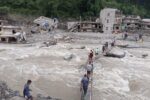
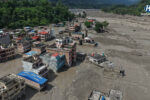
Authorities have recommended 199 houses for reconstruction and 40 for retrofitting in Roshi Rural Municipality following the 2024 monsoon disaster. The District Disaster Management Committee has forwarded the list for approval, with each eligible household set to receive Rs 400,000 in grants. The disaster claimed 81 lives in the district.
Bagmati province collects only 36 percent of revenue target
Bagmati Province has generated Rs 24.49 billion in revenue in the first eight months of the current fiscal year, achieving just 36.29% of its annual target. Revenue collection has been impacted by sluggish real estate transactions, lower vehicle sales, liquidity constraints, and damage to offices during protests. Federal grants and VAT remain key contributors to the provincial income.
Mustang allocates Rs 23 million for tourism development
The Gandaki Province government has approved 27 projects worth Rs 23 million to enhance tourism infrastructure in Mustang. Investments include maintenance of heritage sites, construction of view parks, and development of trekking routes aimed at boosting local tourism.
Budget shortage delays 58 drinking water projects in Dang
Around 58 drinking water projects in Dang remain incomplete due to funding shortages. Several schemes, including major projects in Ghorahi and Gadhwa, have stalled despite partial completion. Authorities have requested additional budget allocations to prioritize and complete these long-pending projects.
Karnali residents face travel hardships amid suspended air services
Residents of high-altitude districts in Karnali Province are facing severe travel difficulties due to the lack of regular air connectivity from Surkhet. People from Dolpa, Humla, Mugu, and Jumla are forced to travel via Nepalgunj for administrative and medical needs. Despite a Rs 4 million subsidy allocated for private airlines, flights remain irregular due to the absence of clear operational procedures. Airlines continue to prefer operating from Ranjha Airport, citing better logistics and lower costs.
Department fines three firms for violations
The Department of Commerce, Supplies, and Consumer Protection has penalized three firms for non-compliance during market inspections. Subha Grocery was fined Rs 50,000, while Pramisa Food Store and AJ Suppliers were fined Rs 10,000 each. Twelve other businesses received corrective instructions as part of ongoing market monitoring efforts.
Lumbini province records slow budget spending
Budget execution in Lumbini Province remains weak, with only 27.63% of the total Rs 38.81 billion budget spent in eight months. Delays in contract processes, political instability, and administrative transitions have slowed progress, leaving the government with the challenge of spending over 70% of the budget within the remaining four months.
Rival panels enter race for FNCCI leadership
Two competing groups have announced their candidacies for the upcoming Federation of Nepalese Chambers of Commerce and Industries (FNCCI) elections scheduled for April 12. Despite calls for consensus leadership, both panels are moving ahead with separate teams for key positions.
Satti customs achieves 60 percent revenue collection
The Satti Customs Office in Tikapur has collected 60% of its annual revenue target, totaling Rs 96.2 million so far. Officials remain optimistic about meeting the full target despite challenges such as cross-border smuggling, and have suggested infrastructure upgrades to enhance revenue collection.
Case against WorldLink dismissed over lack of evidence
Authorities have dropped the revenue leakage case against WorldLink Communications, concluding that its fee structure complies with existing telecommunications regulations. Investigations found no evidence of tax evasion, clearing the company of earlier allegations involving over Rs 2.5 billion.
Kalanga Hydro launches IPO for locals and migrants
Kalanga Hydro Limited has opened its IPO, offering shares to project-affected locals and Nepali migrant workers. The issuance represents 35% of the company’s capital, with applications open until early April.
Unseasonal rain destroys millions of bricks in Rautahat
Heavy unseasonal rainfall has caused major losses to brick industries, destroying around 15 million raw bricks across 50 kilns. Entrepreneurs estimate losses in the billions and have urged the government to introduce insurance mechanisms to safeguard the sector.
Bahrabise–Kodari road upgrade work begins
Work has started on upgrading the 26-kilometer Bahrabise–Kodari section of the Araniko Highway into a double-lane road. The project, currently at 7% progress, aims to improve connectivity and reduce risks in landslide-prone areas.



Comment