




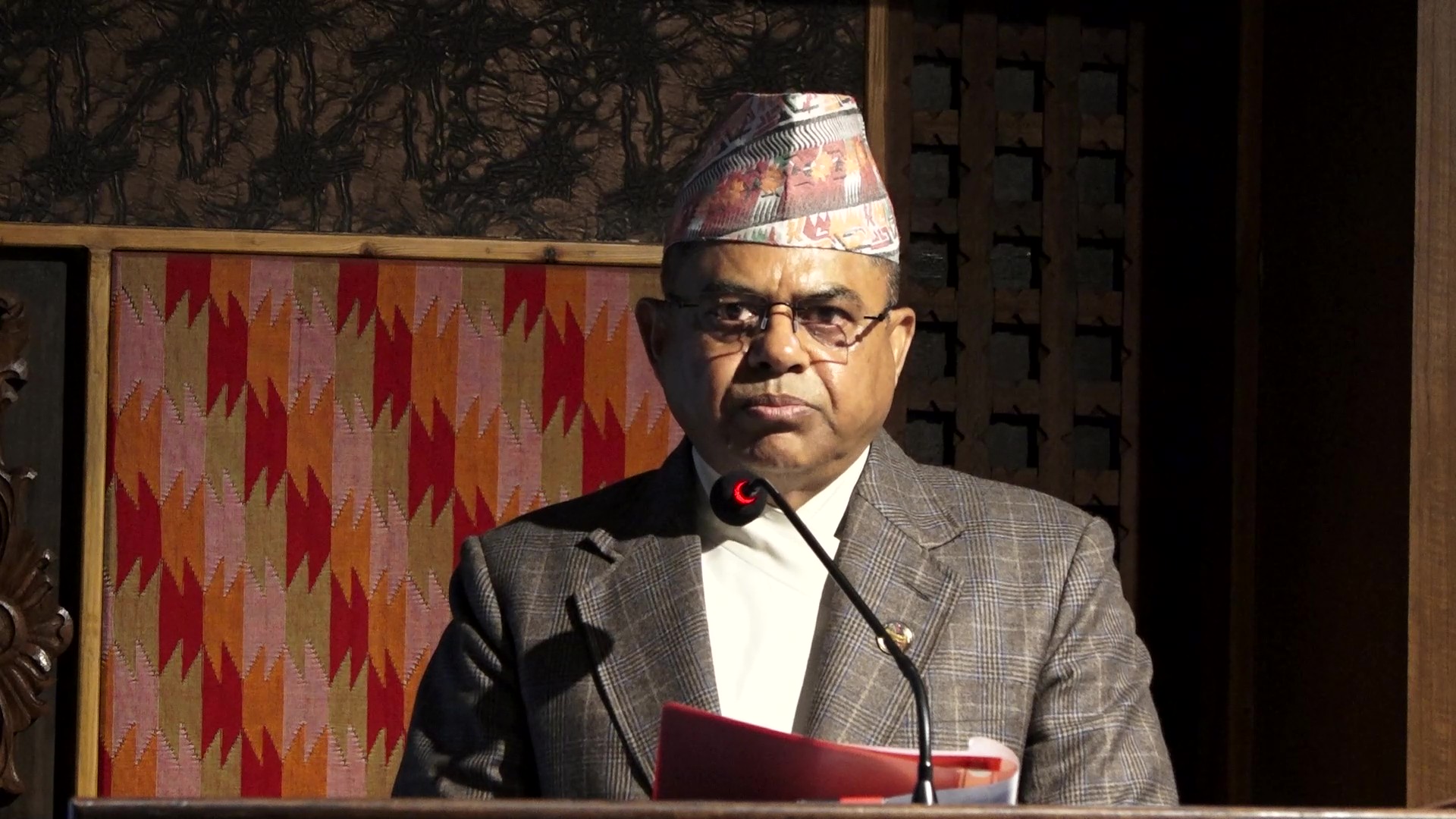
KATHMANDU: Minister for Energy, Water Resources and Irrigation Anil Kumar Sinha has stressed the critical role of weather forecasting and early warning systems in minimizing damage caused by natural disasters in Nepal.
Speaking at a program in Lalitpur on Monday marking World Meteorological Day, Minister Sinha said Nepal suffers significant loss of life and property each year due to natural calamities, underscoring the need for timely and reliable forecasts.
He underlined the importance of maintaining and upgrading modern technologies used in weather forecasting, including automated and human-operated measurement stations, as well as radar, satellite, and radio communication systems deployed across the country.
Sinha also noted that reliable forecasting and early warning systems had played a crucial role in enabling nationwide elections to be conducted simultaneously, even in geographically challenging regions such as the Himalayas.
Highlighting the broader impact, he said sectors such as disaster management, agriculture, water resource management, energy production, aviation safety, and infrastructure development are directly dependent on weather services.
“The expansion, strengthening, and modernization of hydrological and meteorological services is no longer optional but essential,” he said.
The minister added that the government is prioritizing the use of advanced technology, infrastructure development, and skilled human resources to make forecasting systems more scientific, reliable, and effective.
At the same event, acting Director General of the Department of Hydrology and Meteorology Nepal, Archana Shrestha, stressed the need to further enhance forecasting and early warning systems to address growing risks posed by climate change.
She said a new policy on hydrology and meteorology has already been prepared and expressed confidence that service delivery would improve further once the related law is enacted.
World Meteorological Day has been observed globally since 1961 to mark the establishment of the World Meteorological Organization in 1950, under the theme “The Observation Today, the Safety Tomorrow.”






Comment