




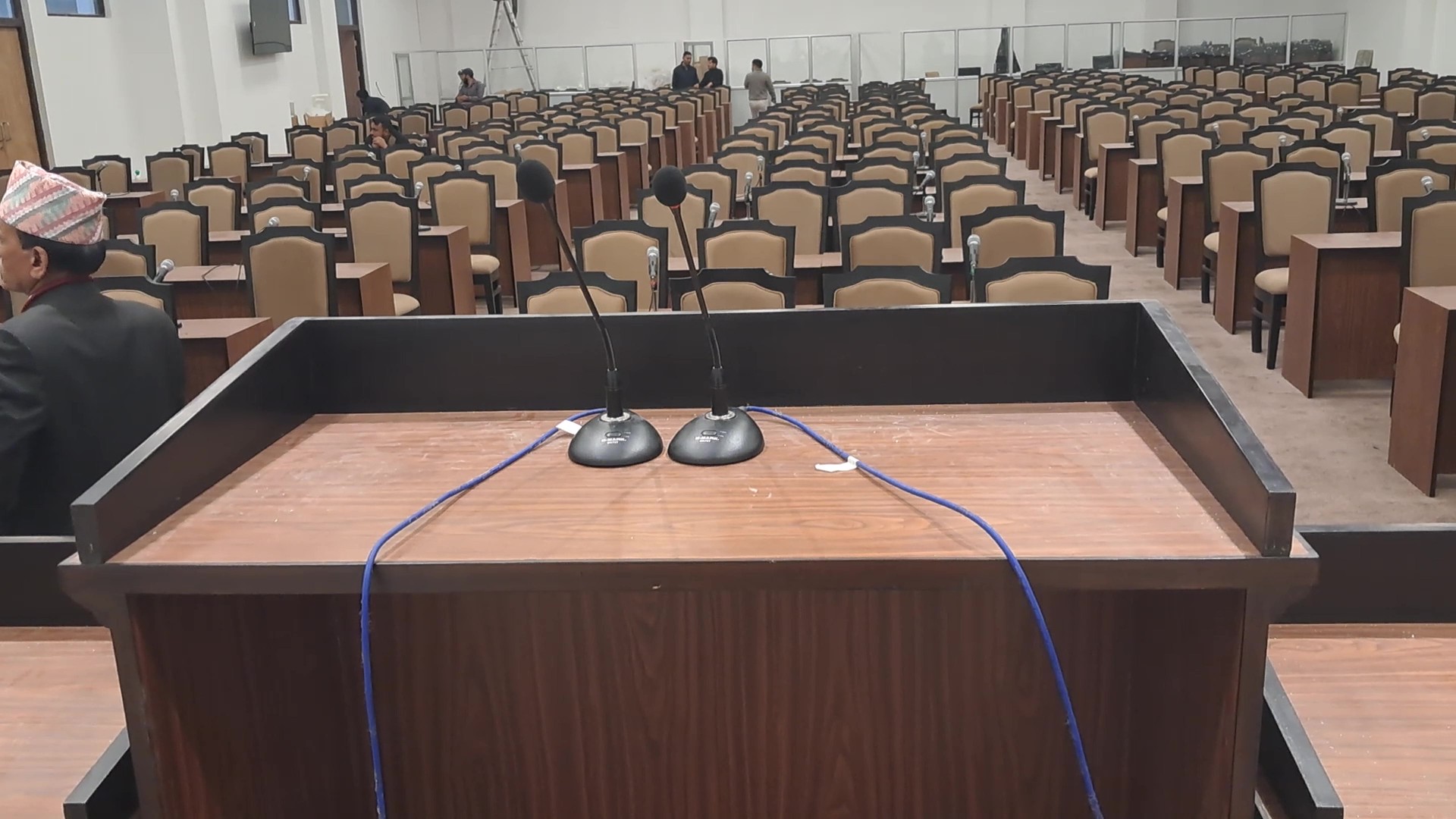
KATHMANDU: Several crucial bills, including those related to the federal civil service, Nepal Police, and school education, have lapsed following the dissolution of the House of Representatives, resetting the legislative process for the incoming Parliament.
The bills, which had previously advanced amid intense deliberations in parliamentary committees, became inactive after the House was dissolved in September 2025 following the post–Gen-Z movement political crisis.
However, the new political landscape, marked by a strong majority secured by the Rastriya Swatantra Party, is expected to make it significantly easier to pass such long-pending legislation.
Easier path to lawmaking
With the party securing 182 seats in the 275-member House, it is poised to hold decisive influence not only in the plenary but also across parliamentary committees.
This numerical strength is likely to expedite the passage of key bills that are directly linked to federalism implementation, including those concerning civil service management, security sector reform, and education.
According to parliamentary officials, a simple majority is sufficient to pass most legislation, making the process smoother under a single-party majority government.
Over 30 bills rendered inactive
Following the dissolution, a total of 31 bills under consideration in the House became inactive, said Ekaram Giri, spokesperson for the Federal Parliament Secretariat.
As per legal provisions, bills originating in the House, as well as those passed by the National Assembly but pending in the lower house, automatically lapse upon dissolution.
However, five bills that originated and remain under consideration in the National Assembly are still active. Additionally, three bills passed by the upper house had already been forwarded to the lower house before dissolution.
A bill related to alternative financial management has also been registered by the caretaker government, while three ordinances introduced in the previous session of the National Assembly are expected to enter the new House as legislative business.
Federalism needs over 300 laws
A study conducted by the National Assembly’s Legislative Management Committee shows that more than 320 laws are required for the full implementation of federalism in Nepal.
Although some legal gaps have been addressed through amendments to existing laws, successive governments had categorized pending legislation into priority levels and forwarded them to Parliament for action.
Bills to be reintroduced
Officials say previously lapsed bills can be reintroduced in revised form in the new Parliament.
“The government can use earlier bills as references while drafting new ones, but even then, they must go through the full legislative process again,” Giri said.
Bills are broadly classified as government and non-government (private member) bills, depending on who introduces them. Lawmakers can introduce private bills on matters other than finance and national security.
Historically, a few private member bills—such as those related to health professional councils, human rights, and legal aid—have been successfully passed in Nepal.
Legislative process and concerns
Former chair of the National Assembly’s legislative committee Parashuram Meghi Gurung said lawmaking in Nepal involves two key stages: pre-legislative and legislative.
The pre-legislative phase includes conceptual approval, drafting, and cabinet endorsement, while the legislative phase involves tabling, debate, committee review, and final passage.
Once passed by both houses, bills are sent to the President for authentication.
Parliamentary rules require the National Assembly to return bills passed by the House within 60 days—or within 15 days in the case of financial legislation.
While laws are ideally passed after extensive deliberation, there have been instances where parliamentary rules were suspended to fast-track urgent legislation.
Experts caution that while the new majority may accelerate lawmaking, ensuring quality through thorough debate remains essential.






Comment