




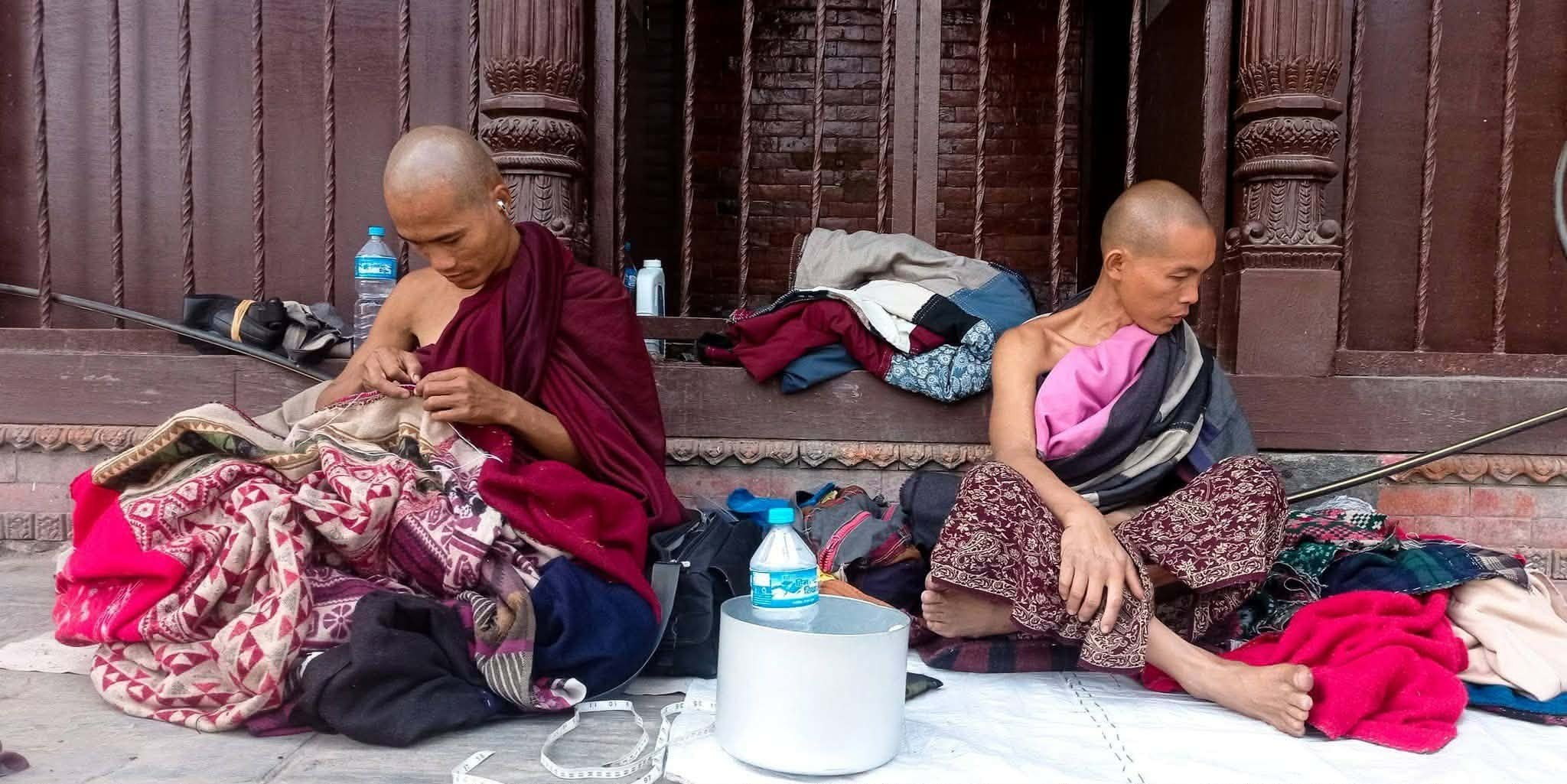
KATHMANDU: Vietnamese Buddhist ascetics are practicing the ancient ‘dhutanga’ disciplines of early Buddhism in various locations across Nepal. Wearing traditional ascetic robes, they follow strict practices in accordance with the ‘Vinaya’ of early Buddhist teachings.
A group of around 30 dhutanga practitioners, including the well-known Vietnamese ascetic Minh Tuy, are engaged in daily meditation and ascetic practices at Suryaghat, Rajarajeshwari Ghat, and Aryaghat in the Pashupatinath area.
Despite challenging weather conditions, some ascetics continue to observe the 13 dhutanga precepts at UNESCO World Heritage sites such as Swayambhu Mahachaitya, Boudhanath (Khasti) Stupa, and other pilgrimage sites and river ghats. In addition to following the 227 monastic rules observed by Theravāda monks, they undertake 13 additional ascetic disciplines specific to dhutanga practice.
The group arrived in Nepal about five months ago on foot with the wish for world peace. Before reaching Kathmandu, they spent approximately three months in Lumbini, the sacred birthplace of Gautama Buddha, practicing intensive meditation.
They describe their time in Nepal as a profound life experience that has allowed them to cultivate wisdom, morality, and concentration, while deeply realizing impermanence, suffering, and non-self.
The 13 dhutanga practices are rigorous ascetic disciplines relating to robes, food, dwelling, and conduct. These include wearing robes made from discarded cloth, limiting oneself to only three robes, collecting alms food in a bowl without skipping houses, and eating only once a day before noon.
Practitioners eat only what is received in their bowl and do not accept additional food once a meal has begun. They live in forests away from settlements, stay under trees or in open spaces without shelter, and may reside in secluded places such as charnel grounds.
They remain content with simple resting places and, in some cases, refrain from lying down, practicing continuous sitting or walking instead.
These ascetics have preserved the demanding dhutanga tradition, which has become rare in the modern era, even in the 21st century. They have stated that they will continue their practice in different parts of Nepal for some time to come.





Comment