




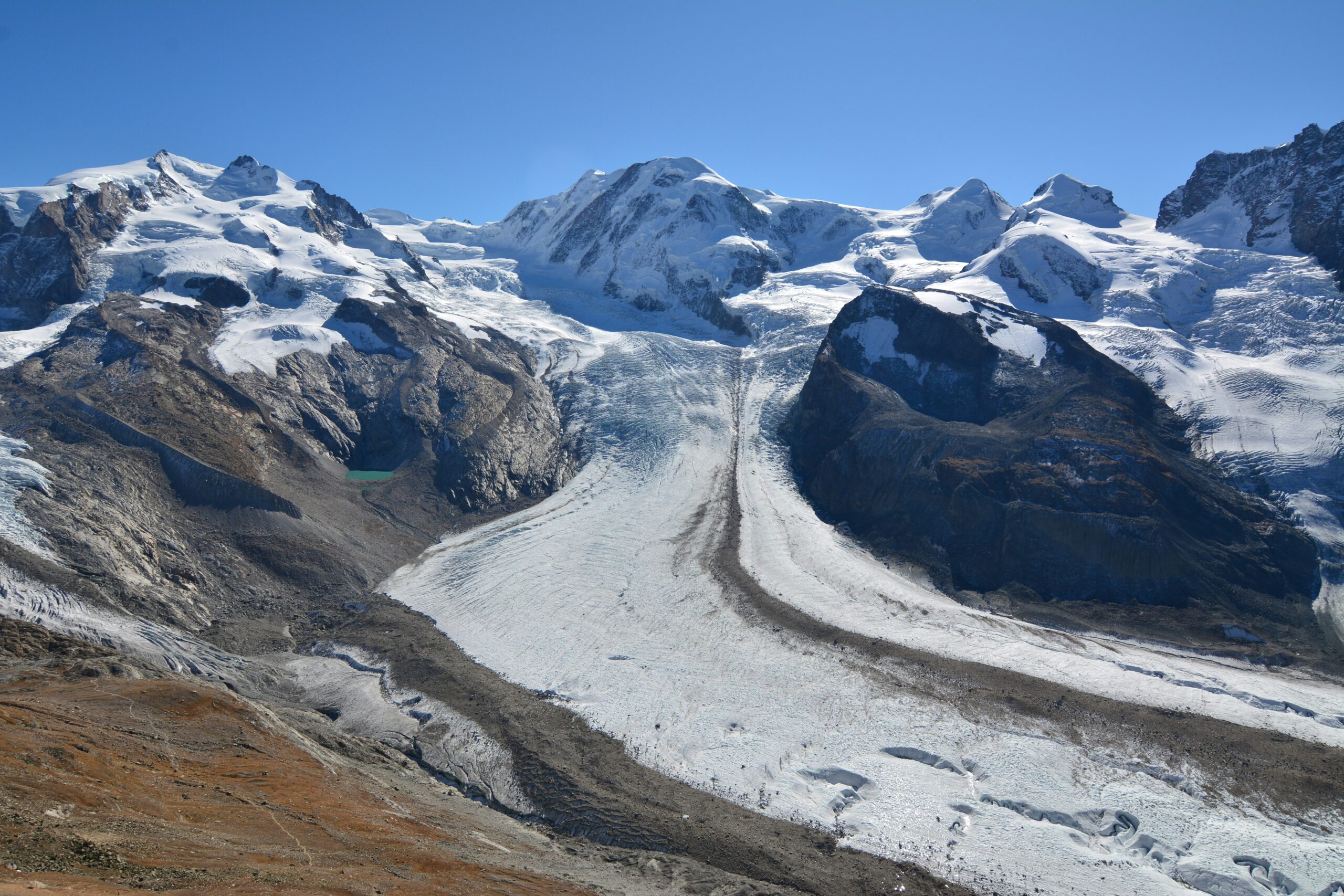
KATHMANDU: Hindu Kush Himalaya (HKH) glaciers are melting at an accelerated pace due to rising global temperatures, with recent studies showing that the rate of ice loss has doubled since 2000.
The latest reports from the International Centre for Integrated Mountain Development (ICIMOD) indicate that glacier thickness in the region has declined by up to 27 meters since 1975. This poses a significant risk to nearly two billion people living in downstream areas dependent on water flowing from the “Water Towers of Asia.”
The studies, titled “Glacier Dynamics in the Hindu Kush Himalaya, 1990–2020” and “HKH Glacier Outlook 2026: 50-Year Insights from Himalayan Glacier Monitoring”, provide the most comprehensive evidence to date of glacier change in the region. They were released on the occasion of World Glacier Monitoring Day.
Home to more than 63,700 glaciers covering approximately 55,782 square kilometers, the HKH region feeds at least 10 major river systems that support billions of people with food, water, energy, and livelihoods.
The reports highlight that roughly 78% of glacier areas, located between 4,500 and 6,000 meters above sea level, face high risks from temperature rises at higher altitudes.
“This is not a distant problem—it is a real crisis manifesting as new disasters every summer and monsoon. The doubling of glacier melt rates this century should both shock and motivate us,” said Pema Gyamtsho, Director General of ICIMOD. “The HKH is at a crossroads. From water insecurity to devastating floods, rapid impacts demand increased monitoring and investment in adaptation. These ‘blind spots’ are no longer unexpected events—they are our new reality.”
Glacier loss and risks
Analysis shows that between 1990 and 2020, glaciers in the HKH lost about 12% of their total area and an estimated 9% of ice volume. Smaller glaciers are particularly vulnerable, posing immediate water shortages for high-altitude communities and increasing hazards such as glacial lake outburst floods.
The HKH Glacier Outlook report collected data from 38 monitored glaciers, revealing extensive ice loss since 2000 and indicating some regions may be approaching irreversible tipping points. Only seven of these glaciers meet global monitoring benchmarks, leaving large areas like Karakoram, Sikkim, Zanskar, and Bhutan largely unmonitored.
“Monitoring representative glaciers in Nepal, such as ‘Mera’ and ‘Rikha Samba,’ as well as smaller rivers in India, is critical. They act as early warning indicators for the entire mountain system,” said Mohammad Farooq Azam, glacier specialist at ICIMOD.
Geographically, the greatest percentage losses were observed in the eastern Hengduan Mountains, with some areas losing up to 33% of glacier coverage in three decades. The most significant ice volume losses are concentrated in the Indus, Ganga, and Brahmaputra basins, which hold over 74% of the region’s glaciers. Large glaciers in these basins contribute nearly 40% of the natural water storage, and key glaciers in the Karakoram range are at high long-term risk for water, food, and disaster security.
Urgent call for action
With 2025 designated the “International Year of Glacier Protection” and 2025–2034 the “Decade for Glaciology,” ICIMOD researchers stress the urgent need to expand glacier monitoring, strengthen methodologies, and invest in climate-resilient adaptation strategies to mitigate rapid changes in the HKH region.
Spanning over 3,500 kilometers across Afghanistan, Bangladesh, Bhutan, China, India, Myanmar, Nepal, and Pakistan, the HKH region is vital for the water, food, and energy security of nearly two billion people. It also hosts countless irreplaceable species, making it extremely sensitive to the “triple planetary crisis” of climate change, pollution, and biodiversity loss.





Comment