




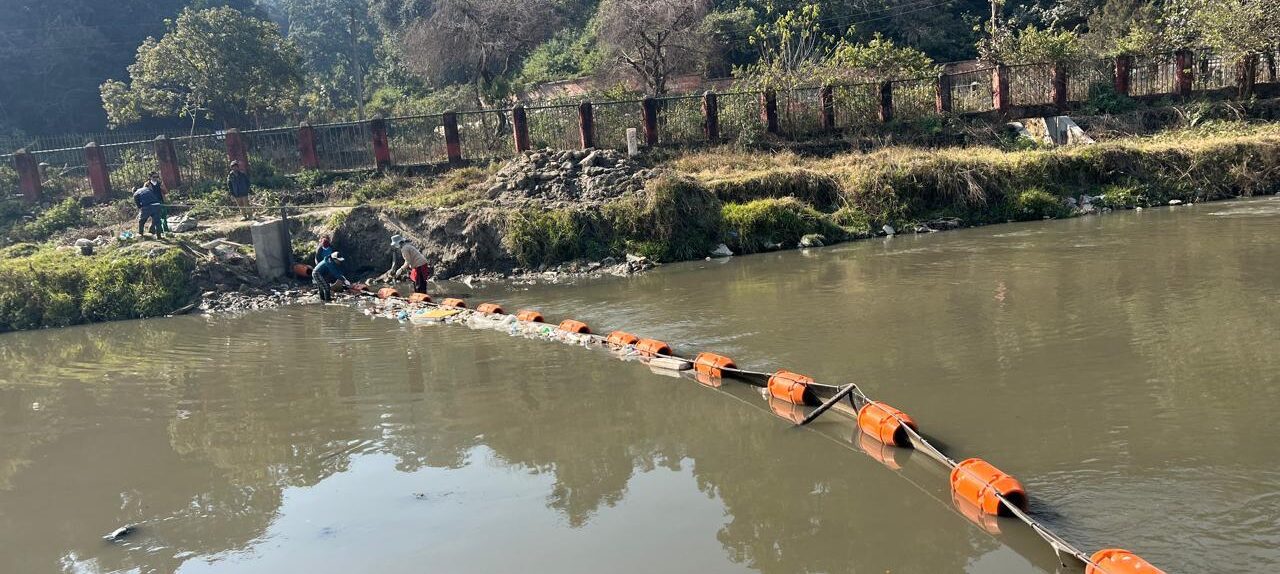
KATHMANDU: The Bagmati Civilization Integrated Development Committee, under the Ministry of Urban Development, has installed a ‘trash barrier’ to collect floating waste in the rivers of Kathmandu.
Following the completion of the installation at Guheswori, the trash barrier is now operational at six locations: Gokarna Barrage, Guheswori, Tilganga Eye Hospital, Bagmati Manahara Dobhan, UN Park, and Karmanasha Dobhan of the Manohara River. The installation was carried out under a contract worth Rs 6.5 million.
According to the personal secretariat of Urban Development Minister Kulman Ghising, the trash barrier stops plastic, polythene, bottles, wood pieces, and other floating waste and collects it at designated points.
Large amounts of floating waste accumulate in the Bagmati, Bishnumati, Manohara, and Dhobikhola rivers due to urbanization and unorganized waste management. The installation of trash barriers helps remove waste without obstructing river flow, thereby reducing pollution.
Collected waste can be regularly removed, sorted, reused, and safely managed, contributing to cleaner rivers, the protection of aquatic life, public health, and the overall aesthetic of the rivers. The barrier is equipped with a rubber conveyor belt and floating components that allow it to stop floating waste while adjusting automatically to rising water levels.





Comment