




KATHMANDU: Rastriya Swatantra Party (RSP) is making a push to attract emerging alternative forces and influential leaders as it seeks to position itself as a major political party.
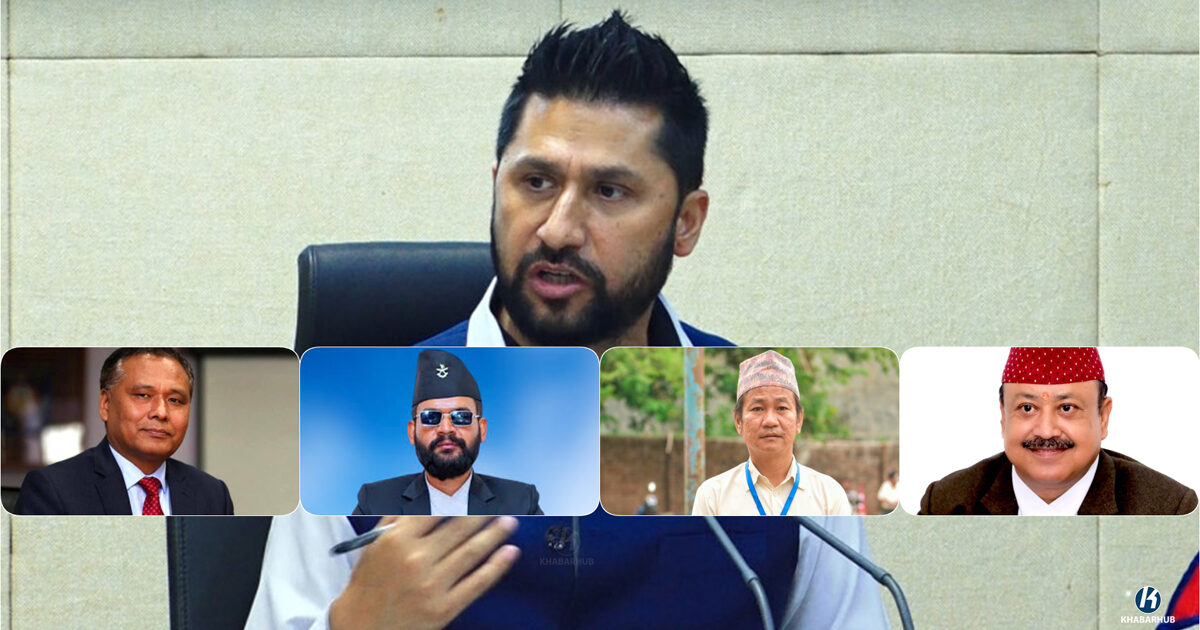
Following the Gen-Z movement of September 8 and 9, discussions have intensified around the political futures of Kathmandu Metropolitan City Mayor Balendra Shah (Balen), Energy Minister Kulman Ghising, Dharan Mayor Harka Sampang, and Dhangadhi Mayor Gopal Hamal.
Kulman has registered a new party, Ujyaalo Nepal, while Harka has formed the Shram Sanskriti Party. Hamal is in touch with the RSP and is considering whether to join Ujjyaalo Nepal or the RSP. Balen, however, remains undecided, creating uncertainty within his circle.
The RSP, which entered parliament as the fourth-largest party in 2022 within a year of its registration, is now working to bring these alternative forces under its umbrella ahead of the next elections. The party, under pressure since RSP Chair Rabi Lamichhane’s imprisonment, is exploring new ways to regain momentum.
Meanwhile, the Bibeksheel Sajha Party, founded by the late Ujjwal Thapa, merged into the RSP, but several leaders including Sumana Shrestha and Santosh Pariyar have since resigned. Despite internal departures at both district and central levels, the RSP has intensified negotiations with new groups to strengthen its position against the Nepali Congress and the CPN-UML.
RSP’s negotiation committee coordinators Dr. Swarnim Wagle and Shishir Khanal are holding continuous discussions with potential allies. Dr. Wagle is in dialogue with Kulman, while Khanal is in talks with Balen’s team.
Key figures close to Balen such as Sunil Lamsal, Sudip Dhakal, Kumar Ben, and Asmit Pokharel are also in communication with the RSP. While Balen has not personally met RSP leaders, sources say he is not opposed to the idea, although no concrete agreement has been reached.
According to a person close to Balen, alternative forces including Gen-Z will ultimately unite, but a final decision will only be possible once the party registration period is over and election activities gather pace.
Balen has yet to register a party, and the RSP is preparing to contest under the ‘bell’ (ghanti) symbol unless an agreement is reached. Party insiders believe it is unlikely that Balen will choose a different party, arguing that both he and the RSP would benefit from joining forces, especially as the RSP continues to expand its nationwide organizational structure.
Behind the scenes, Balen has conveyed several conditions to the RSP. He wants Rabi Lamichhane to serve as Acting President while in jail and to retain equal status upon release. He is seeking an understanding that both sides will work together to secure a majority, after which he should be appointed Prime Minister for the full term.
He is willing to accept the party name, election symbol, and overall identity of the RSP, provided independent candidates outside the party are also accommodated with election tickets.
At the same time, Balen has told Kulman’s allies that he will not join Ujyaalo Nepal. Rumors that Kulman could face corruption allegations have further strained possibilities for unity between the two.
According to leaders close to him, Kulman is considering forming a new electoral front rather than joining the RSP. His team says discussions are ongoing on whether to contest under a single party or through an alliance, with more clarity expected soon.
They insist they are not seeking to abandon their party but are open to coordination if their party’s name and election symbol are accepted.
Kulman has also placed several conditions for joining the RSP. He wants Balen to be appointed party President and insists that if the party wins a majority, he should become Prime Minister. He seeks to retain the name “Ujyaalo Nepal” and its status within the RSP, along with either Ujyaalo Nepal’s election symbol or the RSP’s symbol, depending on mutual agreement.
Currently, the RSP has 21 members in the dissolved House of Representatives, around 200,000 registered party members, and received 1.1 million votes in the 2022 election, making it the fourth-largest party in Nepal.
Given this strength, party insiders say Kulman’s demands are difficult to accept. They argue that he has not yet been tested politically and lacks experience in organizational and electoral politics, making only a front or limited coordination feasible.
Balen and Gopi
Political observers say Balen risks losing momentum if he continues to remain silent. Should Balen and Gopi Hamal decide to contest the next election under the RSP banner, it could reshape national politics, potentially doubling the party’s current electoral strength.
Without such alliances, the RSP may struggle to retain its present standing and could be forced to align with the Nepali Congress or the CPN-UML to form the next government.
The RSP remains weak in Madhesh Province, but Balen’s Madheshi identity could significantly expand the party’s footprint there. His entry could make the RSP a competitive force in the region. The combined influence of Balen and the Gen-Z movement could alter results across both direct and proportional representation seats.
In the 2022 election, the RSP performed poorly in the Valley, Chitwan, and eight districts of Madhesh. Out of the party’s 1.1 million nationwide votes, it secured only 32,000 direct votes and 72,000 proportional votes from Madhesh.
Gopi Hamal, meanwhile, wields strong influence in the Sudurpaschim. If he joins the RSP, party leaders believe their support base in the region could grow substantially. The UML is currently weak in the Sudurpaschim Province, while the Nepali Congress faces internal conflict between the Sher Bahadur Deuba and Shekhar Koirala factions.
A party leader said discussions with Gopi have been positive, and it is likely that he will join the RSP. Multiple rounds of talks have reportedly taken place between the party and mayors close to him.
Kulman and Harka Sampang
The RSP is also underperforming in eastern Nepal. In last year’s Ilam-2 by-election, the party’s candidate Milan Limbu secured only 5,050 votes, a disappointing figure compared to the party’s impressive proportional vote share in the 2022 polls.
Limbu, a former Maoist and journalist, failed to mobilize the support necessary, while allegations of financial misconduct involving Rabi Lamichhane damaged the party’s image in the district.
To strengthen its eastern base, the RSP is seeking to bring in Kulman Ghising and Dharan Mayor Harka Sampang, chair of the Shram Sanskriti Party. If Harka joins, the party believes that doors will open in the eastern hills, where its victory prospects in 2026 elections are currently slim. Districts such as Taplejung, Panchthar, Bhojpur, Okhaldhunga, Sankhuwasabha, Solukhumbu, Tehrathum, Dhankuta, and Dharan remain challenging for the RSP.
Leaders argue that an alliance between Kulman and Harka would greatly increase the party’s influence. Both Rabi and Balen already have active support networks in these districts, making a broader coalition strategically valuable. The RSP is in ongoing dialogue with Harka, with discussions centered on either full unification or at least electoral coordination.
Old parties may weaken if alternative forces unite
If the RSP, Ujyaalo Nepal, and Balen come together, traditional parties could face significant pressure. Sources say the RSP has begun talks with a strategy of sidelining older parties and signaling that newer forces are consolidating.
Internally, however, the question of leadership remains unresolved. While the RSP is willing to negotiate prominent roles, including prime ministerial or ministerial positions, after the March 5, 2026 elections, it is not prepared to relinquish the party presidency. Leadership flexibility exists for incorporating Balen and Kulman, but Rabi Lamichhane, currently in jail, is firm about retaining the presidency.
The RSP is reportedly prepared to compromise on nearly everything except the top post. Party leaders see a merger of democratic and alternative forces as the key to weakening traditional political powerhouses.


Comment