




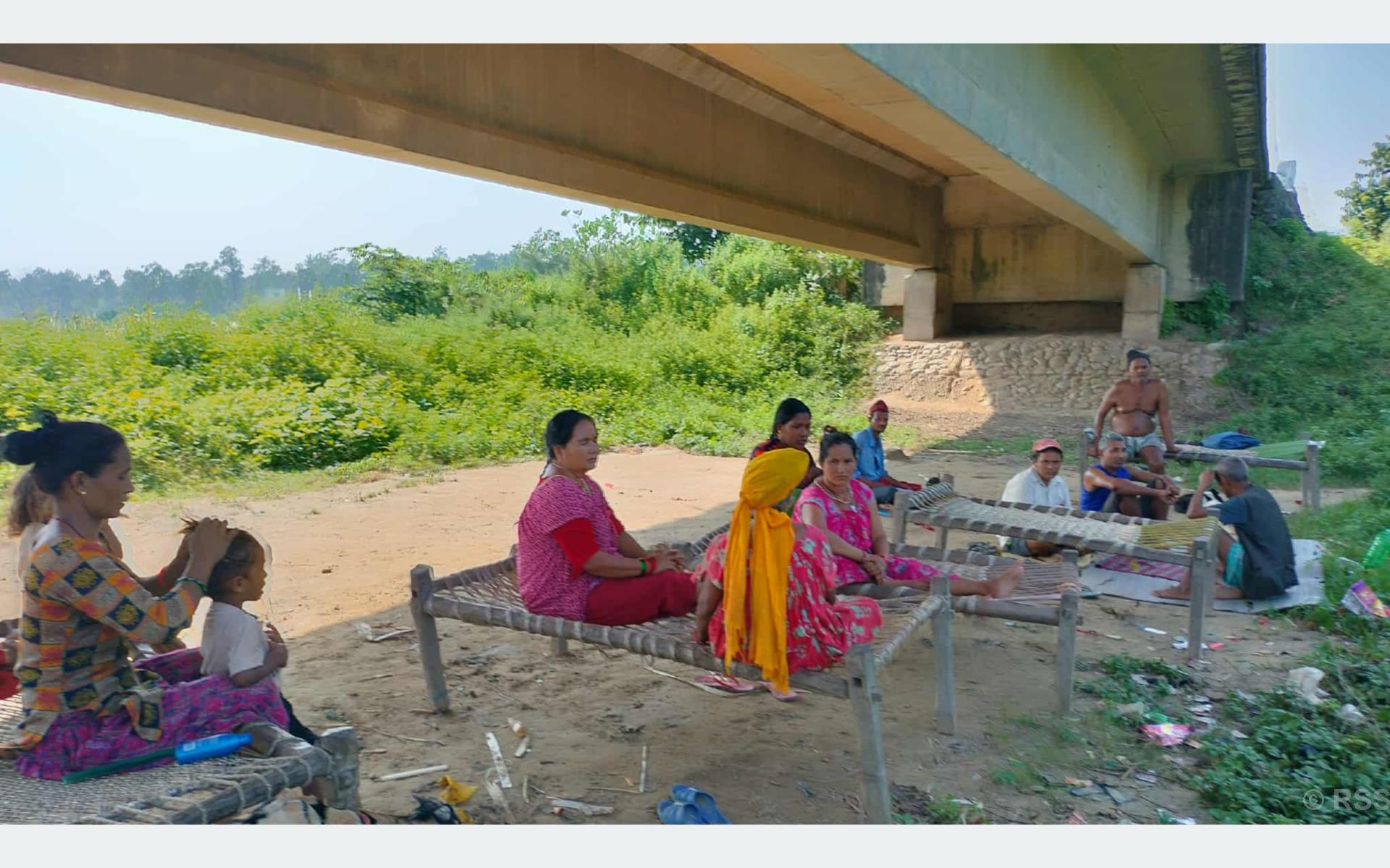
KANCHANPUR: While much of the country is celebrating Dashain with joy and anticipation, the atmosphere in Banahara Camp, located just off the East-West Highway in Shuklaphanta Municipality-11, Kanchanpur, is starkly different. For the 28 landless families living here, Dashain only deepens their sense of hardship and exclusion.
Today marks Maha Ashtami, the eighth day of the festival, and while households across Nepal are buzzing with preparations, the residents of Banahara are struggling to secure even two meals a day.
“We are landless. I’m getting older, and there’s barely any work. On a good week, I find a day’s labor—just enough to eat,” shared 65-year-old Mathudevi Damai. “I dream of eating good food and wearing new clothes during Dashain. But dreams don’t fill stomachs. This is how we’ll live and die.”
Banahara Camp is mostly home to elderly people, women, and children. The youth, in search of employment, have migrated to India—and even during Dashain, few have returned.
“They said they haven’t earned enough to come home this year. Maybe they’ll make it for Tihar. So for us, there’s nothing to celebrate,” Mathudevi added.
Beyond food and clothing, access to basic healthcare remains a daily challenge. With no reliable transport or support, taking sick children or elders to nearby health posts becomes almost impossible.
“We haven’t bought new clothes in over a year. Thinking about special Dashain meals is like chasing the wind,” she said. “Just managing two meals a day feels like a big achievement.”
The families live in makeshift huts along the Banahara River, their roofs patched together with tarpaulins donated by aid groups. In summer, the heat inside becomes unbearable, forcing residents to sleep outdoors.
“Some nights, we sleep under the open sky on khatiyas (traditional cots) or sacks,” said Ranjit Rawat. “Mosquitoes are everywhere. We barely sleep.”
Two months ago, flooding fears forced the families to relocate to the roadside. With the waters now receded, they’ve returned to their fragile shelters, but the danger and discomfort remain.
“Our lives haven’t changed in years,” said Dal Bahadur Bohara. “We’ve spent countless nights under the bridge, but no one seems to care. We’ve gone to the local government many times asking for mosquito nets, tents, even torches. But all we get are empty promises.”
All 28 families in the camp have applied for land and permanent housing through the Land Problem Settlement Commission. But even after two decades of living here, their hopes remain unmet, their wait seemingly endless.






Comment