




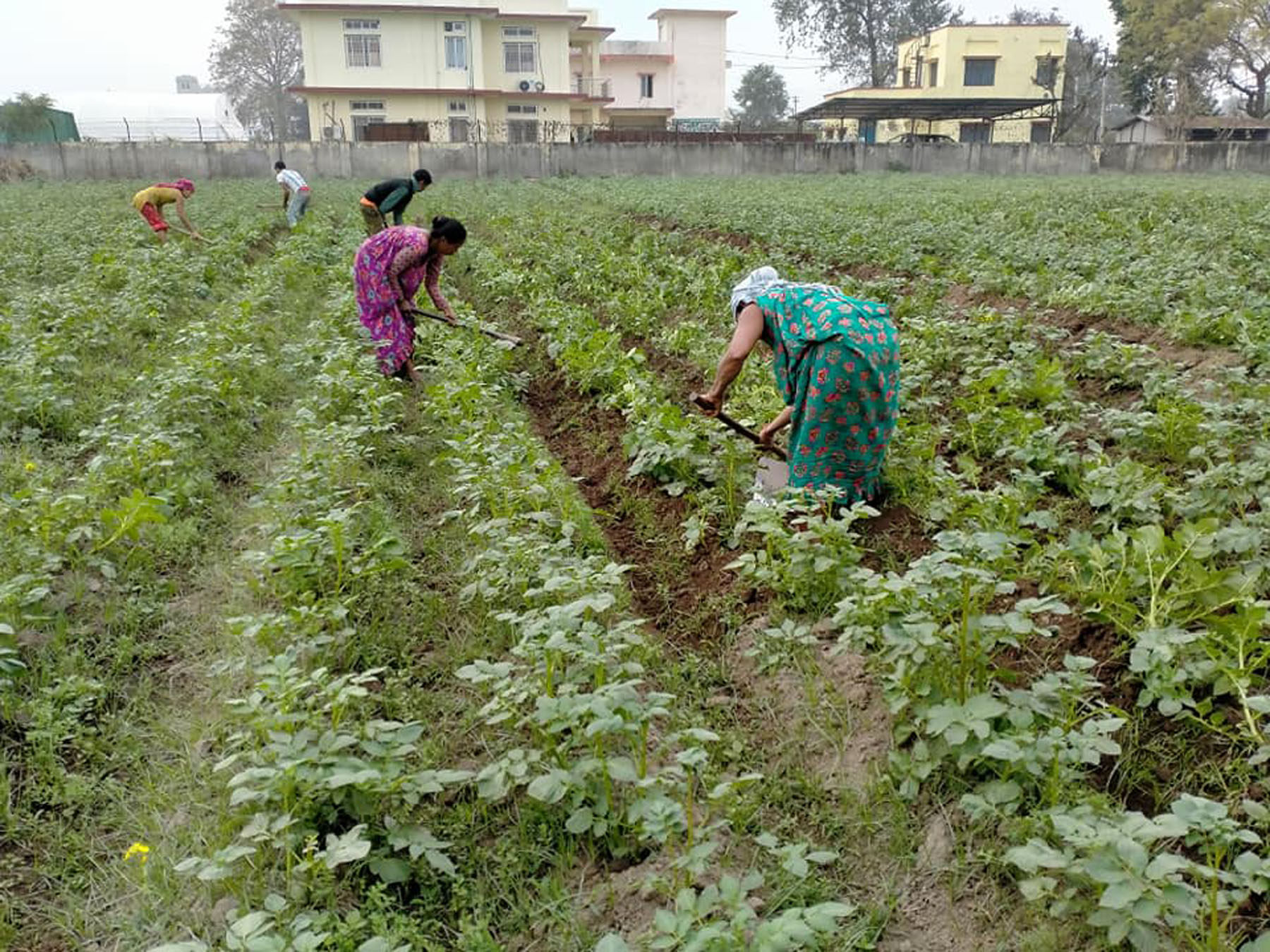
BENI: Potato production has declined in Annapurna Rural Municipality-8, including Nangi, Ramche, and Kafaldanda, key potato-growing areas in Myagdi. The drop in output has made it difficult to meet demand.
Potatoes grown in these cold-climate areas are known for their taste and nutrition, making them popular in urban markets. Considered a food crop for export in the ward, potato farming used to provide good income for local farmers.
However, the recent decrease in production has left them unable to satisfy demand, said Rammaya Pun, a farmer from Nangi and member of Annapurna Rural Municipality.
“Most villagers engage in commercial potato farming. Last year, many farmers earned up to Rs 100,000 by selling potatoes. This year, production has fallen short of expectations despite high demand, and more potatoes may be consumed locally,” he said.
Pun explained that drought during planting and harvesting this year affected production, as potato cultivation still largely relies on rainfall due to limited alternative irrigation sources.
Traditionally, potatoes from the Lekali region were given as Koseli (gifts) or exchanged for rice and paddy from the valley. With improved transportation in the villages, these potatoes have started reaching broader markets instead of being used for feeding livestock, said Chandra Bahadur Khorja, a local of Nangi.
Khorja, who sold 10 potatoes last year, said that this year, due to the lower harvest, he will send them to relatives as Koseli and will not be able to sell them in the market.
Potatoes from Nangi sell for Rs 45 per kg in the village but reach Rs 80–100 per kg in urban markets. Varieties such as Rato, Janakdev, and Raithane are cultivated locally.
Farmer Om Bahadur Purja of Ramche noted that the decline in production is linked to unprocessed seeds, drought, and pests introduced through imported seeds.
Annually, potatoes worth around Rs 100 million are sold from Myagdi to markets in Kushma, Baglung, Pokhara, Kathmandu, and other cities.
The Agricultural Knowledge Center, Prime Minister’s Agricultural Modernization Project, and local authorities have been supporting the expansion of potato cultivation, which currently covers 1,820 hectares in the district.





Comment