




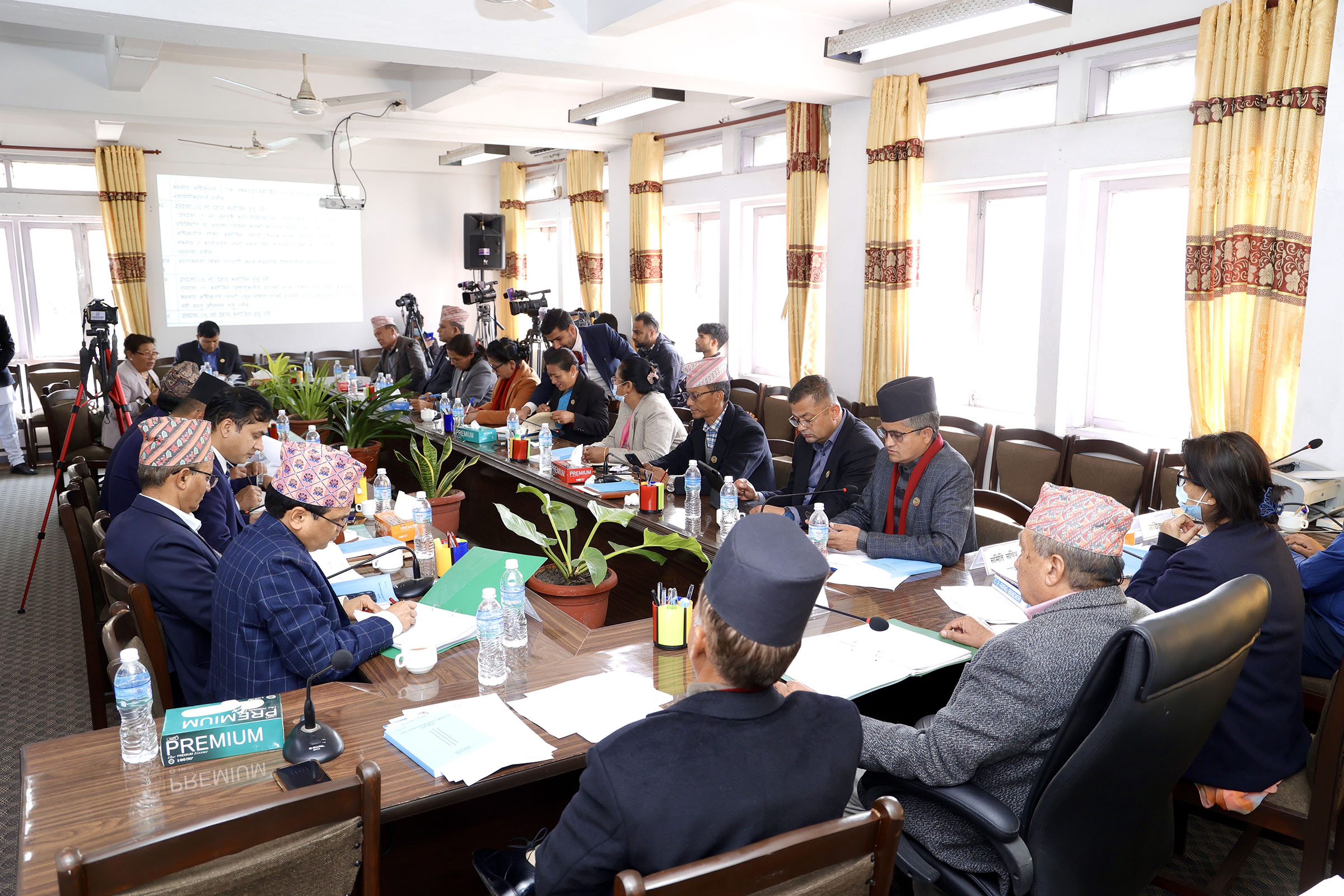
KATHMANDU: The Finance Committee of the House of Representatives held discussions today on the Alternative Development Finance Bill, 2082.
During the session, Deputy Prime Minister and Finance Minister Bishnu Paudel emphasized the necessity of mobilizing new financial resources for the country’s economic progress and sustainable development.
Minister Paudel highlighted that for overall national development, it is essential to increase investment in high-return sustainable infrastructure projects through proper project identification, prioritization, efficient internal resource management, domestic and foreign investment, and the appropriate use of various financial instruments.
The bill aims to mobilize alternative development finance through bonds, gold funds, and other financial instruments to promote employment, sustainable economic growth, long-term investment, and enhance private sector involvement in public infrastructure.
Minister Paudel noted that government revenue alone is insufficient to meet development needs, private capital and technology have not grown adequately, and foreign aid is declining. Therefore, alternative finance is crucial as a substitute for traditional investment sources. The bill was introduced as current laws do not adequately cover alternative financing provisions.
The bill intends to identify and utilize alternative financial sources beyond traditional investments. It has attracted 66 proposed amendments from 11 members of the House.
There has long been a call to explore alternatives to conventional financing methods, such as government, private sector, public-private partnerships, and direct foreign investment, and to introduce new financial sources.
The government’s policies in the current and previous fiscal years have also emphasized seeking alternative investment sources. The government plans to deploy development assistance through blended finance methods combining commercial, private, non-governmental funds, grants, and concessional loans.
The bill defines alternative finance sources as processes to mobilize funds through various means. These include equity or debt raised from investors or the public for specific projects via crowdfunding, issuing special loans guaranteed by implementing bodies, and raising long-term capital from domestic or foreign investors to form investment funds. It also covers raising remittance funds from Nepali citizens abroad or non-resident Nepalis.
Moreover, the bill allows setting up guarantee funds to issue loans or bonds backed fully or partially by international financial institutions. It also permits monetization of assets or transactions of any entity or project to create dedicated project funds.
Additional prescribed methods to mobilize necessary funds are also included under alternative finance sources.
Funds mobilized through alternative finance will be used for identifying, studying, developing, constructing, or implementing projects that promote employment, yield significant economic returns, or contribute to gross domestic product growth.
The bill enables the use of alternative finance for hydropower generation, transmission, and distribution projects; roads, railways, airports, tunnels; industrial development infrastructure such as special economic zones, industrial parks, dry ports, or IT parks.
It also allows financing urban development infrastructure, cable cars, ropeways, pod belts, and similar structures.
According to the draft, investment funds may be deployed in nationally prioritized projects implemented by the private sector under public-private partnerships.
However, projects estimated to cost less than Rs 1 billion are excluded from fund investment. Similarly, projects that cannot provide immediate returns, those unable to provide collateral for loans or guarantees, projects demanding loans secured by bonds or debentures, and those implemented by natural persons are not eligible.
The draft also prohibits the fund from investing in projects implemented by firms, companies, or institutions in which the fund’s managing director, chief executive officer, or similar officials were shareholders, partners, directors, or members at least three years prior to their appointment.
The authorized capital of the fund is proposed to be Rs 100 billion, with a paid-up capital of Rs 25 billion. The government is proposing to hold 51 percent of shares, equivalent to Rs 12.75 billion.
Investors in the fund may include the Nepal government, international financial institutions, foreign banks or financial institutions, the Employees Provident Fund, the Citizen Investment Trust, the Social Security Fund, and insurance companies.






Comment