




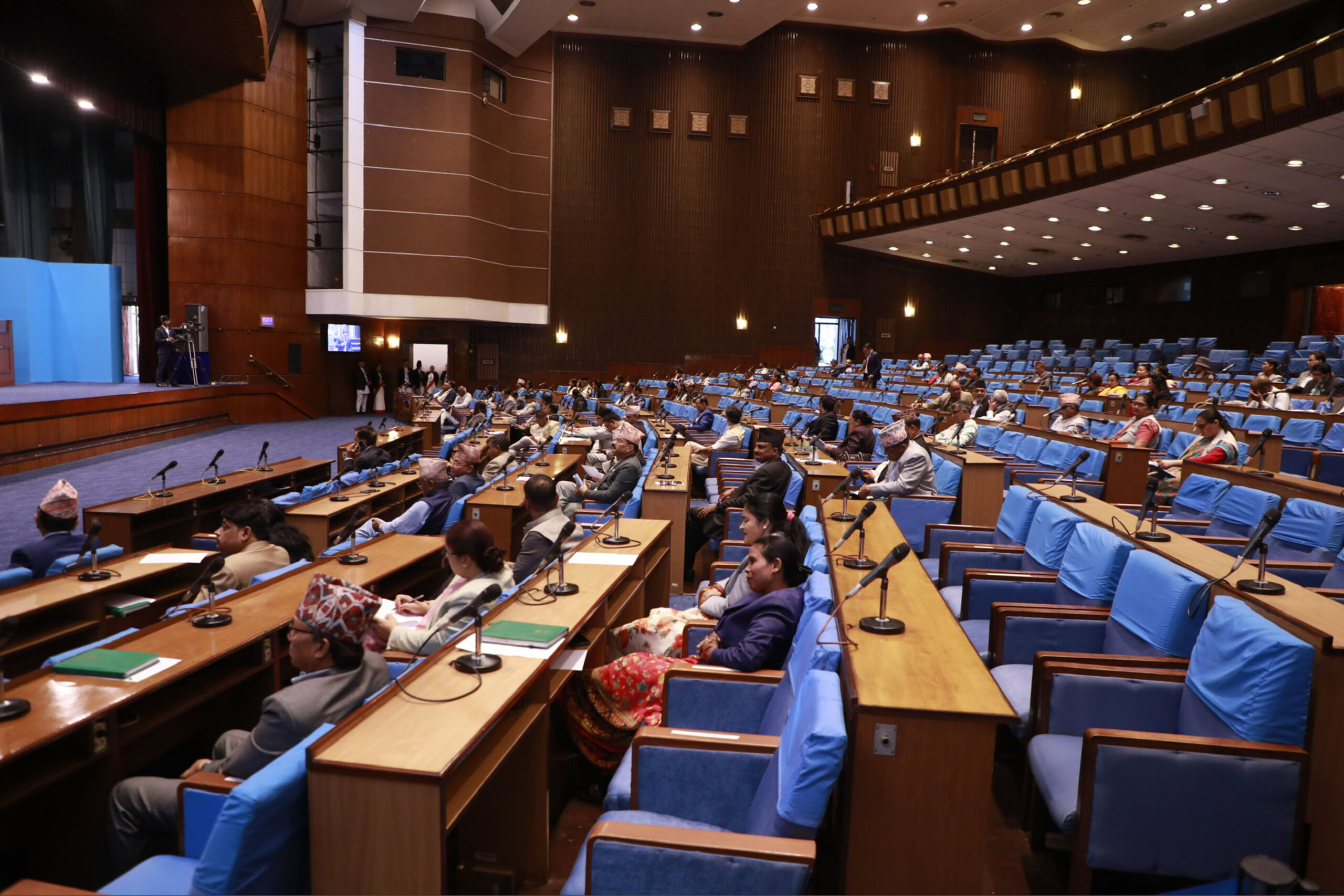
KATHMANDU: A parliamentary special investigation committee formed to probe an error in the Federal Civil Service Bill, 2023, has submitted its final report to the House of Representatives.
Committee chair and Nepali Congress lawmaker Jeevan Pariyar presented the report during Tuesday’s meeting of the House. The committee had been formed on July 7 to investigate claims of irregularities in the bill’s drafting process.
The committee comprised representatives from major political parties, including two each from the Nepali Congress and CPN-UML, and one each from the CPN (Maoist Centre), Rastriya Swatantra Party (RSP), and Rastriya Prajatantra Party (RPP). Members included Jeevan Pariyar and Sushila Thing (Congress), Ishwari Gharti and Narayan Prasad Acharya (UML), Madhav Sapkota (Maoist Centre), Ganesh Parajuli (RSP), and Roshan Karki (RPP).
According to Pariyar, the committee convened 37 meetings over a span of 28 days before finalizing the report. Earlier, he had handed the report to Speaker Devraj Ghimire before presenting it in Parliament.
The committee’s investigation focused on the controversial removal of the cooling-off period provision from the bill, a clause meant to prevent immediate political appointments of civil servants after retirement. The report concludes that Ramhari Khatiwada, chair of the State Affairs and Good Governance Committee, bears moral responsibility for the omission.
“It is clear that the report was tabled in Parliament with his signature. As the signatory, Khatiwada must bear moral accountability, especially since he did not fulfill his role responsibly in addressing the error in the draft,” the report states.
The probe also found that Suraj Kumar Dura, secretary of the State Affairs Committee, failed to carry out his duties. “Despite being present from the beginning and legally responsible for reviewing and presenting the draft, he did not fulfill his obligations,” the report adds.
The committee concluded that senior government officials exerted undue influence to remove the cooling-off clause, calling such interference inappropriate. Although no direct involvement by top officials was proven, their public opposition to the clause after it was passed by the committee was deemed improper.
“The indirect role of high-ranking officials in undermining a clause approved by a parliamentary committee was unbecoming of their position,” the report said.




Comment