




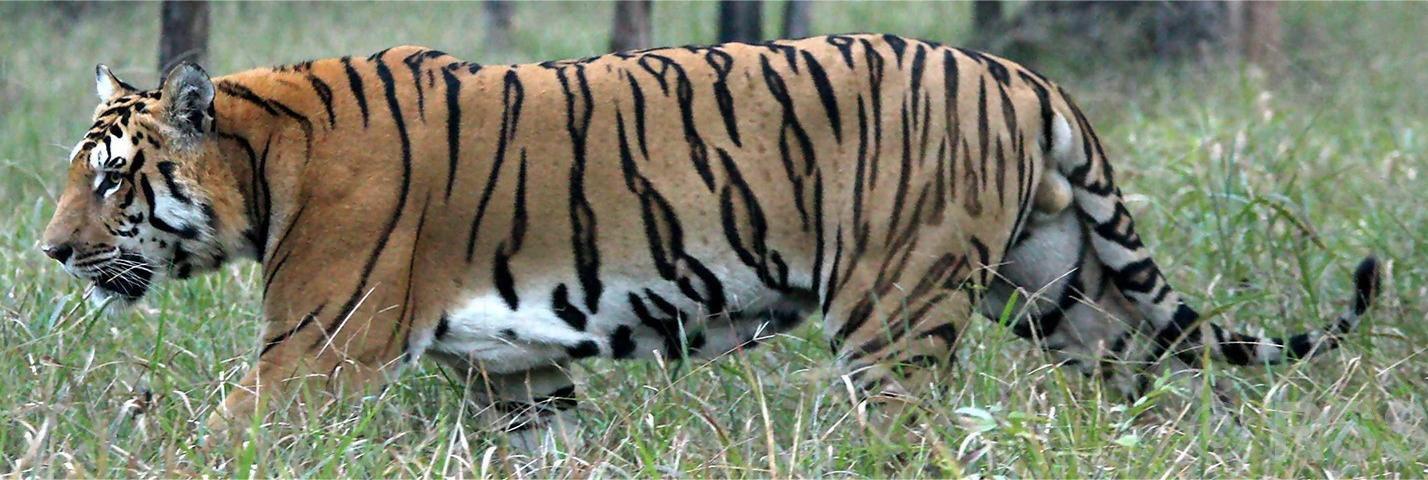
KATHMANDU: Nepal is marking World Tiger Day today, July 29, with renewed focus on the conservation of the country’s growing tiger population.
Celebrated annually since its inception at the 2010 International Tiger Forum in St. Petersburg, Russia, World Tiger Day raises awareness about the importance of protecting tigers, a species once on the brink of extinction.
Nepal has made remarkable progress in tiger conservation, with the latest 2022 national tiger census reporting 355 tigers—nearly triple the 121 counted in 2009. This surpasses the country’s original goal to double its tiger population by 2022.
However, this success brings new challenges. Human-tiger conflict has risen, particularly in buffer zones where locals collecting firewood, grazing livestock, or cutting grass face increased risks. Cases of tiger deaths from poaching or while crossing infrastructure like highways and railways have also been reported.
Experts have begun discussing Nepal’s environmental capacity—or “carrying capacity”—for tigers. According to a joint study by the Department of National Parks and Wildlife Conservation, National Trust for Nature Conservation (NTNC), World Wildlife Fund (WWF) Nepal, and the Zoological Society of London (ZSL), Nepal’s tiger carrying capacity stands at around 400.
Dr. Bhagwan Raj Dahal, Nepal representative of ZSL, said the study’s preliminary findings indicate that the habitat is currently capable of supporting this number. “It’s not just about quantity. We now need to focus on improving habitat quality—expanding grasslands, enhancing water sources, and increasing prey availability,” he said.
Nepal’s tiger population is mainly concentrated in five protected areas: Chitwan National Park (128), Bardiya National Park (125), Parsa Wildlife Reserve (41), Shuklaphanta National Park (36), and Banke National Park (25).
Meanwhile, Dr. Chiranjivi Prasad Pokharel, NTNC Director and a tiger expert, emphasized the importance of tigers in Nepal’s ecotourism industry. “Tigers typically stay within their own territories unless forced out by competition or lack of food and water. With shrinking forest resources, this often brings them into conflict with people,” he noted.
Dr. Pokharel called for more programs promoting human-tiger coexistence, including skill-building and awareness campaigns. “Tigers don’t change their behavior, so people must change theirs,” he said.
Dr. Ghanashyam Gurung, National Representative of WWF Nepal, echoed that sentiment. He said that to reduce conflict, communities living near forests should be provided with alternative livelihoods so they don’t depend on forest resources. “If we improve habitat management and reduce human intrusion, we can mitigate most of the conflict,” he said.
Tigers are native to 13 countries: Nepal, India, China, Bhutan, Russia, Bangladesh, Vietnam, Myanmar, Malaysia, Indonesia, Thailand, and Laos. Globally, tiger numbers plummeted from an estimated 100,000 in 1900 to just 3,200 in 2010.
Thanks to global conservation efforts, the population has rebounded. According to WWF, the global tiger population reached 3,900 in 2016, rose to 4,500 in 2022, and is now estimated at 5,357 in 2025.
Nepal has been observing World Tiger Day since 2067 BS (2010) and conducts a national tiger census every four years. Historical data shows the country had 98 tigers in 1995, 109 in 2000, 126 in 2005, 121 in 2009, 198 in 2013, and 235 in 2018.
With its conservation milestones now recognized globally, Nepal’s next challenge is to ensure that tiger protection remains sustainable—balancing ecological needs with human safety and economic development.






Comment