




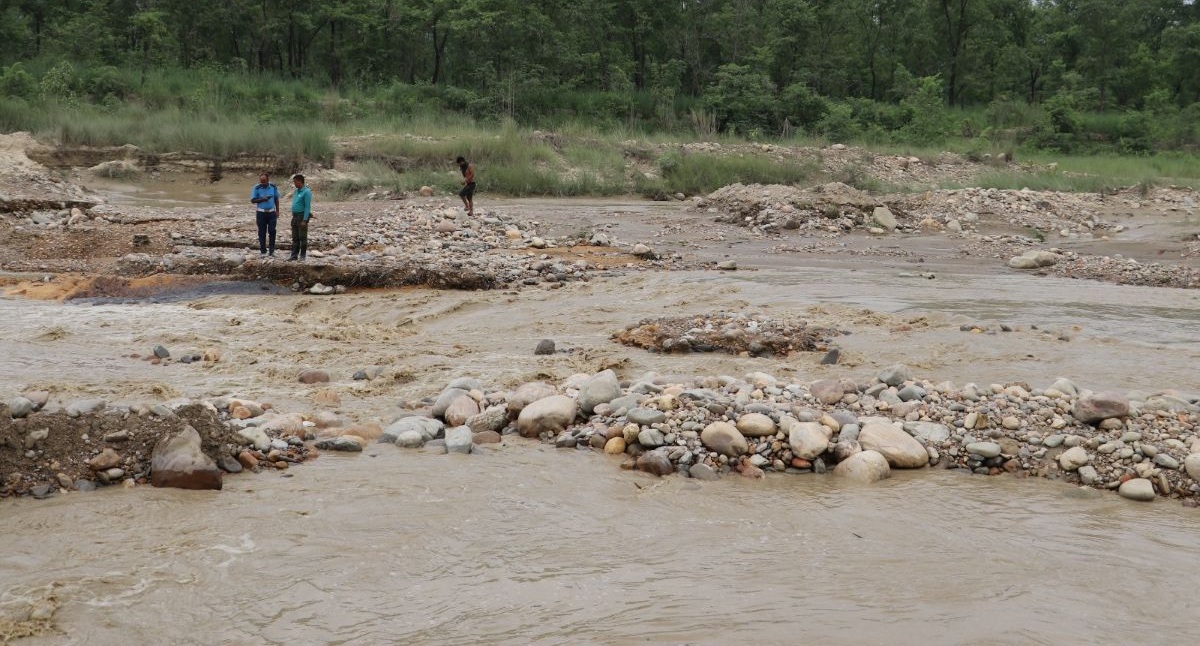
MUSTANG: Initial assessments have begun following the unprecedented flooding in Upper Mustang.
A joint monitoring team comprising Lomanthang Rural Municipality Chairperson Tasinarbu Gurung, Vice-Chairperson Chyumi Bista, Chief Administrative Officer Bikash KC, technical staff, ward officials from all five wards, and security personnel from the Nepal Police and Armed Police Force carried out an on-site inspection on Wednesday to evaluate the damage.
According to Chief Administrative Officer KC, a total of seven bridges were destroyed on rural roads within the municipality—three of them were concrete motorable bridges, alongside one steel and three wooden bridges.
The estimated damage exceeds Rs 15 million. Among the affected structures is a key concrete bridge connecting Arka and Bharsa.
While infrastructure was significantly impacted, no casualties or livestock losses were reported. Chairperson Gurung confirmed that both the permanent and temporary bridges connecting the Ring Road and its adjoining branches were swept away, halting vehicular movement in the area.
Officials suspect the flooding may have been caused by the bursting of a glacial lake, as there was no rainfall reported at the time. “We spoke with locals who confirmed there was no rain in the area when the flood occurred,” said Chairperson Gurung. “The most likely explanation for this sudden flood is the collapse of a glacial lake.”
Armed Police Inspector Bishnu Hari Thapa of the Border Outpost (BOP) at Nechung in Choser, Lomanthang-2, said a reconnaissance team had visited Chumjung to investigate the cause of the flooding.
According to local yarsa collectors, glacial lakes exist at the source of the Chuama River in Chumjung. “We suspect the primary cause to be glacial melt or related snowfall activity, though we haven’t confirmed if rainfall occurred at the lake’s origin,” he added.
Lopsang Chomphel Bista, Chairperson of Loghekar Damodarkunda Rural Municipality, noted that dozens of glacial lakes exist at the headwaters of various rivers in Upper Mustang. He warned that rising ground temperatures, driven by climate change, could destabilize snowdrifts in high-altitude areas, leading to more such events in the future.




Comment