




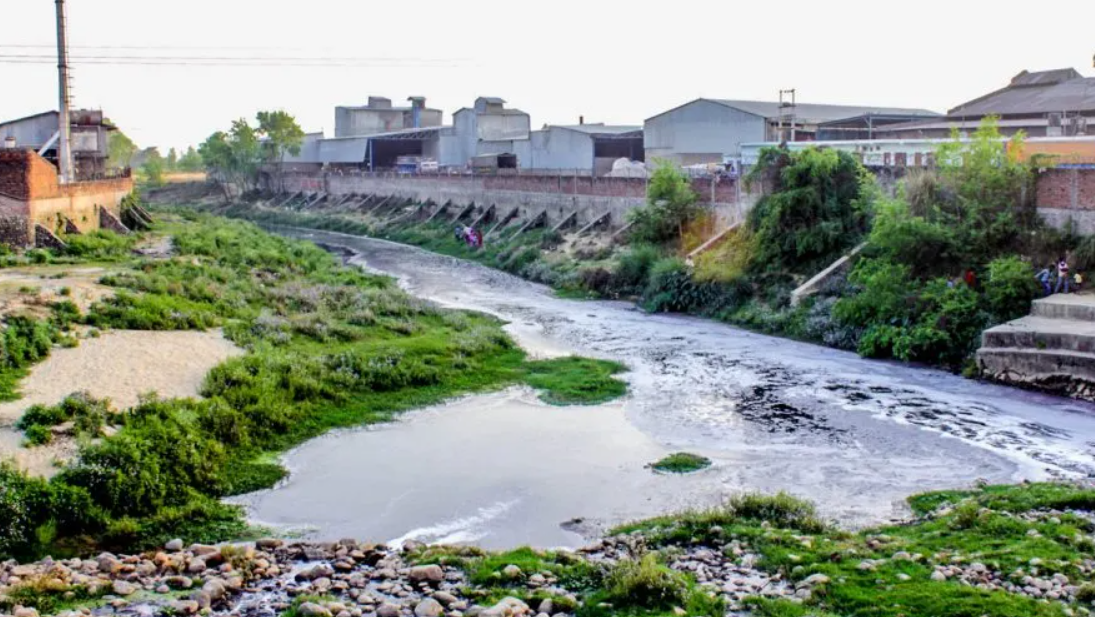
BIRGUNJ: Authorities in Bara and Parsa districts have pledged to take legal and punitive action against factories that have continued to discharge untreated chemical waste into the Sirsiya River, defying repeated requests from local administrations and governments.
The Sirsiya River, once considered a cultural and ecological lifeline of Birgunj, has turned into a polluted waterway due to rampant dumping of industrial waste from factories operating in the Bara–Parsa Industrial Corridor.
Chief District Officer of Parsa, Ganesh Aryal, said that several industries have violated their initial Environmental Impact Assessment (EIA) commitments and continue to dispose of waste directly into the river. “Industries identified as major polluters back in 2010 have failed to install waste treatment plants, citing financial constraints. We are now prepared to bring them within the legal net,” Aryal said.
Jaspal Singh, chairperson of Prakriti Sewa Pratisthan Nepal, lamented the drastic transformation of the river. “We used to swim in the Sirsiya River as children, and it played a central role during Chhath festival rituals. Now, the water is so toxic it can’t even be touched. Aquatic life has been severely disrupted,” he said, urging businesses to act responsibly for future generations.
Jayaprakash Khetan, chairperson of Green City Community Service Center, echoed concerns that the once vibrant river has been reduced to a drainage channel due to excessive waste dumping.
According to Rakesh Sah, chief of the Environment Division at Birgunj Metropolitan City, the direct discharge of industrial waste has worsened pollution levels in the Sirsiya River. City Environment Inspector Prakash Bahadur Air said a survey of 122 factories in the corridor found that only 21 had installed basic treatment plants—and among those, just 13 are operational.
“In the past three years alone, we’ve fined polluting industries up to Rs 1.5 million,” Air said.
Sushil Kumar Sah, Director General of the Industry Department of Madhes Province, emphasized strict enforcement of environmental commitments made by companies during licensing. Hari Gautam, president of the Birgunj Chamber of Commerce and Industry, said installing treatment plants could reduce Sirsiya’s waste by as much as 75%.
Birgunj Mayor Rajeshman Singh said effective clean-up of the Sirsiya River would require coordinated efforts among all stakeholders. Jitpur Simara Sub-Metropolitan City Mayor Rajan Paudel echoed this, stating that joint action with local and security agencies would be taken against polluting industries.
Bara CDO Basanta Adhikari stressed that only punitive and corrective measures can deter companies from polluting the river. Mohan Sharma, president of the Jitpur Simara Chamber of Commerce and Industry, urged all three levels of government to allocate budgets for the installation of systematic waste treatment facilities.

Comment