




KATHMANDU: Last week in Nepal was marked by a flurry of high-profile events—from infrastructure inaugurations and corruption verdicts to diplomatic milestones and political deadlock.
These developments underscored a recurring paradox in the country’s governance: while symbolic progress was made in areas like infrastructure and foreign relations, deep institutional weaknesses and political maneuvering continued to stall real reform. The juxtaposition of momentum and inertia defines the current state of Nepali affairs.
Infrastructure gains hampered by execution failures
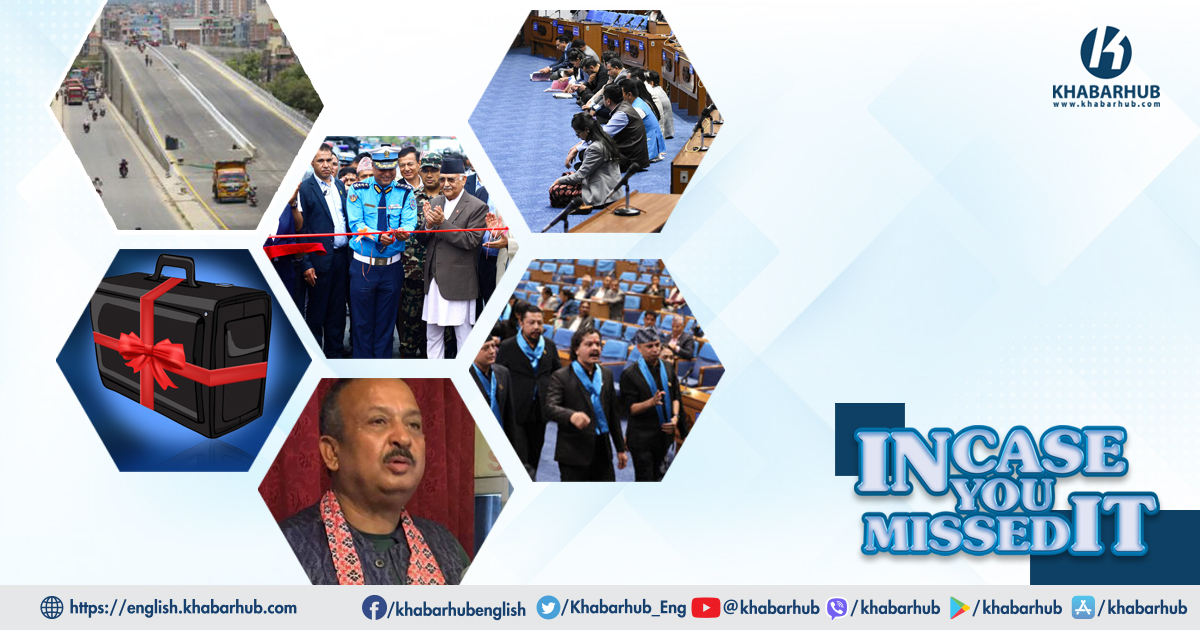
The inauguration of the Gwarko Overpass in Lalitpur by Prime Minister KP Sharma Oli stood out as a tangible step toward easing Kathmandu Valley’s chronic traffic woes. The project is part of the broader Ring Road improvement initiative and represents one of the few large-scale urban infrastructure achievements in recent memory.
Yet the delays that plagued the construction process—technical errors, poor soil conditions, and mid-project design changes—revealed structural inefficiencies in project planning and execution.
The imposition of a Rs 14.7 million fine on the contractor may indicate growing oversight, but the incident reflects broader issues: reactive management, weak contractor accountability, and the absence of rigorous pre-construction assessments.
The project’s completion is commendable, but it offers a cautionary tale about Nepal’s persistent challenges in infrastructure governance.
Legal win in anti-corruption, but partial justice raises concerns
In a rare judicial victory against corruption, Nagarjun Municipality Mayor Mohan Bahadur Basnet was found guilty of accepting a Rs 92 million bribe and laundering more than Rs 130 million. The verdict is significant, not only because it targeted a sitting elected official, but also because it reaffirmed the judiciary’s ability to deliver justice in high-profile corruption cases.
However, the acquittal of private sector actors involved in the bribery deal—despite clear transactional ties—raised questions about the thoroughness of the prosecution and the possible limitations of the anti-corruption framework. The verdict serves as a reminder that while political figures can be held accountable, broader enforcement must include private enablers to truly dismantle entrenched corruption networks.
Transitional justice: Parties stuck in political bargaining
Top leaders from Nepal’s three major political parties—Oli, Deuba, and Dahal—met last week to discuss long-delayed transitional justice issues. With pressure mounting from civil society and victims’ groups, the meeting was intended to demonstrate political will. However, the lack of concrete outcomes signaled yet again the parties’ reluctance to meaningfully confront the legacy of the Maoist conflict.
The talks appeared more symbolic than substantive, revealing how transitional justice remains a bargaining chip rather than a moral imperative. This hesitation undermines Nepal’s post-conflict commitments and perpetuates the suffering of thousands of victims still awaiting recognition and redress.
Visa scandal fuels political standoff and public frustration
Parliamentary disruptions intensified last week as opposition parties, particularly the Rastriya Swatantra Party (RSP) and Rastriya Prajatantra Party (RPP), staged protests over the “visit visa scandal” involving allegations against top officials, including Home Minister Ramesh Lekhak. Their walkouts and symbolic protests, including wearing blue scarves, drew attention to what they called deep-seated impunity within the government.
More troubling was the Maoist party’s tacit support for the ruling coalition’s silence on the issue—despite its past rhetoric on transparency and accountability. The scandal has exposed a broader pattern: selective outrage, politicized justice, and backdoor deals that protect power at the expense of credibility.
Energy diplomacy takes a positive turn
Amid the domestic political noise, a significant development in regional diplomacy went largely underplayed: Nepal began exporting 40 megawatts of electricity to Bangladesh via India. This marked the beginning of a five-month contract and a meaningful step in regional energy cooperation.
If scaled and managed wisely, this export deal could strengthen Nepal’s position as a clean energy exporter and enhance economic stability. But for this to be sustainable, Nepal must invest in reliable transmission infrastructure and carefully navigate the geopolitical sensitivities that come with trilateral cooperation in South Asia.
Provincial budgets signal fiscal dependence and weak autonomy
All seven provinces tabled their fiscal year 2025/26 budgets last week. While most saw modest increases in allocations, a concerning trend continued: provinces remain overwhelmingly dependent on federal transfers, and large portions of previous budgets remain unspent. Some introduced internal borrowing provisions, but their limited local revenue bases point to structural weaknesses in Nepal’s federal setup.
These patterns suggest that provincial governments have yet to achieve meaningful fiscal autonomy. Without clearer coordination mechanisms, capacity-building investments, and revenue mobilization reforms, provincial governance will continue to underperform relative to constitutional expectations.
Judiciary intervenes in administrative dispute, raising deeper questions
Last week, the Patan High Court issued an interim order halting the suspension of Kathmandu Municipal Police Chief Rajunath Pandey. The case, emerging from bureaucratic infighting within the Kathmandu Metropolitan Office, highlighted the increasingly litigious nature of administrative politics.
While judicial oversight can serve as a check on executive overreach, such interventions are becoming more frequent due to the erosion of internal dispute resolution mechanisms. The case reflects the broader breakdown in trust and functionality within local governance structures.
MCC implementation continues amid diplomatic reassurance
The U.S. government’s confirmation that it will continue the Millennium Challenge Corporation (MCC) Nepal Compact, even as it freezes aid to other nations, came as a diplomatic boost. Amid domestic turmoil, MCC’s steady progress offers a rare source of policy continuity and external validation.
Despite past controversies, MCC remains one of the few large-scale infrastructure programs in Nepal with clear targets, timelines, and funding guarantees. If leveraged well, it could serve as a model for disciplined, performance-based foreign assistance.
Reform momentum risks being lost to systemic dysfunction
Last week’s developments demonstrate how Nepal continues to oscillate between ambition and dysfunction. Infrastructure openings, judicial rulings, and regional cooperation efforts signal forward movement. Yet these are continually undermined by political power games, bureaucratic inefficiency, and selective enforcement of accountability.
For Nepal to truly progress, the government must go beyond ceremonial achievements. What’s needed is a consistent commitment to rule of law, institutional reform, and long-term planning. Only then can symbolic milestones translate into sustainable development and democratic maturity.





Comment