




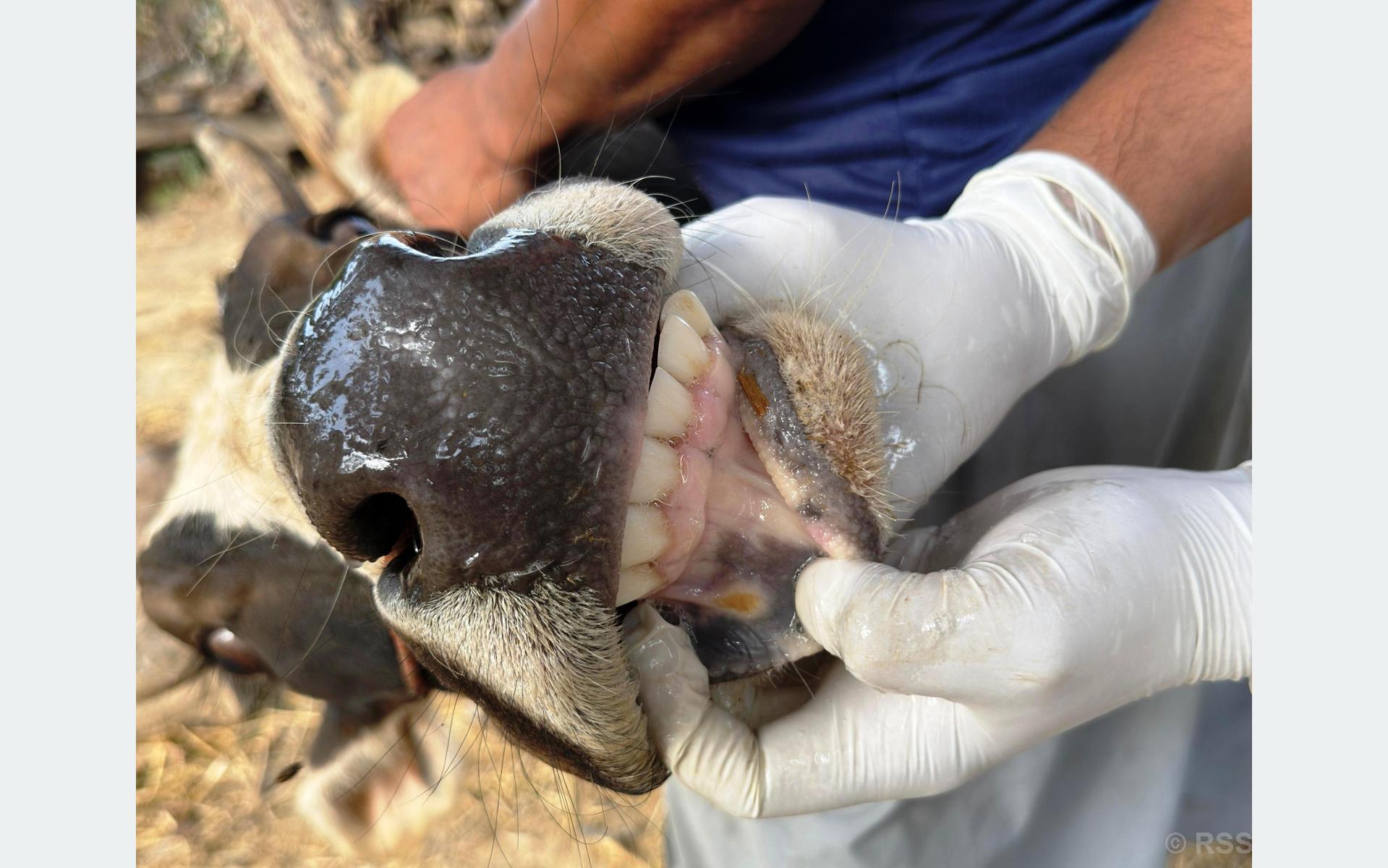
KANCHANPUR: The serotype A virus, which causes foot and mouth disease (FMD), has been detected in livestock in Shuklaphanta Municipality and Laljhadi Rural Municipality of Kanchanpur district.
The infection was confirmed after laboratory testing of samples from affected animals.
Naresh Prasad Joshi, a senior veterinarian at the Animal Disease Research Laboratory in Dhangadhi, said the presence of the serotype A virus has been confirmed for the first time in three years.
“This particular strain had not been seen in livestock recently. Its reappearance is concerning, as it causes hoof-related illness and spreads rapidly,” he stated.
Among the seven known serotypes of the FMD virus — A, O, C, SAT-1, SAT-2, SAT-3, and Asia-1 — serotype A is considered particularly dangerous due to its high transmission rate.
According to Joshi, serotype O is more commonly found in animals, but the current outbreak may have originated through contact with wild animals or livestock from across the Indian border.
“When tested in our lab, the samples showed the presence of serotype A. We have sent them to the Serotype and Borderless Animal Disease Research Laboratory in Chapali, Budhanilkantha, Kathmandu, for PCR confirmation. The final results are awaited,” Joshi added.
FMD primarily affects cloven-hoofed animals such as cows, buffaloes, goats, and pigs. The serotype A strain is particularly virulent and has the ability to mutate. Infected animals may develop blisters, sores, and lesions on the mouth, snout, hooves, and udders.
The disease can also cause fever, excessive drooling, weight loss, reproductive issues, and in severe cases, the death of young animals.
Dr. Joshi warned that FMD can severely impact milk production, lead to weight loss and reduce fertility in livestock. The most effective prevention method is timely vaccination — ideally once every six to twelve months before an outbreak occurs.
Preventive measures also include isolating infected animals, restricting animal movement, and maintaining strict hygiene in sheds, including regular cleaning of animals, tools, and clothing.
Vaccination efforts are currently underway in coordination with provincial and local governments.
“We are vaccinating healthy livestock in and around the affected areas to contain the spread,” said Ram Prasad Bhatta, head of the Livestock Development Section of Shuklaphanta Municipality.
“Our veterinary technicians have been mobilized to visit farmers’ homes and administer vaccines free of cost.”






Comment