




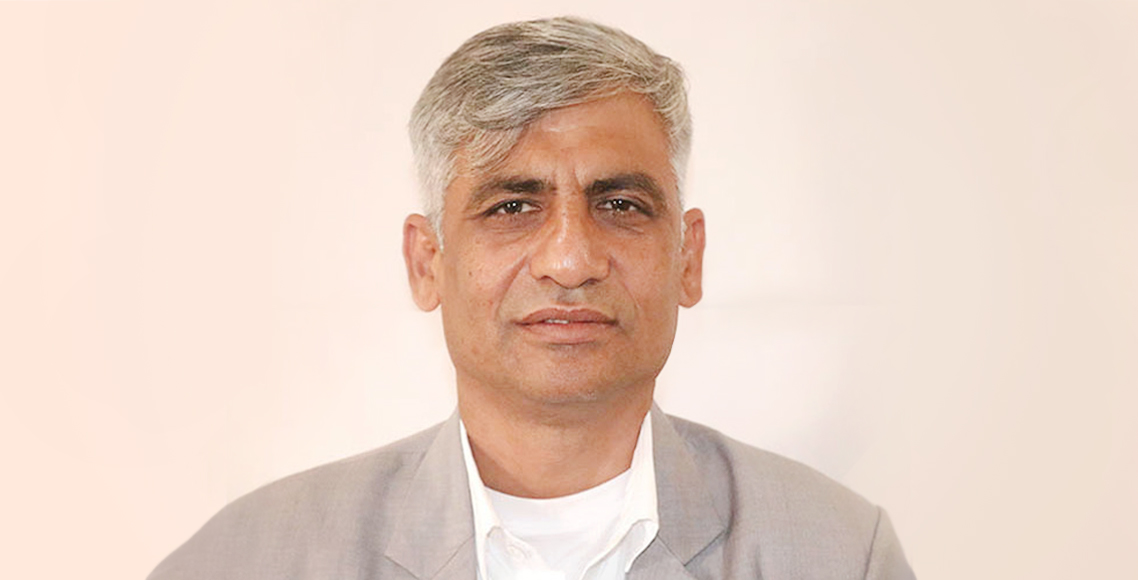
BIRATNAGAR: Kedar Karki, a member of the Nepali Congress (NC) in the Koshi Province Assembly, has made a move by staking his claim for the position of Chief Minister.
Karki presented his claim for the Chief Minister’s office, bolstered by the backing of 39 Members of Parliament (MPs) from the CPN-UML, as well as the support of 8 members from his own party.
Karki said that he had submitted his claim on the grounds of having the support of a majority of 47 MPs in accordance with clause 5 of the state’s governing protocols.
However, it should be noted that the application of clause 5 remains a point of contention within his party.
Of the 47 signatures supporting his claim, 39 belong to the UML party, and 8 are from the Nepali Congress party.
Karki is affiliated with the Shekhar Koirala faction within the Nepali Congress.
It should be noted that within the Koshi Province, there are 10 MPs aligned with the Koirala faction.
In a surprising turn of events, a recent ruling coalition meeting held in Kathmandu decided to endorse Indra Angbo, the leader of the Koshi Province Parliamentary Party representing the Maoist Center, as the new Chief Minister.
Nevertheless, Karki, unsatisfied with this development, garnered support from the UML and moved ahead with his claim for Chief Ministership, asserting that he had secured the majority support among MPs first.



Comment