




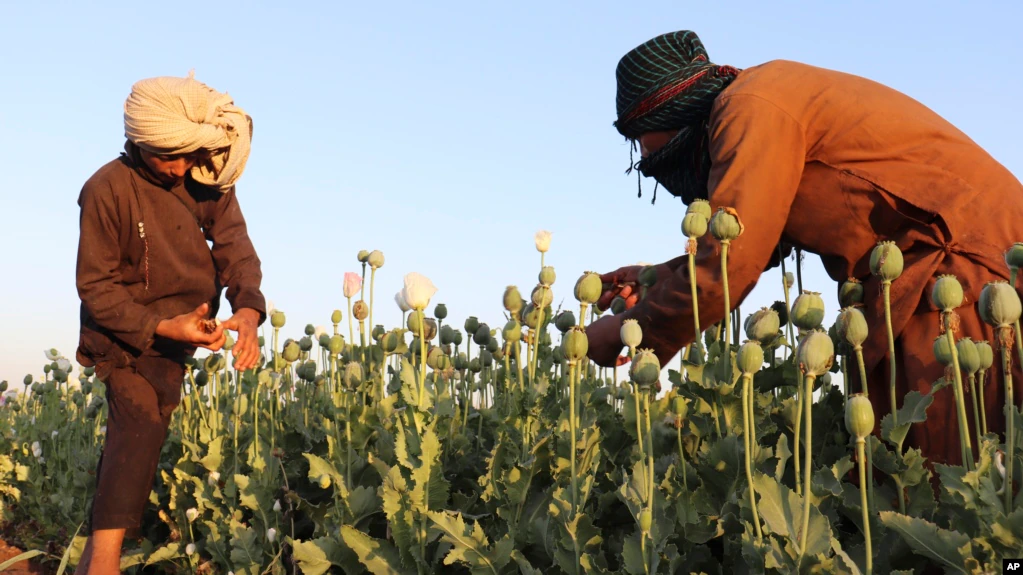
ISLAMABAD: The Taliban have outlawed cultivation of drugs, including opium poppy, across Afghanistan, the world’s biggest opium producer, which accounts for 85 percent of global production.
A decree issued by the ruling Islamist group’s reclusive supreme leader, Haibatullah Akhundzada, also banned the production, usage, transportation, trade, export and import of all other drugs.
“If anyone violates the decree, the crop will be destroyed immediately and the violator will be treated according to the Sharia law,” according to the order announced by the Taliban Interior Ministry at a news conference in Kabul.
The hardline group seized power from the now-defunct Western-backed government days before the United States and NATO-led foreign troops withdrew from Afghanistan in August.
Since then, the Taliban have been under pressure from neighboring and regional countries to combat the production as well as trafficking of drugs.
The opium harvest in Afghanistan increased by 8 percent in 2021, compared to last year, to 6.800 tons, according to a report that the United Nations Office on Drugs and Crimes (UNODC) released in November.
The report warned that the output could lead to markets around the globe being flooded with around 320 tons of pure heroin trafficked from the country.
The UNODC estimated in its report that income from Afghan opiates amounted to $1.8- to $2.7 billion in 2021 inside Afghanistan, but much larger profits are made in the illicit drug supply chains outside the country.
(VOA)



Comment