




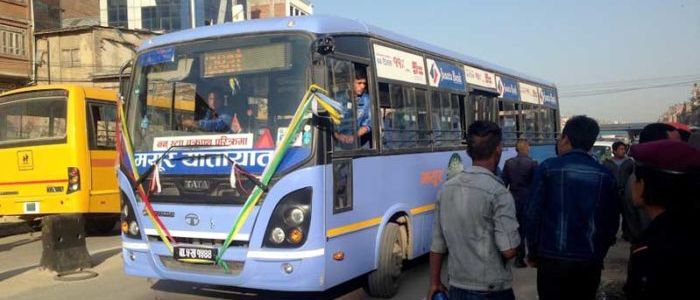
KATHMANDU: The movement of people entering and leaving the Kathmandu Valley has increased since this morning after the opening of long-haul public transport, according to the traffic police.
The cabinet had earlier decided to reopen the long-haul public transport, which was closed since March 25, from today.
Vehicles operating from Thursday are allowed to carry only 50 percent passengers.
The traffic police said that they are monitoring whether the transport businessmen have complied with the government rules or not.
“We are monitoring whether the co-driver has used a face visor or not,” said Bhim Dhakal, chief of the traffic police.
He said action would be taken if anyone was found to have more than 50 per cent passengers and charging fare more than 50 percent.
Transport entrepreneurs have said that traffic has been smooth in places where the local level and the district have not issued a restriction.
President of the National Federation of Transport Entrepreneurs Yogendra Karmacharya claimed that the public transport has been operated following the health protocol.
He said that there were some problems in the Mugling-Narayangadh section due to road blockage. Karmacharya said that no decision has been taken for advance ticket booking for Dashain.






Comment