



The call for elections was presented as a return to constitutional order, yet constitutionalism itself never required the ballot alone. In the aftermath of the announcement, growing engagement from Gen-Z activists and young citizens revealed a deeper concern: widespread confusion about the Constitution and the functioning of the state.
Our view was that this election could have achieved much more. For that to happen, the Political Parties Act, 2072 BS, as well as the election laws, should first have been amended through ordinances. Immediate action could have been taken on four key issues.
First, constitutional standards must be incorporated into the law. Most importantly, the internal democracy of political parties, clearly envisioned by the Constitution, must be guaranteed through legislation. The current Act does not compel internal democracy. Its effects are evident today, including within the CPN-UML. The law makes no provision for internal opposition, nor does it strengthen provincial or local party structures.
At present, the political system is dominated by party high commands, which directly contradicts the spirit of federalism. Either federalism is weakened, or parties must be federalized. This could be addressed through minor amendments, including to provisions requiring a two-thirds majority, particularly those related to internal democracy.
Second, there must be financial transparency within political parties. Where does party funding come from? Are donors transparent? Have they paid taxes? At present, anyone can donate without scrutiny. Today, even individuals seeking medical treatment raise funds through QR codes, yet banks issue QR codes only after verifying citizenship, and donors are expected to comply with tax obligations. Political parties, however, have never been transparent.
Issues of national security arose but were brushed aside. Yet we are now going to snap polls under exactly those unresolved conditions. Strikingly, the term “snap election” is scarcely mentioned, neither in the media nor in public discourse.
When money obtained through corruption or bribery enters party coffers, it must later be recovered, which distorts the party’s social base. Ordinary workers can no longer remain active in parties because they lack financial resources. Social service alone does not sustain political participation.
Third, to truly guarantee federalism, the process of forming provincial governments must be detached from party high commands. Provincial governments should be formed only when provincial party units are empowered to make independent decisions based on the mandate given by voters. This is not happening in Nepal today.
Often, parties that should be in opposition form governments, while those with a clear mandate sit outside power. Parliamentary democracy is not merely a game of numbers; it is a system based on mandate. Provincial heads have failed to respect this principle.
Under Article 76, claims to government formation should be made clearly and morally, this is not a casual bargaining process. Elections are held to determine who holds the people’s mandate, and those who receive it must be invited to form the government.
Because of this moral failure, provincial leaders have undermined the Constitution. This culture flows from the top and explains the declining respect for constitutional offices, including the presidency. If mandates were respected as a norm, no one would dare to manipulate, deceive, or make illegitimate claims to power. The root cause is that parties themselves have not been federalized.
Local governments, by contrast, are relatively stable. Federalism has faltered primarily because provinces remain unstable. Had there been strong counterbalancing power at lower levels, excesses at the top would have been checked. Our experience clearly shows how provincial federalism has been weakened.
Finally, there is the issue of inclusion. The state is moving rapidly toward inclusiveness, and within the next decade, institutions such as the judiciary, civil service, army, and police will likely reflect this change. Political parties, however, remain exceptions because constitutional standards of inclusion have not been enforced on them as public institutions.
If parties were legally required to be inclusive, Nepal could undergo transformative change within just two election cycles. Unfortunately, this opportunity has so far been missed.
Who should monitor political parties? The Election Commission should. If the Commission had been given adequate authority, resources, and the ability to act on time, and if it had been empowered to assess whether parties meet the standards of a public institution, meaningful transformation would have been possible. Such a role would have been fully consistent with the Constitution.
When these four reform measures were raised, the Prime Minister responded by saying that an ordinance should not even be discussed. At a time when the integrity of the office itself was under strain due to the Gen-Z riots, he lacked both the confidence and the courage to pursue such reforms. Political parties, meanwhile, showed no willingness to reform themselves.
This raises a deeper question: how harsh and fragile has our political environment become? Constitutional concerns have now taken a back seat, replaced by anxieties over national security. Who, then, will protect the country? Can it be those who never emerged from social or grassroots movements?
Today, hundreds of candidates have entered electoral politics without any real engagement with society. It is difficult even to recognize the faces in whose names votes are being sought. Traditionally, parties were known, even notorious, because leaders rose through grassroots politics. That culture has eroded. What we now see is lateral entry from the top, while the practice of gradual political growth from the grassroots has disappeared.
In this context, when questions were raised with the Prime Minister, the response was dismissive, why debate at all when things have reached this point? Those projected as future prime ministers are now arguing over whether to debate new candidates or old ones. This reflects the shallow level of political thinking.
Debate is about the future. Its purpose is to hold leaders accountable today for what they did yesterday and to determine what should be done tomorrow. Yet candidates now avoid debates, fearing they may fall behind if they speak openly or comment on public issues. As a result, the public barely knows them.
Is this how votes are to be sought, by playing flutes or drums, by staging performances? Do citizens want to watch their representatives dance, or do they want to hear their ideas? The answer is obvious.
The country is heading into a mid-term election. Despite having a mandate, the government and the House of Representatives failed to exercise their authority and had already lost political legitimacy before completing their tenure.
Issues of national security arose but were brushed aside. Yet we are now going to snap polls under exactly those unresolved conditions. Strikingly, the term “snap election” is scarcely mentioned, neither in the media nor in public discourse.
Foreign relations are another concern. Prime ministers, former prime ministers, and aspiring prime ministers have begun traveling abroad amid this uncertainty. How safe is Nepal in their hands? This leadership has become dangerous for the country, not because of intent alone, but because it lacks any clear vision or prescription for Nepal’s future.
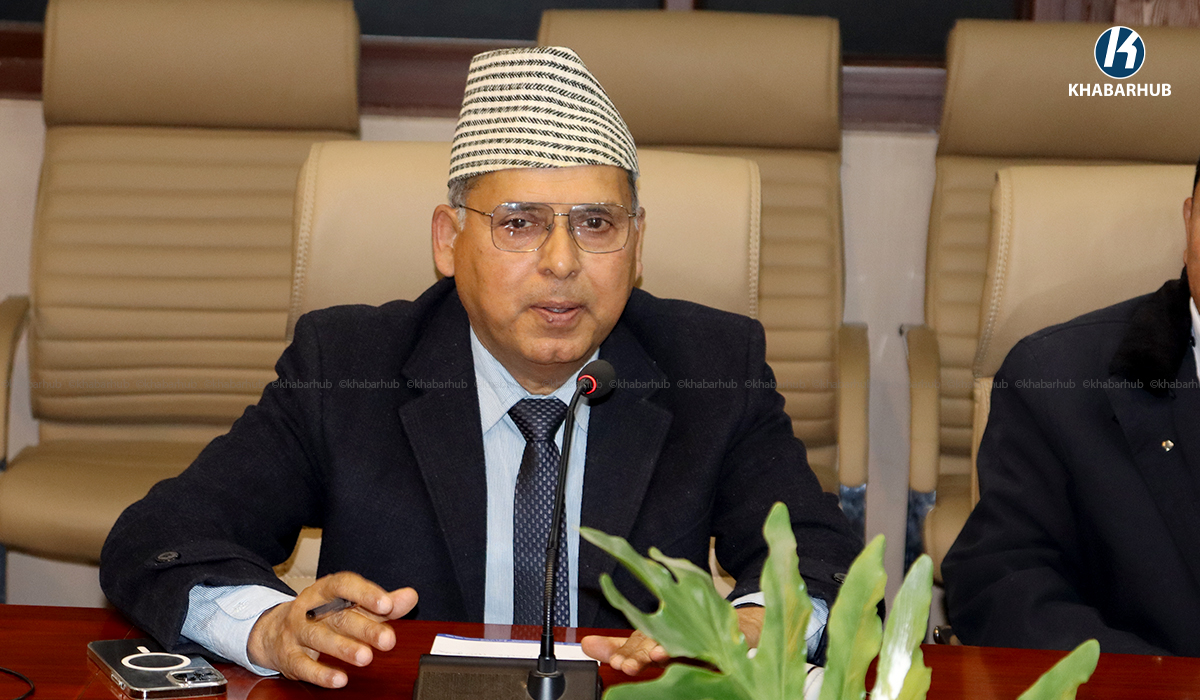
(Edited excerpt from remarks by Advocate Bipin Adhikari at a program organized by the Institute for Strategic and Socio-Economic Research (ISSR) on Wednesday)





Comment