




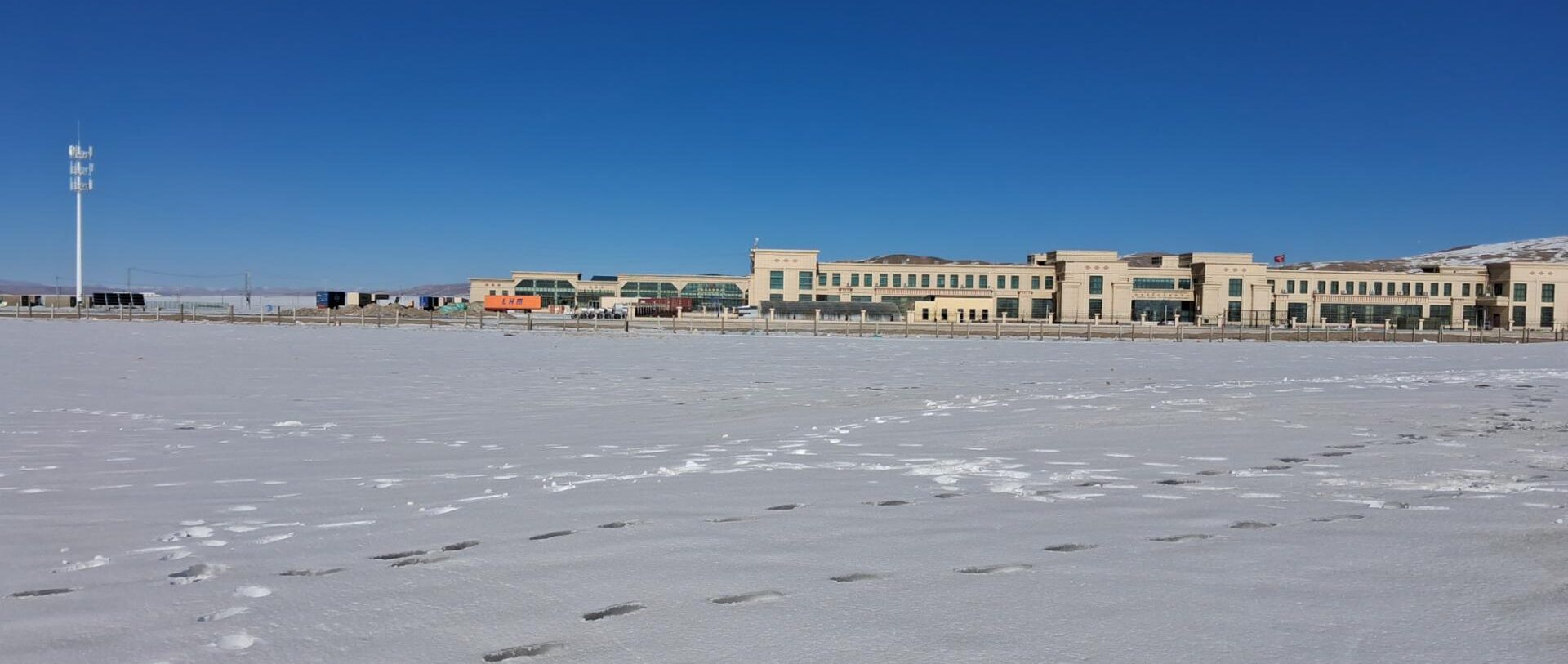
MUSTANG: Construction of essential physical infrastructure at the Korala border checkpoint in Mustang has yet to begin, despite the completion of a detailed project report (DPR) survey four years ago.
The government conducted the DPR survey in Falgun 2079 BS with the objective of developing essential facilities, including customs, immigration, quarantine, a dry port and integrated security posts in the Korala area.
Even before the survey, around 1,000 ropanis of land on the Nepali side of the border had been acquired in the name of the Government of Nepal for the construction of customs and other facilities. The survey, aimed at expanding the trade route with China, took two months to complete.
Geological assessments and soil tests were also conducted to determine the suitability of the proposed sites for infrastructure development.
The DPR was prepared under the initiative of the then Ministry of Industry, Commerce and Supplies and the Nepal Intermodal Transport Development Committee. Sitara Intusip-Fullerite JV completed the survey after securing a contract worth Rs 10 million.
Chairperson of Damodarkunda Rural Municipality, Lopsang Chhomphel Bista, expressed concern over the prolonged delay, saying it was unfortunate that infrastructure construction had not begun even years after the report was submitted to the government.
Although Korala has emerged as an important alternative trading point among Nepal’s border crossings with China, Bista said the absence of essential infrastructure was hampering its development as a well-equipped transit point and limiting effective management of export and import activities.
Three years have passed since the Nepal-China northern Korala border checkpoint was opened for residents of Upper Mustang, while it has been operating as an alternative trade route for the past two years.
The checkpoint has witnessed a significant increase in trade activity. More than Rs 6 billion in revenue was collected through the customs point last year, while over Rs 12 billion has already been collected during the first four months of the current fiscal year.
Currently, around 60 to 70 containers and approximately 100 electric vehicles enter Nepal through the Korala checkpoint every day.
However, the lack of adequate physical infrastructure has created difficulties in border operations, vehicle management and the smooth movement of traffic.
Following the checkpoint’s expansion as a major trade route, the customs yard at Nhechung in Lomanthang Rural Municipality-4 has experienced a growing influx of containers and electric vehicles. Containers parked along up to three lanes of the road have increasingly disrupted traffic movement along the main route to Korala.
Trade activity through the Nepal-China border at Korala has further increased amid the complete closure of the Tatopani and Rasuwagadhi border crossings. Hundreds of containers and electric vehicles are currently transported daily along the Beni-Jomsom-Korala road.
Dharmabir Mandal, a representative of vehicle importer Cimex Inc., said the absence of a dry port had forced transport operators to park containers haphazardly along the roadside. Electric vehicles, meanwhile, have had to be stored in unsafe locations near riverbanks and cliffs.
He added that the lack of basic infrastructure and electric vehicle charging stations at the border checkpoint had created further operational difficulties.
The growing volume of cross-border trade has highlighted the urgent need for the government to accelerate infrastructure development at Korala. Without proper customs facilities, parking areas, storage yards, charging stations and integrated security services, the checkpoint may continue to face operational bottlenecks despite its increasing importance as a trade route with China.





Comment