




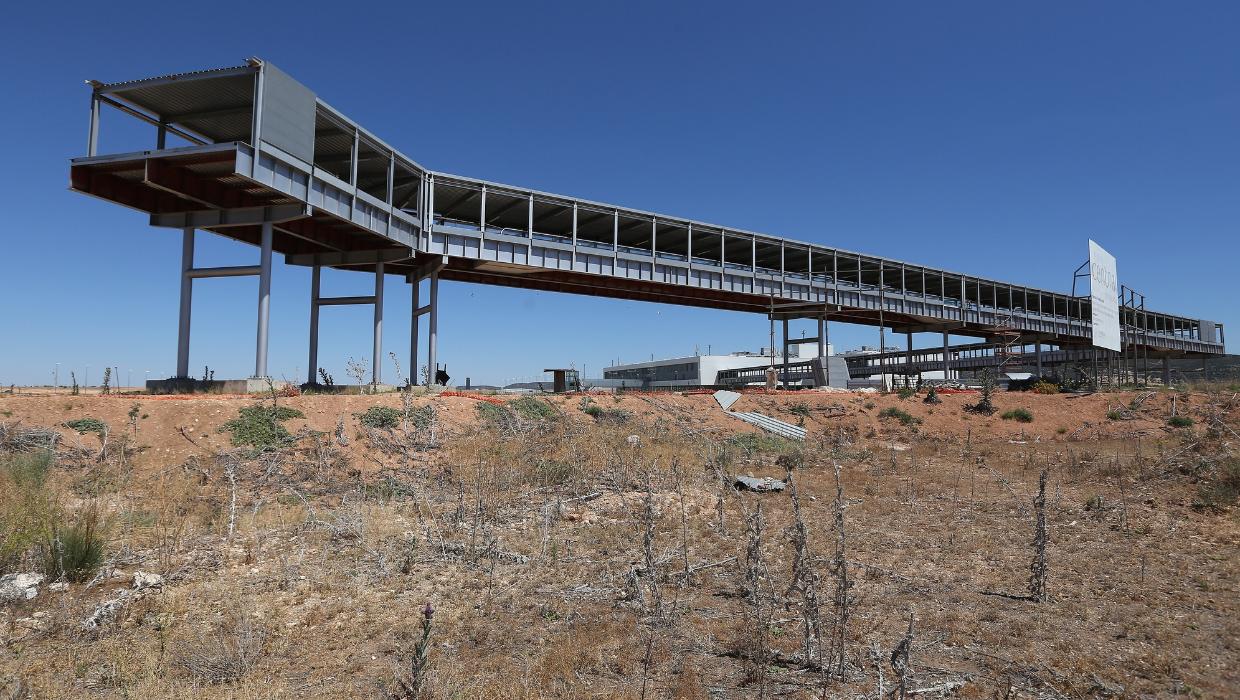
What exactly is going wrong with China’s relentless airport-building spree? Across the country, gleaming new terminals, multi-billion-yuan runways, and ambitious aviation hubs are rising from the ground, yet many of them struggle to attract enough passengers to justify their existence. While airports are traditionally symbols of economic growth and connectivity, a growing number of Chinese airports have become symbols of something very different: overcapacity, wasteful spending, mounting public debt, and questionable planning.
The most troubling aspect of the crisis is not merely that some airports are underperforming. It is that many were built despite clear signs that demand did not exist. In numerous cases, high-speed rail networks, expressways, and improved road transportation had already eroded the need for regional air services. Yet construction continued. Today, several airports operate with only a handful of passengers per day, while others remain almost entirely empty. Some airports have even suspended passenger operations altogether while continuing to receive substantial government subsidies.
The data paints a stark picture. China had 270 certified transport airports by the end of 2025. Of these, 191 airports, or 71%, handled fewer than 2 million passengers annually, yet together they accounted for only 5.9% of total passenger traffic. By contrast, just 41 major airports handled 83.7% of all passenger traffic nationwide.
Reports from 2026 showed that some regional airports carried virtually no passengers at all. Chongqing’s Xiannvshan Airport and Yunnan’s Ninglang Luguhu Airport reportedly recorded no regular passenger traffic during the first ten months of the year, while other airports averaged fewer than ten passengers a day. Despite this, government subsidies continued flowing into these facilities. According to published subsidy plans, central-government support for small and medium-sized airports has expanded significantly, reaching more than 2.5 billion yuan and covering nearly 200 airports.
At the same time, China continues pursuing its long-term goal of expanding the national airport network to roughly 400 transport airports by 2035, requiring the construction of around 130 additional airports over the coming decade.
The consequences extend far beyond empty terminals. Every loss-making airport requires continuous spending on staff, maintenance, security, air traffic management, utilities, and infrastructure upkeep. These costs eventually become a burden on provincial governments, local authorities, and ultimately taxpayers.
Critics argue that the root problem lies in an incentive structure that rewards construction rather than efficiency. Large infrastructure projects often help local officials demonstrate visible achievements, boost short-term GDP figures, attract investment announcements, and improve political credentials. Airports are among the most prestigious projects a local administration can showcase. Once approved, billions of yuan flow into land acquisition, construction contracts, procurement deals, and supporting infrastructure.
According to critics of the system, the real beneficiaries are often not ordinary citizens but local bureaucracies, politically connected contractors, state-owned enterprises, and vested interests tied to large-scale construction projects. Because promotions and evaluations tend to focus on growth targets and project completion, officials may have little incentive to question whether long-term demand actually exists. By the time losses emerge, the officials who approved the projects have frequently moved to other positions.
The financial damage is becoming increasingly difficult to ignore. Several provincial airport groups have accumulated enormous losses over the past decade. Reports indicate that airport operators in provinces such as Hunan and Sichuan have suffered billions of yuan in cumulative losses. Even major aviation hubs have struggled. Beijing Capital International Airport, once one of the world’s busiest airports, has reported significant financial losses since passenger traffic shifted to Beijing Daxing International Airport and non-aviation revenues weakened.
Meanwhile, new mega-projects continue moving forward. Dalian’s Jinzhouwan International Airport, being constructed on a vast artificial island, represents one of the most ambitious airport developments in recent years. Supporters view it as a future growth engine, while critics question whether future passenger demand can justify such enormous investment.
Another major concern is opportunity cost. Every yuan spent maintaining underutilised airports is a yuan unavailable for healthcare, pensions, social welfare, education, elder care, or economic relief measures. At a time when many local governments face financial strains and declining land-sale revenues, continuing to subsidise airports with minimal traffic raises difficult questions about spending priorities.
The challenge is being intensified by structural changes in transportation. China’s high-speed rail network, widely regarded as one of the most extensive in the world, has dramatically reduced travel times between major cities and tourist destinations. In many regions, trains now offer a faster, cheaper, and more convenient alternative to flying. As a result, numerous regional airports have lost their original competitive advantage.
What makes the situation particularly striking is the contradiction between capacity and demand. While dozens of airports struggle to attract passengers, construction plans continue advancing at a remarkable pace. Critics see this as evidence of a development model that places greater emphasis on building infrastructure than ensuring its economic viability. They argue that empty airports are becoming visible reminders of a broader problem: investment-driven growth that prioritises expansion over efficiency.
China’s airport network undoubtedly includes world-class facilities and critical transportation hubs that play a vital role in the economy. Yet the rise of ghost airports raises uncomfortable questions about planning, accountability, and resource allocation. If passenger demand remains weak while construction continues, the country risks creating more monuments to ambition than engines of growth. The danger is not simply empty airports. It is the accumulation of debt, waste, and financial obligations that future generations may ultimately be left to carry.






Comment