




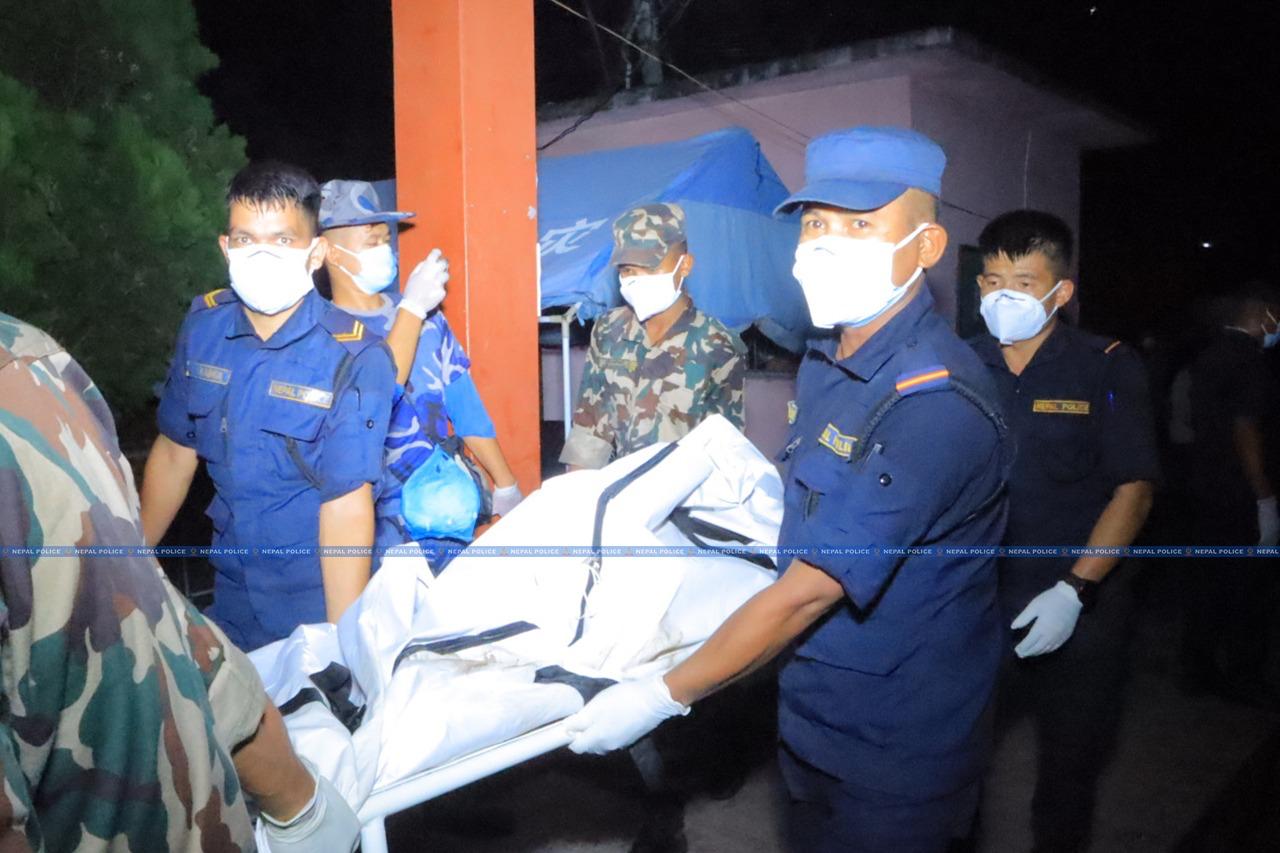
KATHMANDU: Nepal Police has intensified efforts to manage abandoned and unidentified bodies and body parts recovered from various districts, with a focus on minimizing the risk of infection and other public health hazards.
As the number of recovered bodies continues to rise and some have begun decomposing due to a lack of adequate morgue facilities, police have stepped up the systematic management of the bodies. The measures are aimed at controlling foul odours and preventing the spread of infections and potential epidemics resulting from the further decomposition of the bodies.
In Chitwan, the management of unidentified bodies has already begun in accordance with a decision of the District Security Committee. Similar arrangements have been adopted in other districts.
So far, a total of 669 bodies have been recovered, including 13 in Rasuwa, 41 in Nuwakot, 49 in Dhading, 248 in Chitwan, 54 in Gorkha, 31 in Tanahun, 158 in Nawalparasi East and 75 in Nawalparasi West.
Procedures for managing abandoned and unidentified bodies
Based on information received from various sources and through search and rescue operations conducted by security agencies, bodies and body parts recovered from riverbanks, streams and other locations are collected with due care.
After completing necessary legal procedures, including the preparation of an autopsy report at the location where the body was recovered, the body is placed in a body bag and safely transferred to a hospital morgue.
In the presence of a forensic doctor, the body is cleaned as necessary and photographed from the front, back, left, right and various other angles to facilitate identification. A postmortem examination is then conducted.
Following the postmortem examination, the body is safely preserved for identification. Photographs and available identifying information are made public to help members of the public identify the deceased.
If relatives contact the Help Desk after identifying a body through photographs or other information, the body is handed over to them after completing the necessary identification and legal procedures. Identification is verified using available photographs, physical marks, clothing and details recorded in the postmortem report.
For bodies whose identities cannot be established, each body is assigned a unique code number. Details including photographs, physical marks, identifying features, clothing and other belongings found with the body are systematically recorded. DNA samples are also collected and safely preserved to facilitate identification in the future, if necessary.
In accordance with decisions of the District Security Committee and the Management of Unidentified and Unclaimed Bodies (First Amendment) Directive, 2083, bodies that need to be buried are managed respectfully and safely at designated locations. The code number assigned to each body is recorded both at the burial site and above ground. GPS coordinates, photographs, maps and detailed records of the burial location are also maintained.
Photographs, DNA samples, code numbers, identification marks, identifying details, postmortem and autopsy reports, and records of the date and location of burial for each body are securely preserved. These records will help establish the identity of a deceased person using available scientific and legal evidence if a family member or relative makes a claim in the future.
Details of abandoned and unidentified bodies can be viewed through the “Unidentified Bodies Details” section on the official website of Nepal Police.




Comment