




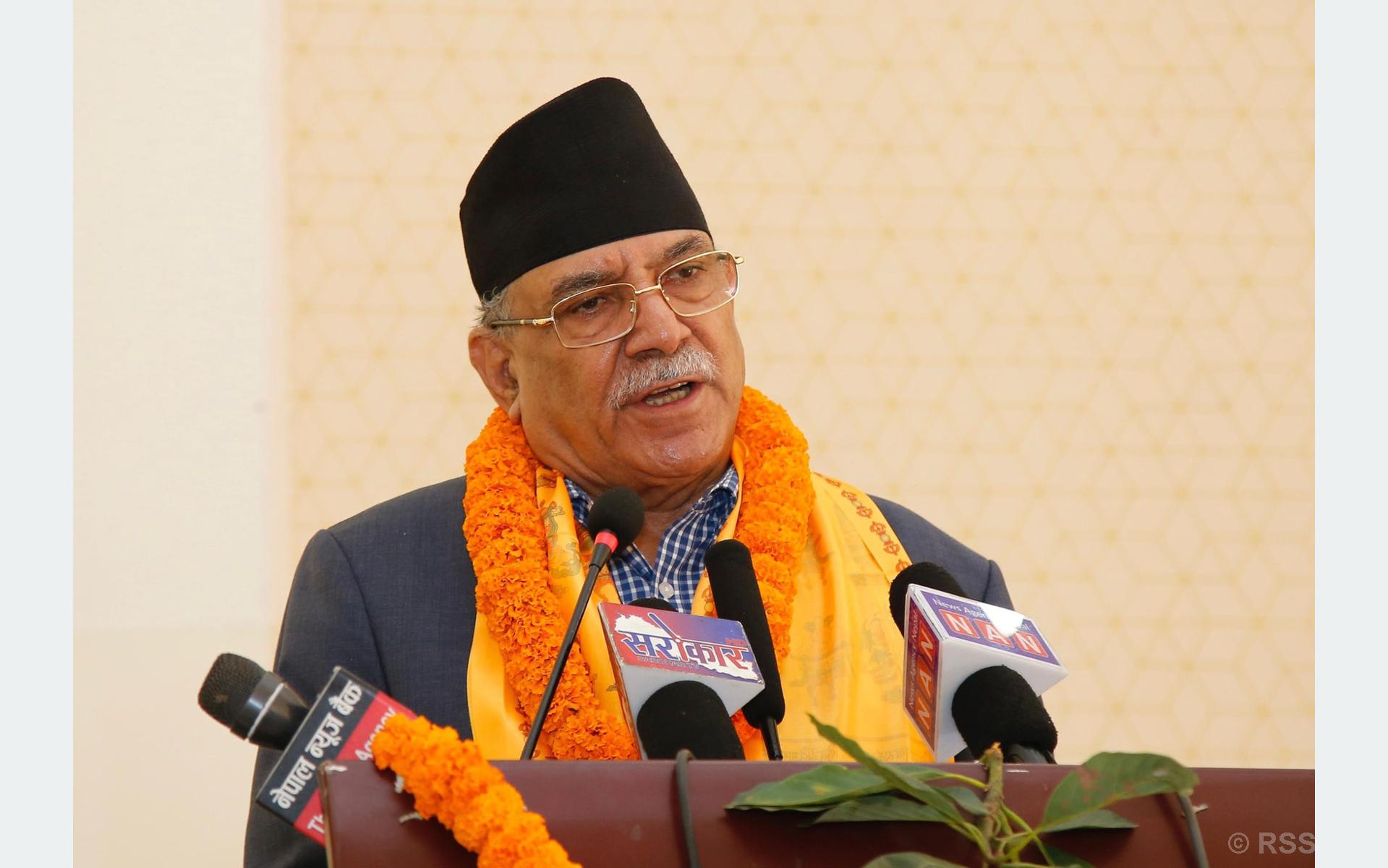
KATHMANDU: Nepali Communist Party (NCP) Coordinator and former Prime Minister Pushpa Kamal Dahal “Prachanda” has said efforts are underway to bring all communist forces in Nepal together under a common banner, with plans to intensify the unity campaign.
Addressing a programme in Kathmandu on Saturday, Dahal said the initiative would focus on bringing together communist parties and groups of all sizes to consolidate leftist public opinion and create a foundation for socialism.
He acknowledged that previous attempts to unite communist forces had failed to produce lasting results but stressed that such setbacks should not discourage further efforts. He said the party was determined to advance the campaign and strengthen the broader movement for communist unity.
Dahal revealed that his party had proposed a three-point cooperation framework to the CPN-UML and a two-point proposal to the CPN-Masal. Discussions were also continuing with other communist groups to explore possibilities for cooperation and political unity.
He said the country’s prevailing problems could be addressed through broader cooperation and practical political collaboration based on common ideological, political and principled positions.
“We are optimistic at the central level, and I urge all of you to make collective efforts at the grassroots. We are working with various parties to advance cooperation and practical unity while maintaining common ground in ideology, politics and principles,” he said.
Dahal also said discussions were underway to establish a broader political front involving parties and forces associated with the peace process and the Constituent Assembly to address the country’s current political challenges.
He said constructive dialogue had begun with political forces committed to peace, the constitution, the federal democratic republic, inclusion and national unity. Expressing confidence in the initiative, he said a united front could be established if political forces across the country made collective efforts.
Meanwhile, Dahal acknowledged that he had previously fallen short in maintaining dialogue and expanding relations with international powers. He said he was now working to strengthen his international engagement and diplomatic role.
Referring to changing global political dynamics, Dahal observed that the international order, institutions and norms established after the Second World War were undergoing significant changes, accompanied by growing geopolitical polarisation and efforts to establish new global structures.
He stressed that Nepal should also strengthen its role in the international arena by taking into account these emerging geopolitical developments.


Comment