




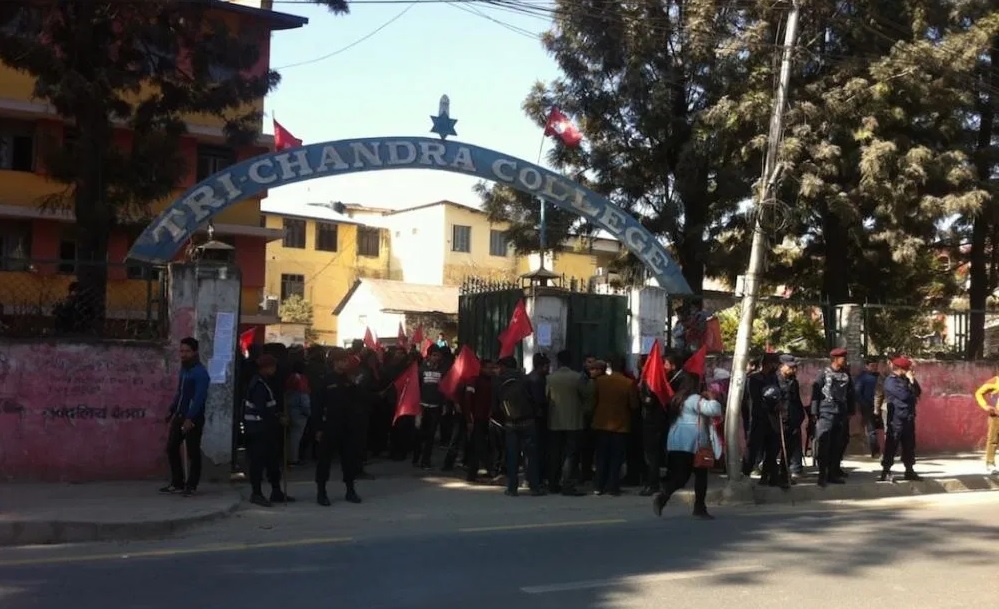
KATHMANDU: Govinda Koirala, president of the Free Students’ Union (FSU) at Trichandra Multiple Campus, has urged Nepal’s Supreme Court to constitute an independent committee modeled on India’s Lyngdoh Committee to resolve the ongoing legal dispute over student politics.
In a video message released on social media, Koirala argued that student politics cannot be shaped through unilateral government directives, stressing that students are stakeholders who deserve meaningful dialogue and consensus in decisions affecting their future.
He said government decisions on student politics have failed to create a sense of ownership among students.
“A government may abolish or restrict student politics through an executive directive today, while another government may restore it tomorrow,” Koirala said. “This is not a matter of a temporary political decision but of the long-term future and ownership of the country’s education sector.”
Koirala said the Supreme Court has a historic opportunity to correct possible policy mistakes and should go beyond issuing a judicial order by creating a platform for broad consultation among stakeholders.
Referring to India, he urged the court to consider the precedent of the Lyngdoh Committee, formed by the Supreme Court of India in 2006 under the leadership of former Chief Election Commissioner J.M. Lyngdoh to address criminalization, violence and the lack of a code of conduct in student politics.
The committee’s recommendations introduced clear guidelines for student elections in Indian universities, including age limits for candidates, campaign spending ceilings, election standards and codes of conduct.
Drawing on that example, Koirala proposed that Nepal establish a similar independent committee led by a former election commissioner or other experts.
According to him, the committee should consult student organizations, the government, political parties, university administrations and parents before preparing a comprehensive report that would serve as the basis for reforming student politics.
Expressing hope that the Supreme Court would deliver an innovative and forward-looking verdict, Koirala said the judiciary should help end the recurring confrontation between the government and students by providing a lasting institutional solution.
“A rule has no legitimacy if those it governs have no ownership over it,” he said. “Decisions affecting students must be made with students’ participation through meaningful dialogue and consensus.”





Comment