




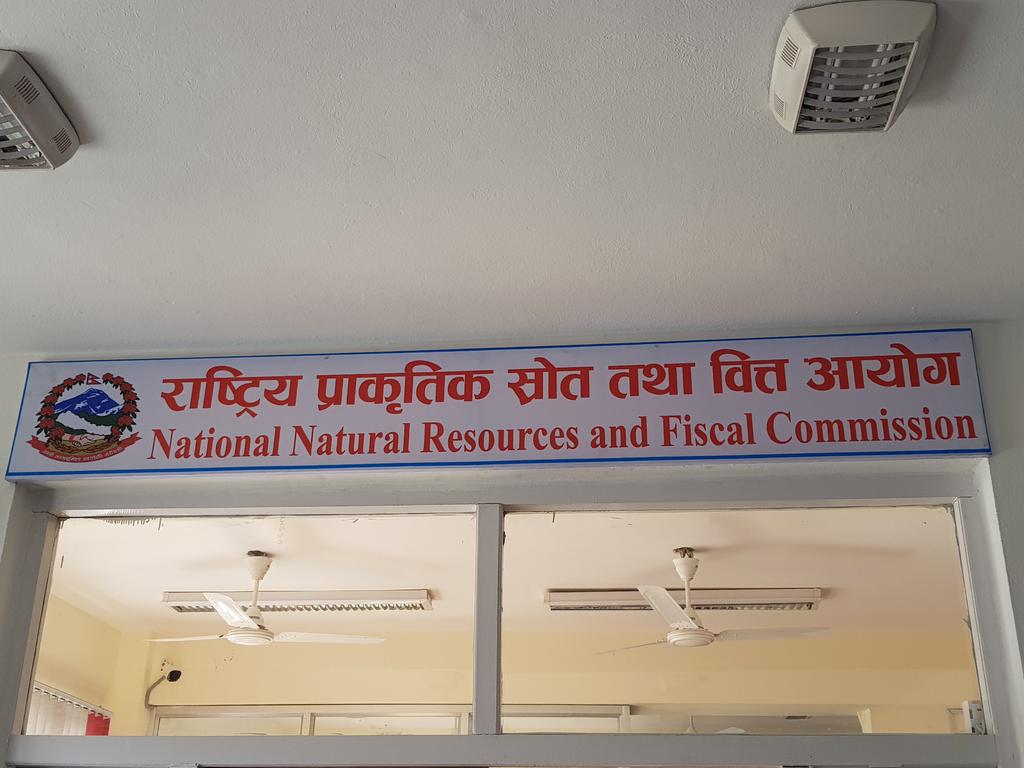
KATHMANDU: The National Natural Resources and Fiscal Commission has urged the federal government not to cut fiscal equalization grants allocated to provincial and local governments.
A meeting of the Commission held on February 23 decided to draw the government’s attention to the issue, stating that the reduction of grants contradicts constitutional provisions.
The government had earlier decided to reduce fiscal equalization grants to provinces and local levels after failing to meet its revenue collection target in the first six months of the current fiscal year. On February 10, the Office of the Financial Comptroller General issued a circular to all Treasury and Accounts Controller Offices instructing them to cut the amount allocated under the third installment of the fiscal equalization grant.
The Commission has clarified that, as per the Constitution, the authority to determine the amount of fiscal equalization grants rests solely with it.
“Exercising the authority vested by the constitutional provisions, the Commission has determined and recommended the amount of fiscal equalization grants to be transferred from the Federal Consolidated Fund to provincial and local governments for the fiscal year 2025/26,” the decision states. “It is the Commission’s understanding that the Government of Nepal must mandatorily implement the recommendation made by the Commission under the constitutional framework.”
The Commission has therefore called on the Ministry of Finance to ensure that transfers are made in accordance with its recommendation and the budget passed by the Federal Parliament.
According to Article 60(3) of the Constitution of Nepal, the recommendation of the amount of fiscal transfers to provinces and local levels is vested in the Commission. Similarly, Article 251(1)(b) authorizes the Commission to recommend fiscal equalization grants to be provided from the Federal Consolidated Fund to provincial and local governments. Based on these provisions, the Commission concluded that grants must be disbursed as recommended.
The government, however, has defended the decision, citing lower-than-expected revenue collection. The circular from the Office of the Financial Comptroller General states that only 81.75 percent of the revenue target had been collected by the end of Poush, and that grants to provinces and local levels would be transferred proportionately.
Accordingly, of the 25 percent amount allocated for the third quarterly installment, only 20.43 percent—ensuring that total transfers do not exceed 70.43 percent of the approved annual budget—has been authorized for disbursement.
The Ministry of Finance’s 95-point budget implementation guideline states that while the first and second installments are to be released as per initial estimates, the third and fourth installments would be determined based on the actual revenue collection situation.
The government had set a revenue target of Rs 1.533 trillion for the current fiscal year. However, by the end of Poush, only Rs 588.51 billion—equivalent to 38.38 percent of the annual target—had been collected.
A similar reduction in grants was made in the previous fiscal year, drawing dissatisfaction from provincial and local governments. At the time, they had protested the budget cuts, arguing that funds had already been committed to contracted and ongoing projects. Following the backlash, the Office of the Financial Comptroller General revised its decision regarding the third installment and released some additional funds. Even then, with reductions in the fourth installment, provinces and local levels received only 91.76 percent of their total approved annual budget.




Comment